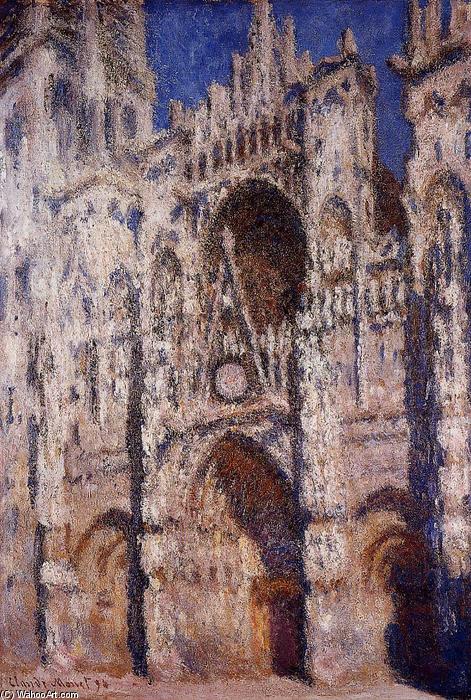
Rouen Cathedral 01: A Symphony of Light and Stone
Claude Monet’s *Rouen Cathedral* series represents more than just a depiction of a medieval building; it embodies the very essence of Impressionism—a radical departure from academic painting that prioritized capturing fleeting moments of perception. Painted between 1892 and 1893, during Monet's residency in Rouen, Normandy, these canvases are not merely visual records but profound explorations of how light transforms architectural grandeur into an ethereal spectacle. The series comprises thirty-two paintings, each meticulously crafted to convey the cathedral’s appearance under varying conditions of illumination—dawn, midday sun, and dusk—resulting in a breathtaking panorama of tonal shifts and textural nuances.
- Subject Matter: Monet focused intently on Rouen Cathedral, selecting it as his primary subject for an extended period. This deliberate choice wasn't arbitrary; the cathedral’s imposing façade served as a canvas for demonstrating the Impressionist preoccupation with capturing the subtleties of natural light and its influence on form.
- Style: The series firmly establishes Monet within the Impressionist movement, rejecting traditional compositional conventions in favor of asymmetrical arrangements and loose brushstrokes that prioritize spontaneity and immediacy. This stylistic approach aligns perfectly with the Impressionists’ belief that art should strive to reproduce what the eye perceives rather than what the intellect understands.
- Technique: Monet employed a revolutionary technique—plein air painting—working directly from nature, which allowed him to capture the ephemeral qualities of light and atmosphere with unprecedented accuracy. He applied thick impasto paint—heavy textured strokes—to create surfaces that resemble sculpted stone, mirroring the cathedral’s materiality while simultaneously conveying its luminosity.
The historical context surrounding these paintings is equally significant. France experienced a resurgence of religious fervor in the 1890s, fueled by anxieties about societal decline and moral decay. Monet's depiction of Rouen Cathedral tapped into this cultural zeitgeist, presenting it as a symbol of enduring faith and artistic heritage. Furthermore, the cathedral itself—a masterpiece of Gothic architecture—represented the pinnacle of medieval craftsmanship and artistry, embodying ideals of grandeur, solemnity, and spiritual aspiration. Monet’s paintings subtly convey these values through their masterful rendering of light and texture.
Symbolism: Beyond its aesthetic qualities, *Rouen Cathedral* carries symbolic weight. The cathedral's towering spire symbolizes divine transcendence, while the stained glass windows illuminate the interior space with colored light—a visual metaphor for spiritual illumination. Monet’s careful observation of these elements underscores his artistic ambition to capture not just what he saw but also what he felt—the awe and reverence inspired by encountering such a monumental edifice bathed in radiant sunlight.
Emotional Impact: Viewing Monet's *Rouen Cathedral* series evokes a powerful emotional response. The paintings’ luminous surfaces transport the viewer back to the moment of observation, capturing the serenity and grandeur of the cathedral under different atmospheric conditions. They invite contemplation on themes of beauty, faith, and the passage of time—elements that resonate deeply with audiences across generations. Monet's achievement lies in transforming a static architectural structure into an animated tableau vivant—a living picture—that embodies the transformative power of Impressionist art.