A Moment Frozen in Light: Exploring Monet’s Rouen Cathedral Series
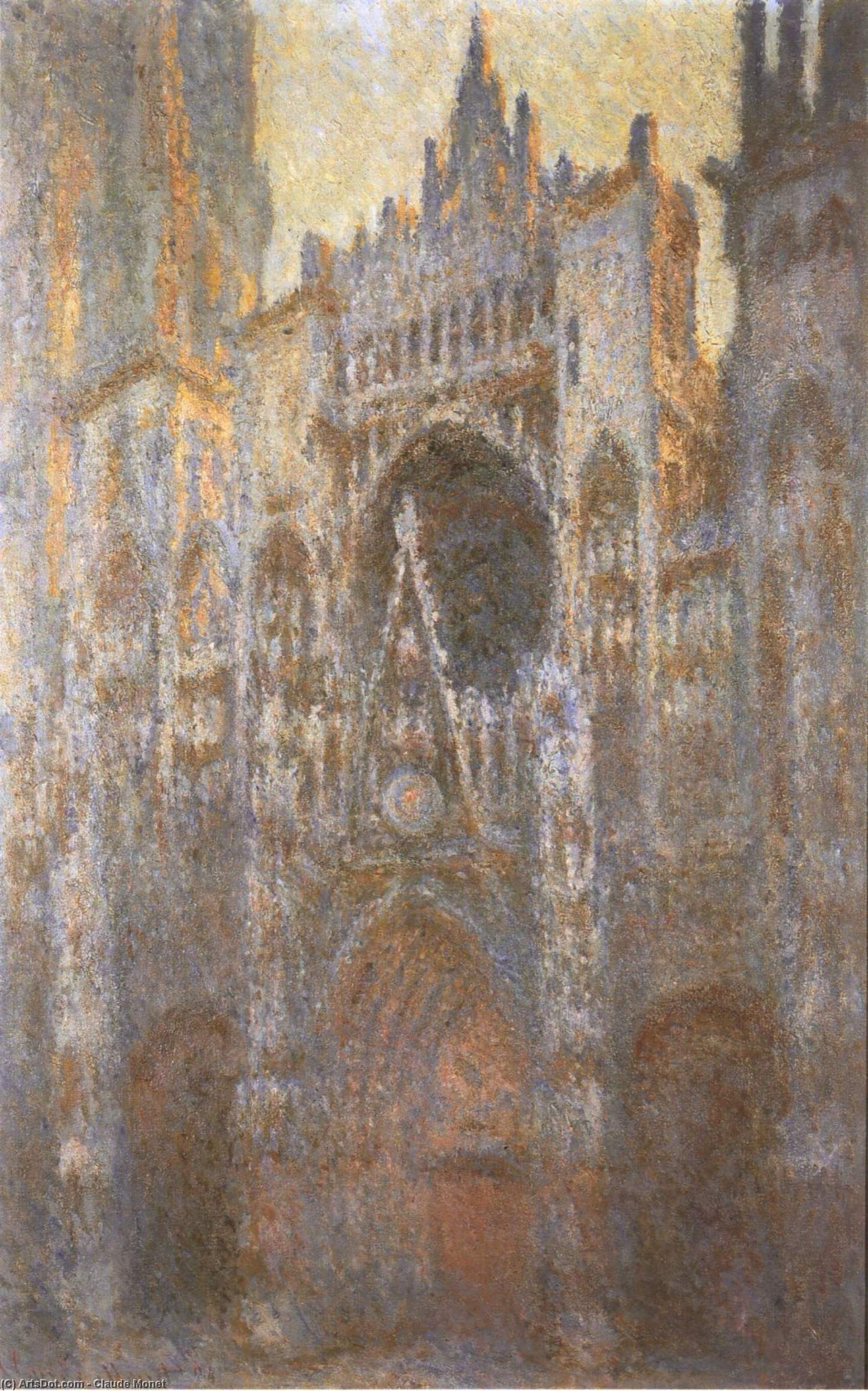
Claude Monet's "Rouen Cathedral 02," painted in 1894, isn’t merely a depiction of a building; it’s an immersion into the very essence of light and atmosphere. This pivotal work from his celebrated series on Rouen Cathedral offers a profound meditation on perception, time, and the ephemeral beauty of the natural world. The cathedral itself—a towering testament to Gothic architecture—becomes a canvas for Monet's revolutionary approach to painting, moving away from fixed representations towards capturing fleeting impressions.
Monet’s decision to return to Rouen Cathedral after years spent in Giverny marked a significant shift in his artistic practice. He had previously focused on landscapes and gardens, but the cathedral presented a unique challenge: a monumental structure that demanded an entirely new way of seeing. He began painting multiple canvases simultaneously, each capturing the same subject under subtly different lighting conditions—a technique he meticulously documented and later theorized about. This relentless pursuit of light’s effects is vividly realized in “Rouen Cathedral 02,” where the building seems to dissolve into a haze of browns, grays, and ochres.
Impressionism at its Most Evocative: Technique and Style
The painting exemplifies the core tenets of Impressionism. Monet employs loose, broken brushstrokes—a hallmark of his style—to suggest form rather than define it precisely. The stonework isn’t rendered with sharp edges but instead appears as a textured mosaic of color, conveying both its solidity and its vulnerability to light. Notice how he uses *impasto* – thick applications of paint – particularly on the vertical surfaces, creating a tactile quality that draws the eye upwards towards the imposing height of the cathedral. The composition is carefully structured, with the strong vertical lines of the building contrasted by the horizontal bands of sky and ground, creating a sense of depth and perspective.
The color palette is deliberately muted, reflecting the overcast skies of Rouen. Monet masterfully uses complementary colors—the blues and oranges—to create visual interest and suggest the play of light on the stone. He’s not striving for photographic accuracy; instead, he's translating his *experience* of seeing – the way the cathedral appears to him at a particular moment in time – onto the canvas.
Symbolism and Emotional Resonance
Rouen Cathedral carries immense historical and symbolic weight. It’s a structure steeped in centuries of religious devotion, architectural innovation, and civic pride. Monet's repeated depictions of the cathedral can be interpreted as an exploration of faith, memory, and the passage of time. The hazy atmosphere evokes a sense of melancholy and contemplation, suggesting that even grand structures are subject to decay and change.
Furthermore, the series’ focus on light—a central element in Monet's artistic philosophy—can be seen as an allegory for the divine presence. Light, like faith, is intangible yet profoundly transformative. “Rouen Cathedral 02” invites us to contemplate not just the beauty of the building itself but also the ephemeral nature of perception and the enduring power of light to shape our experience.
A Legacy of Light: Reproductions and Artistic Inspiration
Reproductions of “Rouen Cathedral 02” offer a remarkable opportunity to bring this iconic work into your home or office. The meticulous detail captured by Monet, combined with his masterful use of color and light, makes it a captivating addition to any collection. Consider how the painting’s atmospheric qualities can complement various interior design styles – from classic and traditional to modern and minimalist. The subtle shifts in tone and texture create a sense of depth and movement that will transform any space.