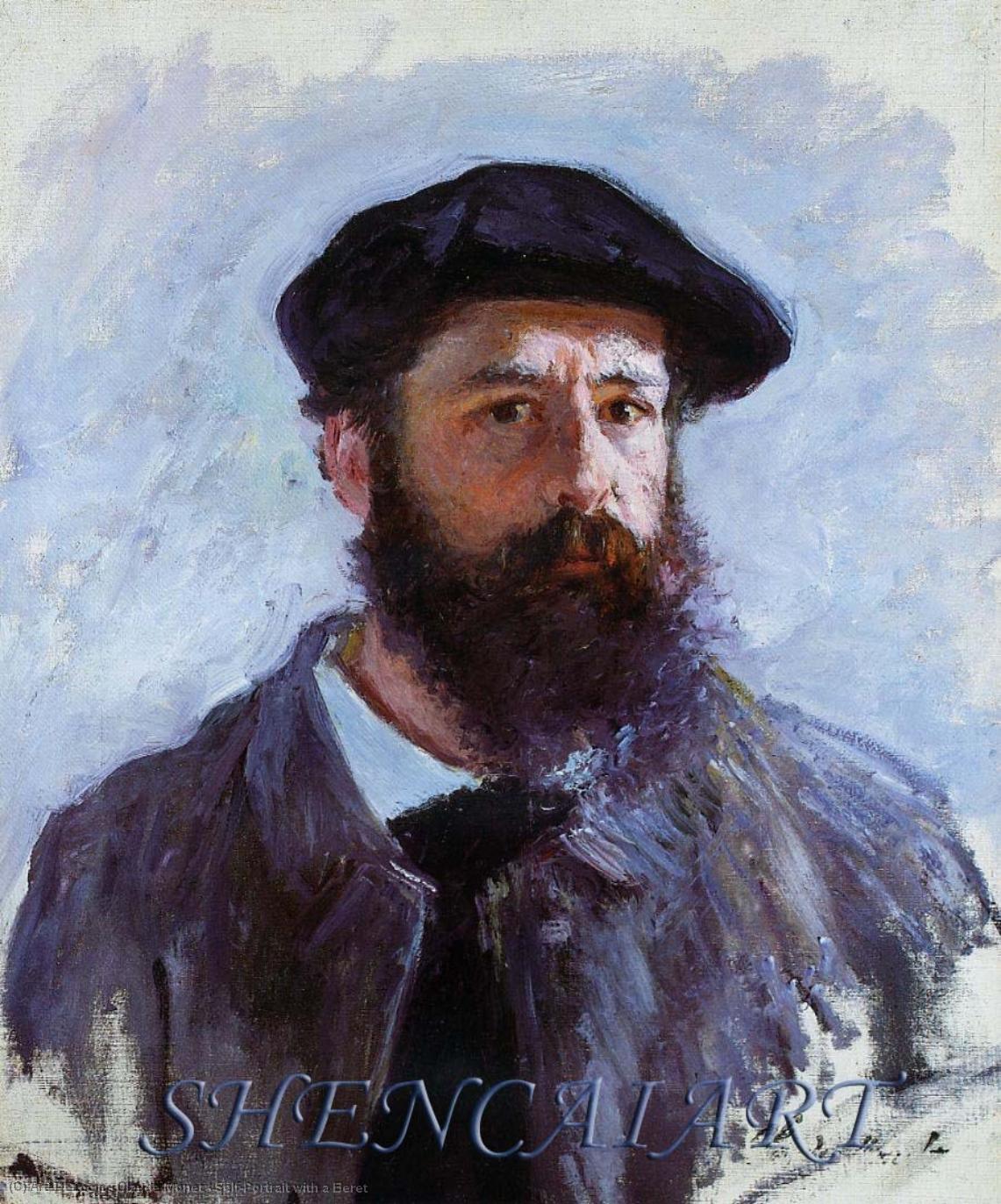
A Window into the Soul: Unveiling Monet’s ‘Self-Portrait with a Beret’
Claude Monet, a name synonymous with Impressionism, possessed an extraordinary ability to capture not just the appearance of a scene but also its fleeting essence. Among his vast and luminous body of work, “Self-Portrait with a Beret” (1886) stands as a particularly poignant example of this talent – a deeply personal and remarkably evocative image that transcends mere representation. More than simply a likeness, it’s a glimpse into the artist's mind, a moment frozen in time, revealing a quiet intensity and a subtle vulnerability rarely seen in his more celebrated landscapes.
Painted during a period of intense self-reflection and artistic experimentation, this oil-on-canvas masterpiece measures 46 x 56 cm. The composition is deceptively simple: Monet himself, rendered with an almost photographic precision, gazes directly at the viewer from a dimly lit interior. He wears a dark beret, a small detail that adds a touch of formality and perhaps even a hint of melancholy to his expression. The background – a cloudy sky glimpsed through a window – provides a sense of depth and mystery, suggesting an inner world just beyond our perception. Two figures are subtly integrated into the scene; one on the left side of the painting and another in the distance on the right, creating a dynamic interplay of space and human presence.
Impressionism’s Revolutionary Light
Monet's technique is undeniably Impressionistic – a radical departure from the academic traditions that dominated art at the time. He employed loose, visible brushstrokes, prioritizing the depiction of light and color over meticulous detail. The paint itself seems to shimmer and dance across the canvas, capturing the ephemeral qualities of a fleeting moment. Notice how he uses broken colors—small dabs of blues, greens, and greys—to create an atmospheric effect, mimicking the way light scatters in the air. This technique was revolutionary for its time, as it broke away from traditional methods of painting by emphasizing the fleeting moments of natural light. It’s a testament to Monet's dedication to observing and translating his sensory experience onto canvas.
The influence of Paul Cézanne is subtly present in this work. Cézanne, often considered a bridge between Impressionism and Cubism, explored the underlying structure of forms through repetitive, exploratory brushstrokes – a technique that Monet adopts here to build up complex fields of color and create a sense of solidity within the atmospheric haze. However, unlike Cézanne’s more geometric approach, Monet retains a fluidity and spontaneity that is characteristic of his style.
A Legacy of Light and Emotion
Monet's “Self-Portrait with a Beret” isn’t just a beautiful painting; it’s a significant cultural artifact. His innovative approach to light, color, and perception paved the way for future art movements, including Cubism, which was pioneered by Pablo Picasso and Georges Braque. These artists built upon Monet's foundation, further exploring abstraction and challenging traditional notions of representation. The impact of Impressionism can be seen in various forms of modern art, from abstract expressionism to contemporary installations – a testament to the enduring power of Monet’s vision.
Today, “Self-Portrait with a Beret” is highly regarded and sought after by museums and collectors alike. The Staatliche Museen zu Berlin houses an impressive collection of European paintings from the 13th to the 18th centuries, including works influenced by Monet. For those who wish to own a piece of art history, Claude Monet: Self-Portrait with a Beret is available as a handmade oil painting reproduction at ArtsDot. This allows art enthusiasts to bring the essence of Monet’s masterpiece into their own homes, experiencing its beauty and emotional depth firsthand.
As we continue to appreciate and study these masterpieces, we are reminded of the enduring power of art to capture our imagination and inspire future generations. Monet's “Self-Portrait with a Beret” remains a poignant reminder of his genius – a window into the soul of one of history’s most influential artists.