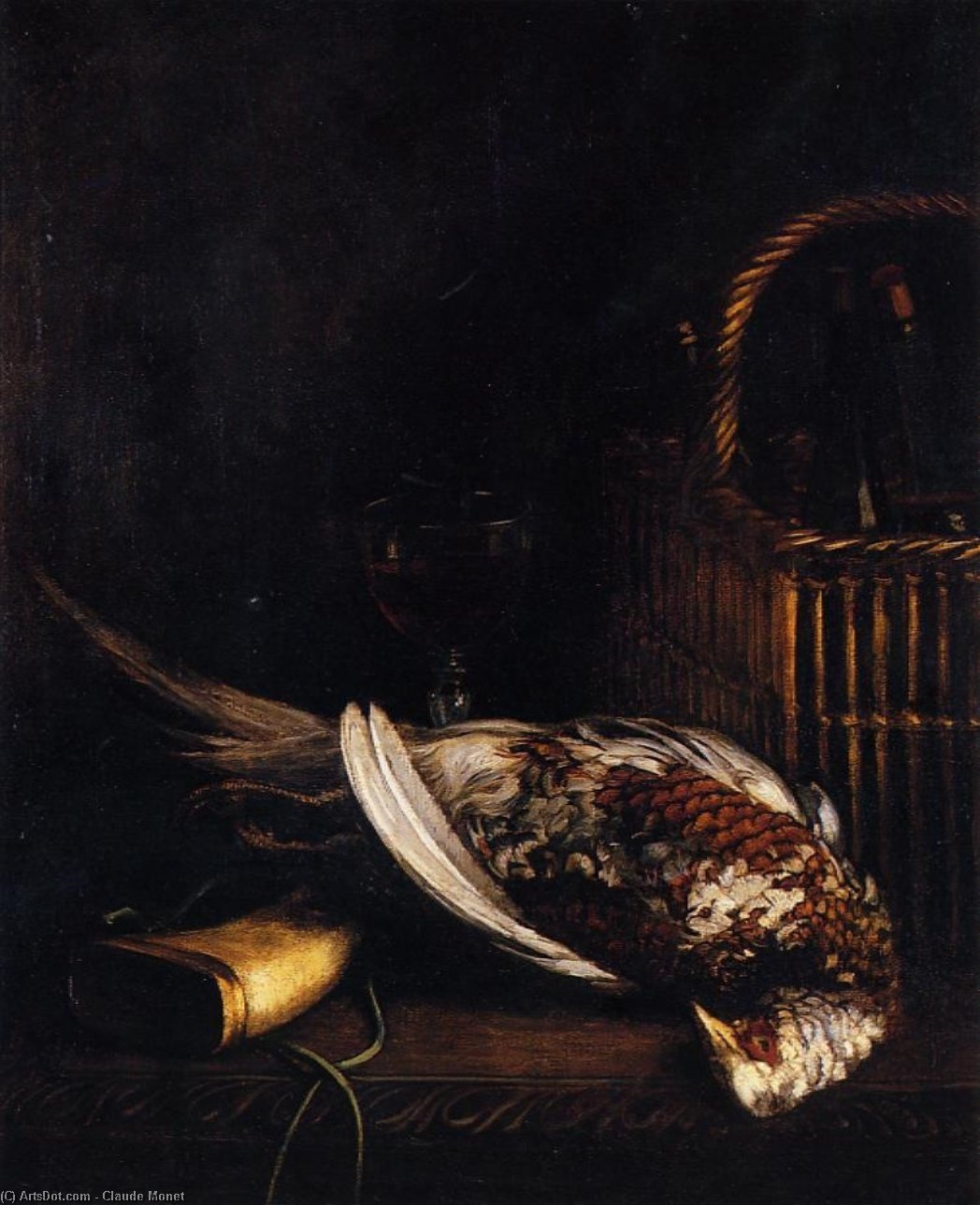
Delve into Claude Monet's early masterpiece, 'Still Life with Pheasant,' exploring its symbolic representation of mortality and Impressionistic techniques—available on ArtsDot.com & Musee des Beaux-Arts.
Explore the world of Claude Monet, the Impressionist master renowned for capturing fleeting light and color through iconic landscapes like Water Lilies & Haystacks.
Still Life with Pheasant – A Window into Monet’s Early Vision
Claude Monet, a name inextricably linked to Impressionism, wasn't merely an artist who painted landscapes; he was a meticulous observer of the ephemeral beauty surrounding him—a true poet of light and color. His formative years in Normandy profoundly shaped his artistic sensibilities, fostering a lifelong fascination with capturing the subtle nuances of natural illumination. This early masterpiece, “Still Life with Pheasant,” painted in 1861, offers a remarkable glimpse into Monet’s burgeoning stylistic explorations and foreshadows the revolutionary techniques that would define his illustrious career.
Composition and Symbolism: Tranquility Amidst Decay
The painting's central focus is undeniably a dead pheasant resting diagonally across the canvas—a deliberate choice reflecting the pervasive theme of mortality within Impressionist art. Surrounding this poignant subject are three wine glasses, arranged with careful consideration, alongside scattered books on a simple wooden table. Monet’s masterful arrangement creates an atmosphere of serene stillness, inviting contemplation and subtly hinting at the passage of time. The dead bird itself serves as a powerful symbol—a reminder that beauty exists even in decay, mirroring the artist's own evolving understanding of artistic expression.
Technique: Pioneering Light and Color – An Impressionistic Breakthrough
Monet’s approach to “Still Life with Pheasant” demonstrates his nascent mastery of Impressionist techniques. Prior to his celebrated series paintings like Haystacks and Water Lilies, this work showcases his groundbreaking experimentation with capturing the fleeting effects of light on everyday objects. The oil paint medium is applied in loose brushstrokes—a characteristic feature of Impressionism—allowing for a vibrant blending of colors that mimics the way sunlight dances across surfaces. Notice particularly the rich reds and browns within the pheasant’s plumage, contrasted against the darker tones of the table and background; these hues are achieved through meticulous layering and subtle glazing – techniques that would become hallmarks of Monet's later masterpieces.
Historical Context: Echoes of Boudin and the Dawn of Impressionism
“Still Life with Pheasant” stands as a crucial stepping stone in Monet’s artistic development, directly influenced by his mentor Eugène Boudin—who championed the revolutionary practice of painting en plein air. Boudin instilled within Monet the conviction that art should strive to reproduce the sensory experience of nature as it appears at any given moment. This ethos aligns perfectly with the broader Impressionist movement, which sought to abandon academic conventions and embrace subjective perception. The painting’s quiet contemplation reflects a reaction against the grand narratives and idealized representations favored by earlier artistic traditions—a deliberate assertion of beauty in its simplest form.
Emotional Impact: A Moment Frozen in Time
Beyond its formal analysis, “Still Life with Pheasant” possesses an undeniable emotional resonance. The melancholic stillness conveyed by Monet’s brushstrokes invites viewers to consider themes of loss and acceptance. Yet, simultaneously, the luminous colors—particularly those capturing the subtle glow of reflected light—suggest a celebration of life's fleeting beauty. It is this duality – the juxtaposition of sorrowful contemplation with radiant optimism – that elevates “Still Life with Pheasant” beyond mere visual representation; it becomes an evocative meditation on the human condition and a testament to Monet’s enduring legacy as one of art history’s most perceptive observers of light and emotion.