A profound meditation on spirituality through the Crucifixion by Claude Monet captures the transformative power of light and Early Renaissance detail, inviting you to explore this luminous masterpiece for your collection.
Explore the world of Claude Monet, the Impressionist master renowned for capturing fleeting light and color through iconic landscapes like Water Lilies & Haystacks.
Claude Monet’s Reverie: Exploring Faith and Light Through ‘The Crucifixion’ and ‘The Resurrection’
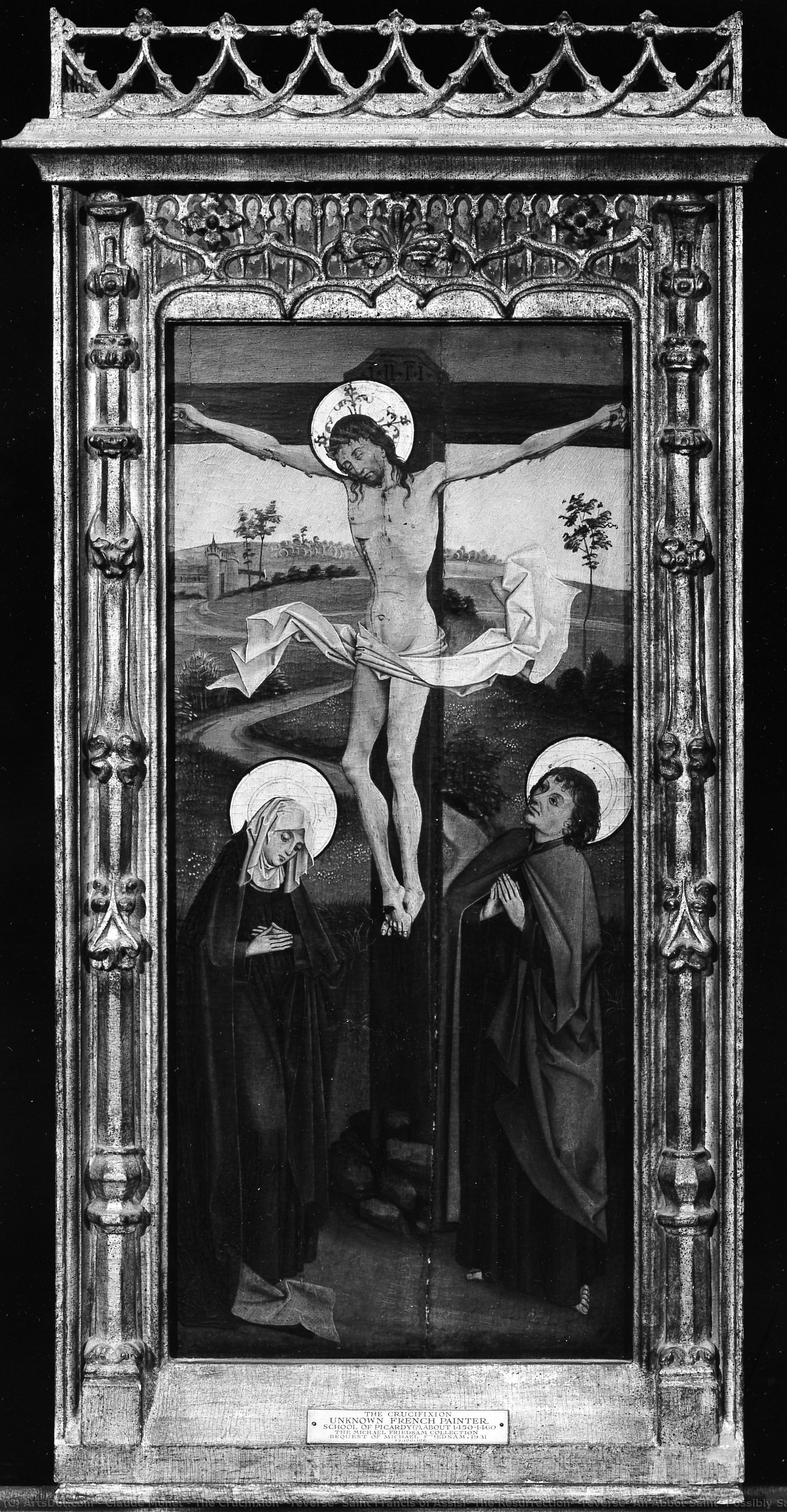
Claude Monet's monumental panel painting, “The Crucifixion, (reverse) Saint Francis of Assisi; The Resurrection, (reverse) An Abbot Saint, Possibly Saint Benedict,” transcends mere depiction—it embodies a profound meditation on spirituality and the transformative power of natural light. Executed around 1460 by Northern French Painter, this artwork stands as a testament to the artistic fervor of the Early Renaissance, blending meticulous detail with an ethereal aesthetic that continues to captivate audiences today. Its presence within The Friedsam Collection underscores its enduring significance as a masterpiece of devotional art.
A Composition Steeped in Symbolism
The painting’s central focus is undeniably Jesus Christ on the cross—a motif deeply rooted in Christian iconography and representing sacrifice, suffering, and redemption. Alongside him are figures venerating Mary Magdalene and Saint Francis of Assisi, symbolizing compassion and humility – key virtues championed by both saints. The Abbot Saint, possibly Benedict, embodies monastic piety and contemplation. These figures aren’t merely passive observers; they engage in prayerful devotion, reflecting the spiritual essence of the scene. The landscape backdrop—characterized by stylized trees and a distant horizon—serves as more than just scenery; it symbolizes Paradise regained, offering solace and hope amidst earthly tribulations. Monet skillfully employs these elements to convey a narrative rich in theological symbolism.
Technique and Artistic Vision: Impressionistic Echoes
Monet’s masterful technique reflects the burgeoning influence of Impressionism, despite its execution predating the movement's formal establishment. Oil paint on wood demonstrates careful layering and blending—evident from subtle brushstrokes that capture the nuances of light and texture. The artist prioritized capturing fleeting atmospheric conditions, prioritizing luminosity over precise representation. This approach is particularly noticeable in the depiction of the cross itself, where Monet skillfully renders the interplay of shadows and highlights to imbue the image with a palpable sense of solemnity. The flattened perspective contributes to an overall feeling of serenity and contemplation—a hallmark of Monet’s artistic sensibility.
Historical Context: Renaissance Faith and Artistic Innovation
“The Crucifixion” emerged during a period marked by significant religious revival in Northern France, fueled by the fervor for Saint Francis of Assisi's teachings on poverty and humility. This painting exemplifies the humanist spirit of the Renaissance—a movement that celebrated human intellect and artistic creativity while simultaneously reaffirming Christian beliefs. Monet’s decision to depict these saints alongside Christ underscores the importance of compassion and spiritual contemplation within the broader cultural landscape of his time. The artwork’s stylistic choices – prioritizing luminous color palettes and expressive brushwork – foreshadowed the groundbreaking innovations that would characterize Impressionism, cementing Monet's legacy as a pioneer of modern art.
Emotional Resonance: A Window into Spiritual Reflection
Ultimately, “The Crucifixion” and “The Resurrection” resonate deeply with viewers through their evocative portrayal of faith and contemplation. Monet’s masterful use of light—diffused and even—creates an atmosphere of solemn reverence, inviting introspection and fostering a connection to the spiritual realm. The painting's enduring appeal lies in its ability to transcend temporal boundaries, communicating timeless themes of sacrifice, compassion, and hope. A high-quality reproduction allows admirers to experience this profound artistic vision firsthand, transporting them back to a moment of serene beauty and spiritual contemplation.