Explore the world of Claude Monet, the Impressionist master renowned for capturing fleeting light and color through iconic landscapes like Water Lilies & Haystacks.
Claude Monet’s Impressionistic Vision of Tranquility
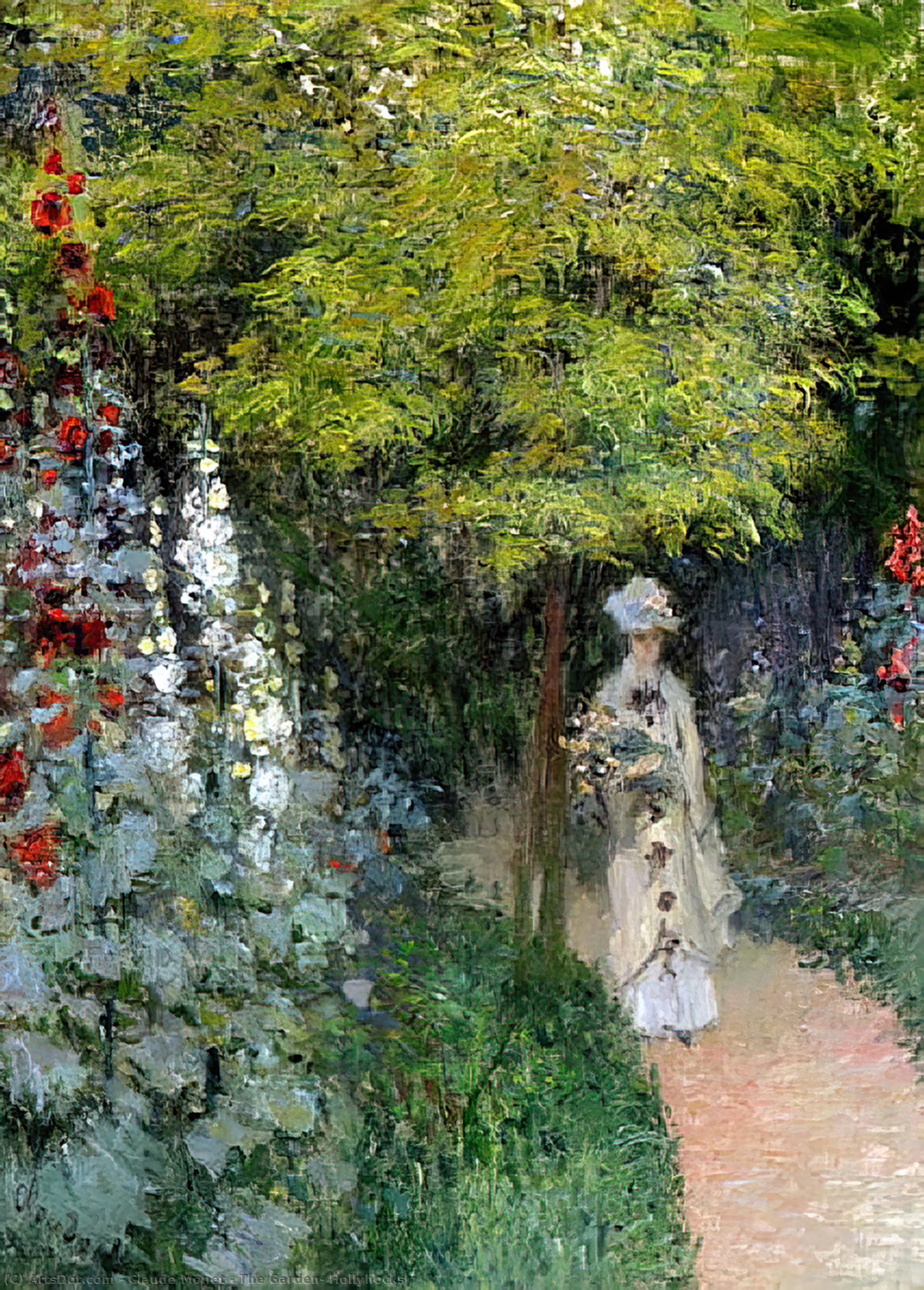
Claude Monet's "The Garden, Hollyhocks," painted in 1877, stands as an emblem of Impressionism—a movement that fundamentally challenged artistic conventions and prioritized capturing the immediacy of sensory experience. More than just a depiction of a garden scene, it’s a meditation on light, color, and the artist's subjective perception of nature, encapsulating the spirit of its time. Monet wasn’t striving for photographic accuracy; instead, he sought to convey the feeling of being *there*, immersed in the beauty of the natural world as he perceived it—a revolutionary concept for the art world of the Victorian era.
Composition and Technique: Embracing Fleeting Light
The painting's composition is deceptively simple yet remarkably effective. Monet employs a horizontal format, emphasizing the expansive expanse of the garden itself. A dirt path winds through the lush foliage, drawing the viewer’s eye into the scene. Dominating the canvas are towering hollyhocks—their vibrant red and white blossoms punctuating the greenery with bursts of color. The artist utilizes loose brushstrokes—characteristic of Impressionism—to render the flowers and trees. These strokes aren't blended smoothly; rather, they retain their individual texture, creating a palpable sense of movement and capturing the shimmering quality of sunlight filtering through the branches. Monet’s masterful use of *plein air* painting—working outdoors directly from observation—allowed him to accurately reproduce the subtle nuances of light as it shifted throughout the day.
A Portrait Within Landscape: Camille Doncieux and Artistic Intention
At the center of the composition stands a woman, likely Camille Doncieux, Monet’s first wife. She walks along the path, dressed in a hat—a fashionable accessory of the period—adding to the garden's serene ambiance. Monet portrays her figure subtly blended into the landscape, mirroring the Impressionist preoccupation with dissolving boundaries between subject and environment. This technique isn’t merely stylistic; it reflects Monet’s belief that art should capture not just what is seen but also how one *feels* when confronted by beauty—a profound statement about the role of emotion in artistic expression. The woman's presence serves as a focal point, grounding the viewer within this immersive visual experience.
Symbolism and Historical Context: Reflecting Romantic Ideals
“The Garden, Hollyhocks” resonates with themes prevalent in Romantic art – an appreciation for nature’s grandeur and its ability to inspire contemplation. Hollyhocks themselves hold symbolic significance, representing purity, devotion, and remembrance—references to Monet's personal life and his idealized vision of domestic tranquility. Painted during a period marked by significant social and artistic upheaval, Impressionism represented a rejection of academic formalism and an embrace of subjective experience. Monet’s work aligns with this broader movement’s desire to liberate art from rigid conventions and explore the transformative power of perception. It stands as a testament to Monet's unwavering commitment to capturing the ephemeral beauty of the natural world—a legacy that continues to inspire artists and collectors today.
Emotional Impact: Capturing Serenity and Wonder
Ultimately, “The Garden, Hollyhocks” succeeds in conveying a profound sense of serenity and wonder. The soft light, vibrant colors, and textured brushstrokes combine to create an atmosphere of tranquility—inviting the viewer to step into Monet’s world and experience the sublime beauty of a sunlit garden. It's a painting that speaks to our innate desire for connection with nature and reminds us of the importance of savoring fleeting moments of joy and contemplation—a timeless masterpiece that embodies the enduring spirit of Impressionism.