Explore Monet's legacy and immerse yourself in Impressionist art at Musée Marmottan Monet.
Explore the world of Claude Monet, the Impressionist master renowned for capturing fleeting light and color through iconic landscapes like Water Lilies & Haystacks.
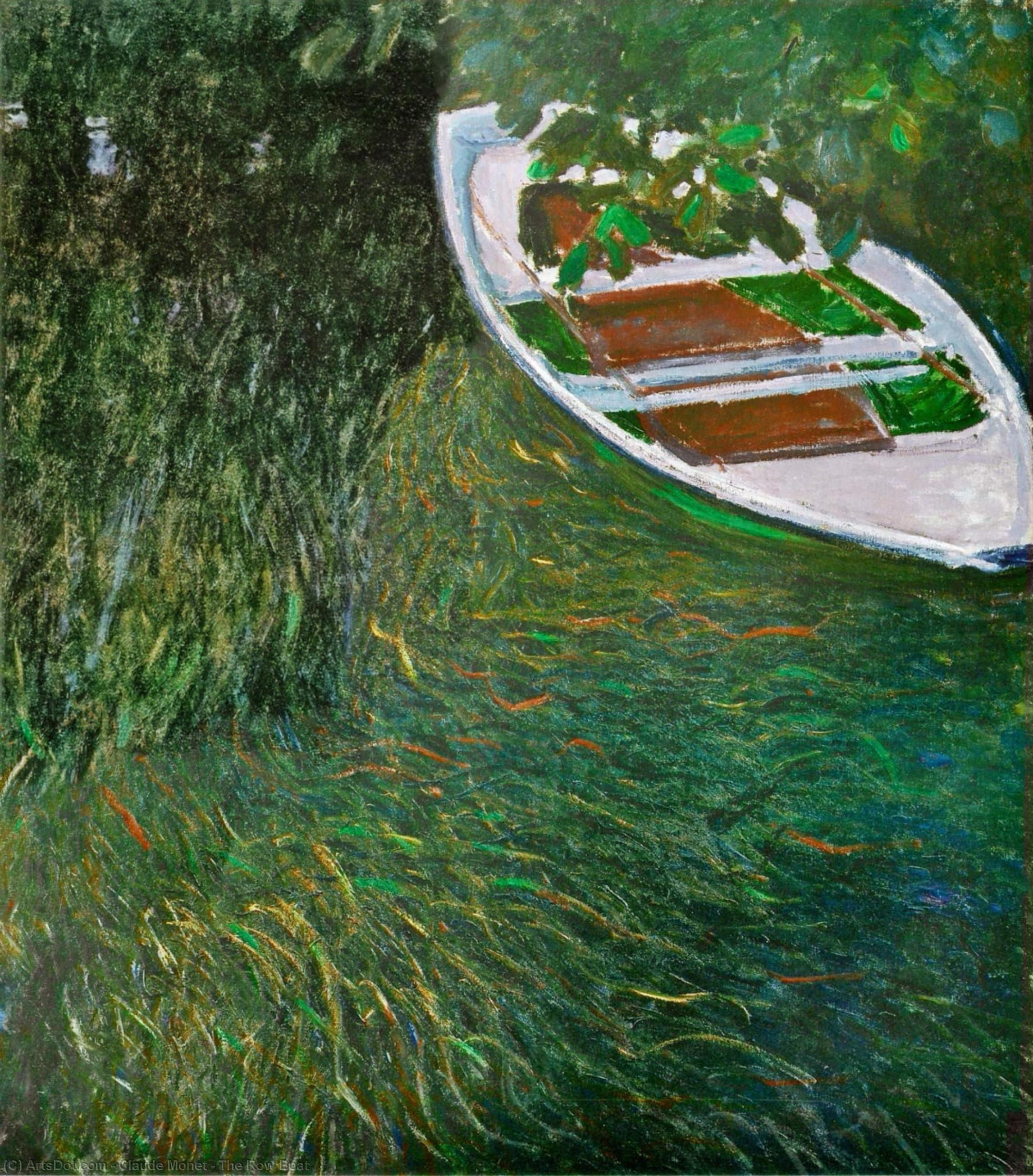
The Row Boat
Claude Monet, one of the most celebrated artists of the Impressionist movement, left an indelible mark on the world of art with his captivating paintings. Among his notable works is “The Row Boat,” a masterpiece that embodies the essence of serenity and tranquility.
Artistic Vision
"The Row Boat" (1887) is a quintessential representation of Monet’s Impressionist style, characterized by soft brushstrokes and an emphasis on capturing light. The painting depicts a serene scene where a row boat glides across the water, surrounded by lush greenery. The atmosphere is peaceful, inviting the viewer to step into the tranquil world that Monet has created. It's more than just a depiction of a landscape; it’s an attempt to convey the feeling of stillness and contemplation—a core principle of Impressionism.
Composition and Technique
Monet’s composition in “The Row Boat” is noteworthy for its balance and harmony. The main subject, the row boat, is placed centrally, drawing the viewer's attention. The surrounding landscape, with its vibrant greens and subtle reflections on the water, adds depth and dimension to the painting. Monet’s use of light is a defining feature of his work, and in “The Row Boat,” he skillfully captures the play of sunlight on the water and foliage. He achieves this through layering thin washes of color—a technique known as *glazing*—allowing hues to blend seamlessly and creating an ethereal luminosity that distinguishes Impressionist art from earlier academic styles. The brushstrokes themselves are loose and visible, contributing to the painting’s textural quality and conveying a sense of spontaneity.
Artistic Influences
Monet was influenced by various artists and movements during his career. His association with other Impressionist painters, such as Theodore Robinson, is evident in his work. For example, Robinson's "Giverny" /art/list/?Filter=theodore+robinson,theodore,robinson) shares a similar serene and naturalistic approach. Robinson’s exploration of tonal landscapes—emphasizing subtle gradations of color to depict atmospheric conditions—directly impacted Monet's own compositional choices.
Legacy and Impact
“The Row Boat” is part of Monet’s extensive oeuvre, which has had a profound impact on modern art. His innovative techniques and emphasis on light paved the way for subsequent artistic movements, including Expressionism and Fauvism. The influence of Impressionism can be seen in the works of later artists like Vincent van Gogh /art/list/?Filter=D3XVH7-Vincent+van+Gogh,vincent,gogh), who was inspired by Monet’s use of color and light. Van Gogh's expressive brushstrokes and vibrant palette owe a considerable debt to Monet’s pioneering approach to capturing the immediacy of visual experience—a legacy that continues to resonate with artists today.
Preservation and Display
“The Row Boat” is housed in the Musée Marmottan Monet in Paris, France /art/list/?Filter=8YDSCY-Claude+Monet-+The+Row+Boat). This museum is dedicated to preserving and showcasing Monet’s works, providing a unique opportunity for art enthusiasts to experience his masterpieces firsthand. The museum's carefully controlled environment ensures that the painting remains in optimal condition for generations to come—a testament to the enduring beauty and significance of Monet’s artistic vision.
Monet's legacy continues to inspire artists and captivate audiences around the world. His work serves as a reminder of the power of art to evoke emotions and create lasting impressions.