Subject and Composition: A Vibrant Still Life
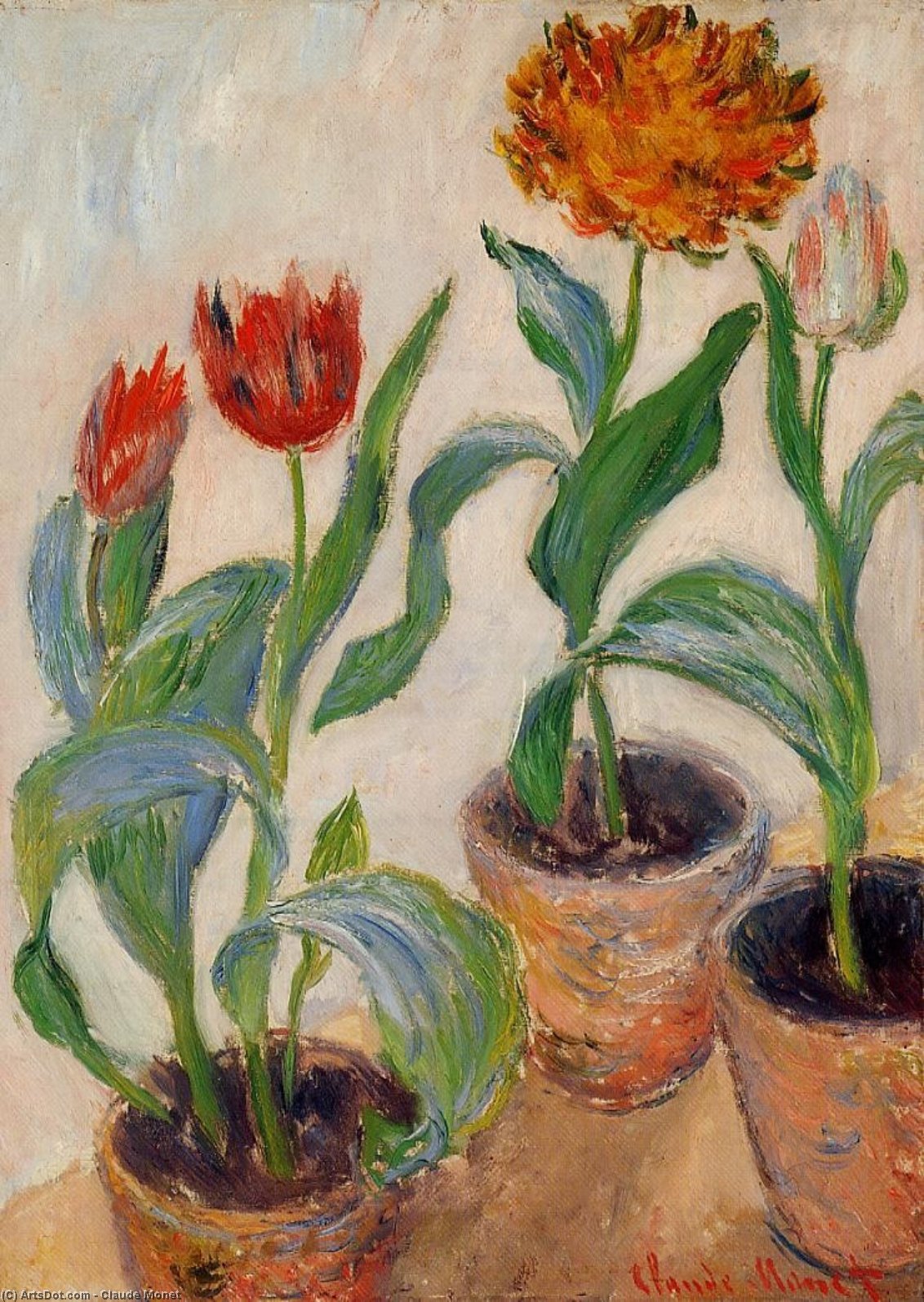
Claude Monet's "Three Pots of Tulips," painted in 1883, presents a charming still life scene centered around three terracotta pots brimming with vibrant tulips and interspersed with yellow daisies. The composition is deceptively simple; however, it showcases Monet’s mastery in capturing the fleeting effects of light and color. The arrangement isn't rigidly formal but rather feels spontaneous, as if observed directly from nature. Two birds are subtly incorporated into the background, adding a touch of liveliness to the otherwise serene scene. The pots themselves are rendered with textured brushstrokes, hinting at their rough materiality while remaining secondary to the brilliance of the floral display.
Impressionistic Technique and Color Palette
"Three Pots of Tulips" is a quintessential example of Impressionism. Monet employed his signature technique of plein air painting – working outdoors directly from observation – allowing him to capture the immediate sensory experience of the scene. Loose, visible brushstrokes are characteristic throughout the canvas; they don't blend smoothly but rather create a textured surface that vibrates with energy. The color palette is dominated by bright, saturated hues: fiery reds and oranges in the tulips contrast beautifully with the sunny yellows of the daisies and the earthy tones of the pots. Monet skillfully uses light and shadow to define form and create depth, avoiding harsh outlines and instead relying on subtle shifts in color intensity.
Historical Context and Artistic Movement
Painted during a period of significant artistic innovation, "Three Pots of Tulips" reflects the burgeoning Impressionist movement in late 19th-century France. Impressionism emerged as a reaction against the academic conventions of the Salon system, which favored historical and mythological subjects rendered with meticulous detail. Monet and his contemporaries sought to capture the subjective experience of seeing – the fleeting impressions of light and atmosphere that constantly change. This painting was created during a time when artists were increasingly interested in depicting everyday life and scenes from nature, moving away from traditional artistic hierarchies.
Symbolism and Emotional Impact
While seemingly straightforward, "Three Pots of Tulips" carries subtle symbolic weight. Tulips, historically associated with love and affection, contribute to the painting's overall sense of warmth and beauty. The vibrant colors evoke feelings of joy, optimism, and renewal – qualities often linked to springtime and the blossoming of nature. Monet’s ability to translate these sensory experiences onto canvas creates a deeply emotional impact; viewers are invited not just to see the flowers but also to feel the warmth of the sunlight and the gentle breeze that might have inspired the artist. The inclusion of birds adds a sense of freedom and natural harmony, further enhancing the painting's uplifting quality.
A Timeless Masterpiece
"Three Pots of Tulips" stands as a testament to Claude Monet’s artistic genius and his profound connection with nature. Its vibrant colors, dynamic brushwork, and evocative subject matter continue to captivate audiences today, making it a cherished example of Impressionist art and a source of enduring beauty.