A Glimpse into Belle Époque Leisure: Claude Monet’s *Victor Jacquemont Holding a Parasol*
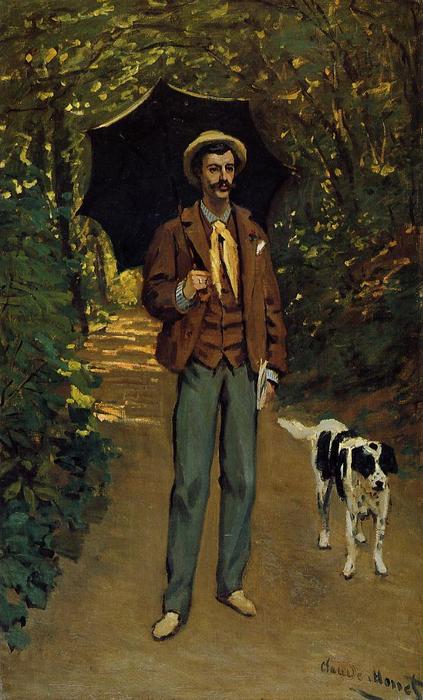
Claude Monet's 1865 painting, *Victor Jacquemont Holding a Parasol*, is more than just a portrait; it’s a captivating snapshot of modern life emerging within the heart of nature. This work beautifully encapsulates the spirit of the Belle Époque – an era defined by burgeoning leisure and a renewed appreciation for the outdoors. The scene depicts Monet's friend, Victor Jacquemont, elegantly strolling along a woodland path accompanied by his dog, embodying a sense of relaxed sophistication.
Impressionistic Beginnings: Style & Technique
Though predating the full bloom of Impressionism, *Victor Jacquemont Holding a Parasol* demonstrates key characteristics that would come to define the movement. Monet eschews the meticulous detail favored by academic painters in favor of capturing the *impression* of light and atmosphere. Notice his use of loose, visible brushstrokes – not blended smoothly, but applied with an energetic spontaneity. This technique creates a sense of movement and vibrancy, as if the scene is shimmering before your eyes. The color palette, while restrained compared to Monet’s later works, is nonetheless lively, utilizing subtle variations in greens and browns to depict the lush foliage. The dappled light filtering through the trees is suggested rather than precisely rendered, contributing to the painting's overall atmospheric quality.
Context & Composition: A Moment in Time
Created during a period of significant social change, this painting reflects a growing middle class with increased disposable income and leisure time. The inclusion of details like the handbag near the bench adds a touch of realism, grounding the scene in everyday life. The composition is carefully balanced; Jacquemont’s upright figure provides a central focus, while the surrounding greenery creates a sense of depth and enclosure. The path itself draws the viewer's eye into the painting, inviting us to join the stroll. Two benches flank the pathway, hinting at opportunities for rest and social interaction – hallmarks of this evolving modern lifestyle.
Symbolism & Emotional Resonance
The parasol is a particularly evocative symbol in this work. Beyond its practical function of providing shade, it represents refinement and status—a fashionable accessory enjoyed by the upper classes. It also subtly suggests protection and privacy within the public space of the park. The presence of the dog symbolizes companionship and loyalty, adding a layer of warmth to the scene. Overall, the painting evokes a feeling of tranquility, peacefulness, and quiet contemplation. It’s an invitation to slow down, appreciate the beauty of nature, and savor a moment of respite from the bustle of modern life.
Monet's Legacy & Collecting Today
- A Pivotal Work: *Victor Jacquemont Holding a Parasol* is an important early work by Monet, showcasing his developing style and foreshadowing the innovations that would define Impressionism.
- Interior Design Appeal: The painting’s harmonious color palette and serene subject matter make it an ideal addition to a variety of interior design schemes – from traditional drawing rooms to contemporary living spaces. Its calming presence can enhance any room, bringing a touch of French elegance and artistic sophistication.
- Collecting Impressionism: For collectors seeking to acquire a piece of art history, this work represents an accessible entry point into the world of Monet and Impressionism. High-quality reproductions allow enthusiasts to enjoy the beauty and artistry of this masterpiece without the expense of an original.
- Museum Presence: While not always on permanent display, works by Monet are prominently featured in major museums worldwide, including the Musée Marmottan Monet in Paris and the California Palace of the Legion of Honor in San Francisco.
This painting is a testament to Monet’s enduring ability to capture fleeting moments of beauty and transform them into timeless works of art.