A Serene Oasis: Exploring Monet’s “Water Lilies (27)”
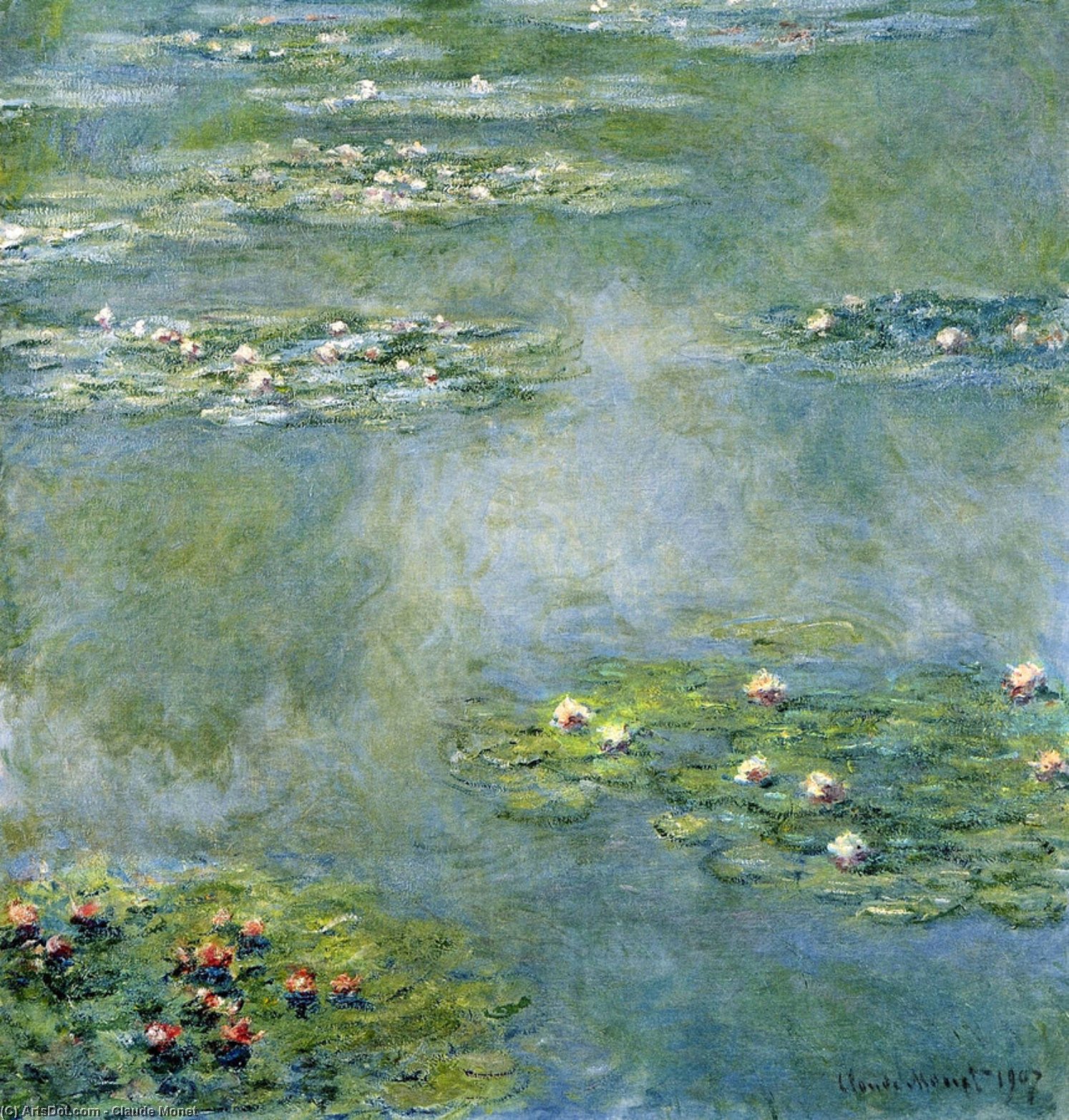
Claude Monet's "Water Lilies (27)," painted in 1907, is a quintessential example of the artist’s enduring fascination with nature and his groundbreaking contributions to Impressionism. This work isn’t merely a depiction of a garden pond; it’s an immersive experience, inviting viewers into a world of tranquil beauty and fleeting light.
Subject & Composition
The painting focuses on the surface of Monet's beloved water lily pond at Giverny. Floating blossoms and lush green pads dominate the canvas, their forms gently reflected in the still water below. A subtle inclusion – a small frog nestled amongst the foliage – adds a touch of life and spontaneity to the scene. The composition is deliberately horizontal, emphasizing the expansive quality of the water and sky, creating a sense of limitless space.
Impressionistic Technique & Style
- Broken Brushstrokes: Monet masterfully employs short, broken brushstrokes to capture the shimmering effects of light on the water’s surface and the delicate textures of the plants. This technique is a hallmark of Impressionism, prioritizing sensation over precise representation.
- Vibrant Color Palette: A rich yet harmonious palette of greens, blues, pinks, and whites evokes the vibrancy of nature. Monet doesn’t mix colors on his palette but applies them directly to the canvas, allowing the viewer's eye to blend them optically.
- Emphasis on Light & Atmosphere: The painting isn’t about *what* is depicted, but *how* it appears under specific lighting conditions. Monet sought to capture the ephemeral quality of light and its transformative effect on color and form.
Historical Context & Artistic Influences
Painted during a pivotal period in art history, “Water Lilies (27)” reflects the shift away from academic realism towards subjective experience. Monet was at the forefront of this movement, challenging traditional artistic conventions and paving the way for modern art. While firmly rooted in Impressionism, his work also demonstrates influences from Symbolism and Art Nouveau – movements that explored emotional expression and the beauty of natural forms.
Symbolism & Emotional Impact
Beyond its aesthetic appeal, “Water Lilies (27)” carries symbolic weight. The water lily itself often represents purity, enlightenment, and rebirth. The pond can be interpreted as a microcosm of the natural world, reflecting themes of harmony, tranquility, and the cyclical nature of life. The painting evokes a sense of peaceful contemplation, inviting viewers to escape the stresses of modern life and reconnect with the beauty of nature.
Interior Design & Collecting
A reproduction of “Water Lilies (27)” would be a stunning addition to any interior. Its calming color palette and serene subject matter make it ideal for bedrooms, living rooms, or meditation spaces. The painting’s horizontal format lends itself well to larger walls, creating a focal point that draws the eye and promotes relaxation. As part of Monet's celebrated series, owning a high-quality reproduction connects you to a legacy of artistic innovation and enduring beauty.
Further Exploration
To delve deeper into Monet’s world, consider visiting the Musée de l'Orangerie in Paris, home to his monumental Water Lilies murals. Exploring other works from the series, such as “Water Lilies (8)” and “Water Lilies (13),” will further illuminate the artist’s evolving vision and mastery of Impressionistic technique.