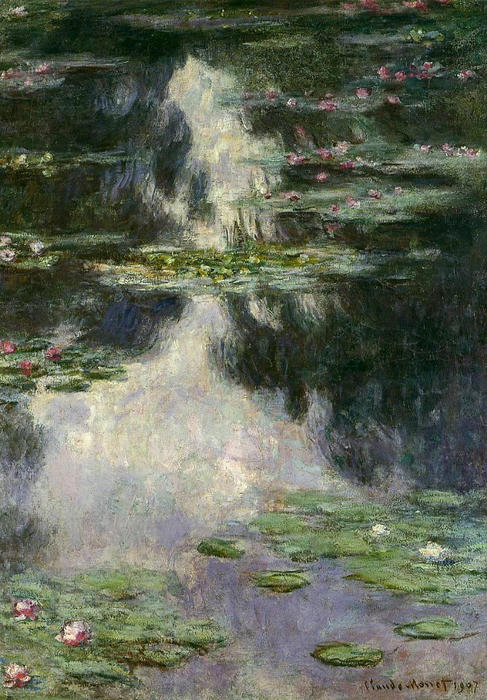
A Window into Impressionism’s Soul
Claude Monet's “Water Lilies” isn’t merely a depiction of flowers; it’s an immersion in the very essence of Impressionist philosophy. Painted between 1907 and 1926, during his twilight years at Giverny—a garden he meticulously crafted as a living laboratory for capturing fleeting moments of natural beauty—this monumental series transcends simple representation. It embodies Monet's unwavering dedication to portraying how light dances upon surfaces, transforming ordinary scenes into ethereal visions.
The Garden’s Canvas: Technique and Composition
Monet’s masterful technique is immediately apparent. He employed a revolutionary method—plein air painting—working directly outdoors for extended periods, applying thick impasto strokes of pigment onto canvas wet with linseed oil. This approach allowed him to capture the subtle nuances of color and luminosity that would dissipate if he attempted to paint indoors. The composition itself is deceptively simple: a tranquil pond dominated by dozens of water lilies – predominantly white and pink blossoms—their reflections shimmering on the glassy surface. Monet’s careful arrangement creates a sense of depth and perspective, guiding the viewer's eye across the canvas.
Symbolism Rooted in Observation
Beyond its aesthetic beauty, “Water Lilies” carries profound symbolic weight. For Monet, the pond represented not just a picturesque landscape but also a microcosm of the natural world—a space where he could observe and record the ceaseless transformations brought about by weather and time. The lilies themselves symbolize purity, serenity, and rebirth – themes central to Impressionist spirituality. Furthermore, Monet’s obsessive repetition of the same subject matter served as a deliberate challenge to academic conventions that prioritized idealized depictions over honest observation.
Historical Context: Embracing Modernity
“Water Lilies” emerged during a pivotal moment in art history—the burgeoning Impressionist movement. Artists like Monet rejected the rigid rules of Salon exhibitions, favoring instead informal gatherings where they could experiment with new approaches to painting. They sought to capture the sensory experience of everyday life, prioritizing color and light over meticulous detail. This series represents a decisive break from traditional artistic traditions, establishing Impressionism as a cornerstone of modern art.
Emotional Resonance: A Meditation on Beauty
Looking at “Water Lilies” is akin to entering a meditative space. Monet’s masterful use of color—particularly the interplay between warm yellows and oranges reflecting sunlight and cool blues mirroring the pond’s depths—evokes a palpable sense of tranquility and wonder. The painting invites contemplation, prompting viewers to appreciate the ephemeral beauty of nature and the transformative power of artistic vision. It remains an enduring testament to Monet's genius and his unwavering belief in the primacy of perception.