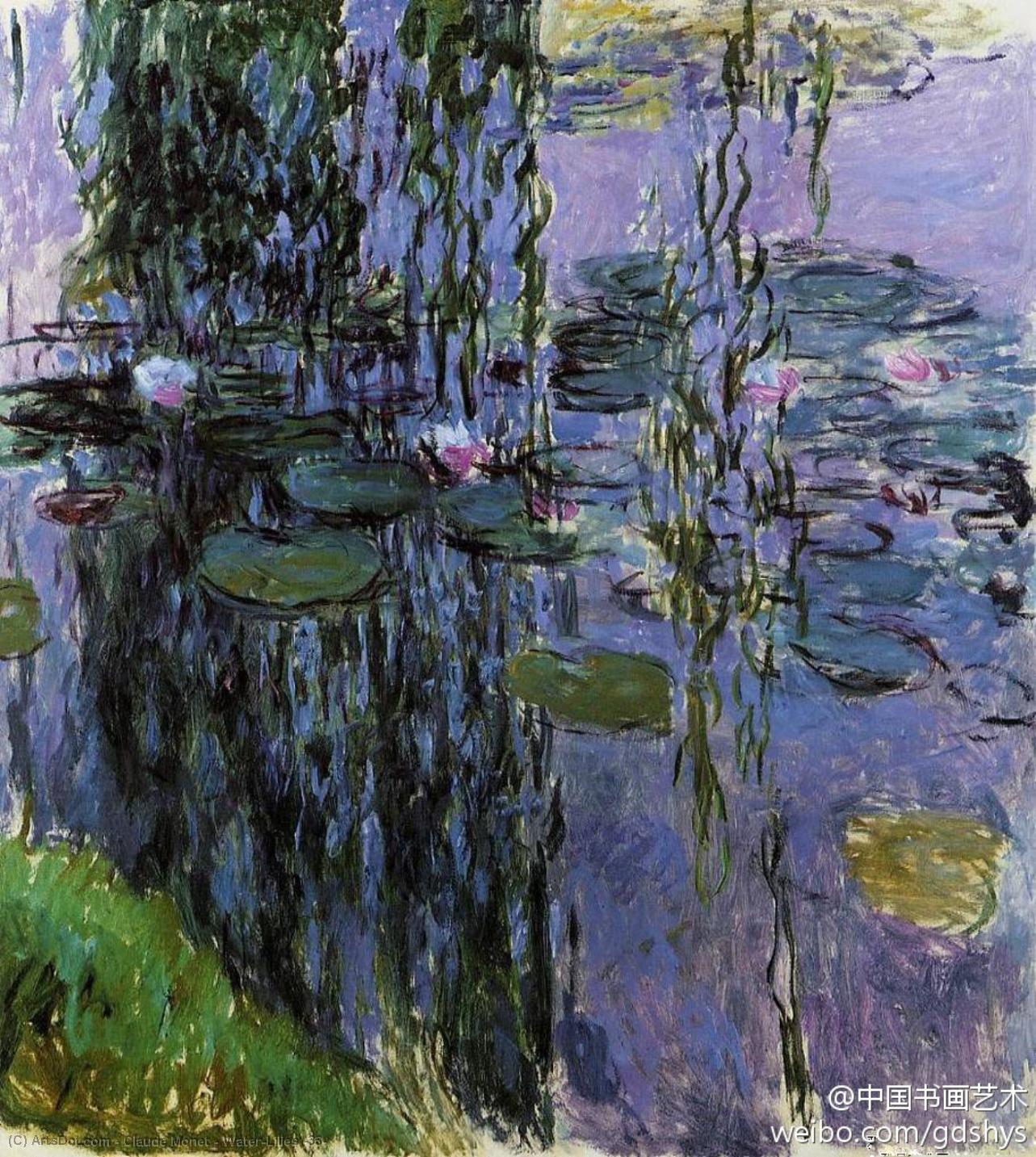
Water-Lilies (33) by Claude Monet: A Serene Impression
- Title: Water-Lilies (33)
- Artist: Claude Monet
- Date: 1916
- Medium: Oil on Canvas
- Size: Unknown
- Location: Musée Marmottan Monet, Paris, France
A Glimpse into Monet's Water Garden
Claude Monet’s Water-Lilies (33) is a quintessential example of his innovative and captivating Impressionist style. Painted in 1916, this oil on canvas transports the viewer to the serene beauty of Monet’s own water garden at Giverny. The painting depicts a close-up view of the pond's surface, showcasing floating water lilies and purple flowers amidst reflections of light and color. Monet masterfully captures the ephemeral qualities of nature – the play of sunlight on water, the subtle shifts in hue, and the overall atmosphere of tranquility.
Impressionism and Monet’s Series Paintings
As a founder of French Impressionism, Monet was dedicated to capturing fleeting moments and sensory experiences. His Water Lilies series exemplifies this approach through his technique of painting the same subject at different times of day, under varying weather conditions. This allowed him to study and portray the effects of light, time, and atmosphere on color and contrast. The term "Impressionism" itself originates from Monet's work Impression, Sunrise, highlighting the movement’s focus on capturing immediate visual impressions rather than precise representations.
Symbolism and Emotional Impact
Beyond its aesthetic beauty, Water-Lilies (33) carries symbolic weight. The water lilies themselves represent tranquility, purity, and rebirth – themes that resonated deeply with Monet during a period marked by personal loss and the devastation of World War I. The painting evokes a sense of peace and contemplation, inviting viewers to immerse themselves in the serene beauty of nature. The lack of distinct horizon lines or clear spatial depth creates an immersive experience, blurring the boundaries between reality and dream.
A Legacy of Artistic Innovation
Water-Lilies (33) stands as a testament to Monet’s enduring legacy as one of history's most influential artists. His dedication to capturing the essence of light and color revolutionized painting, paving the way for modern art movements. The Musée Marmottan Monet houses an impressive collection of Impressionist works, including many masterpieces by Claude Monet, making it a must-visit destination for art enthusiasts seeking to explore his profound contributions to the world of art.