A Symphony of Light and Reflection: Claude Monet’s “Water Lilies (55)”
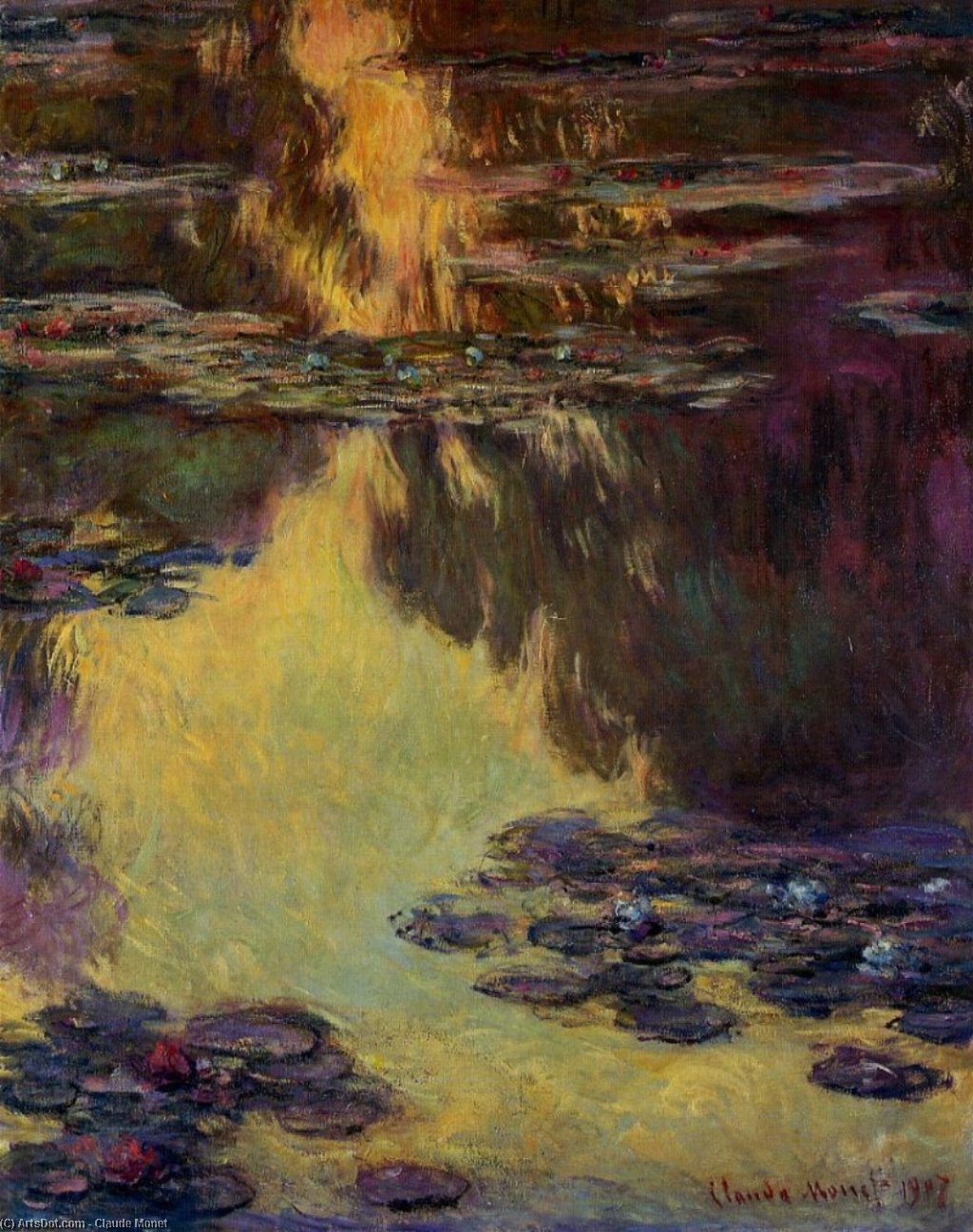
Claude Monet's "Water Lilies (55)," painted in 1907, isn’t merely a depiction of a pond; it’s an immersion into the very essence of Impressionism – a fleeting moment captured with audacious color and a profound understanding of light. This magnificent oil on canvas, now available as a meticulously crafted hand-painted reproduction from ArtsDot.com, transports the viewer to Monet's sanctuary at Giverny, where he dedicated his life to observing and translating the ephemeral beauty of nature onto canvas. The painting’s core is a vibrant tapestry of water lilies – a riot of yellows, creams, and subtle greens – floating serenely on the surface of a still pond. These aren’t static blooms; they seem to shimmer with an inner light, their petals delicately unfurling as if caught in a gentle breeze. The surrounding foliage, rendered in softer hues, provides a grounding contrast, while the reflections dancing upon the water's surface create an illusion of infinite depth and space. It is a scene brimming with tranquility, yet simultaneously alive with movement and vibrancy.
Monet’s Impressionist Alchemy: Technique and Vision
At the heart of “Water Lilies (55)” lies Monet’s masterful manipulation of color and light – hallmarks of his revolutionary Impressionist style. He eschewed traditional techniques, opting instead for loose, visible brushstrokes that capture the *impression* of a scene rather than a precise representation. Notice how he doesn't meticulously outline each lily or leaf; instead, he builds up layers of paint, allowing the colors to blend and mingle on the canvas, creating an atmospheric haze. This technique is particularly evident in the rendering of the water itself – a shifting mosaic of blues, greens, and violets that constantly changes with the light. Monet’s use of broken color—applying small dabs of pure pigment next to each other rather than blending them—further enhances this effect, mimicking the way sunlight scatters across the water's surface. The painting is not about photographic accuracy; it’s about conveying a feeling, an experience – the sensation of being enveloped by nature’s beauty.
A Garden of Dreams: Context and Inspiration
“Water Lilies (55)” emerged from Monet’s personal paradise at Giverny, a garden he meticulously designed over decades. This wasn't simply a decorative space; it was an artistic laboratory – a place where he could experiment with light, color, and composition, constantly seeking to capture the fleeting effects of nature. The pond itself, fed by a small stream, became the subject of countless paintings, each capturing a slightly different moment in time. Monet’s fascination extended beyond mere observation; he actively shaped his environment, planting specific flowers and arranging elements to create the ideal conditions for painting. This intimate connection between artist and landscape is powerfully evident in “Water Lilies (55),” which feels less like a detached study and more like a deeply personal expression of joy and wonder. The Japanese bridge visible in the background further emphasizes this connection to nature, reflecting Monet’s appreciation for Eastern aesthetics.
Beyond Beauty: Symbolism and Emotional Resonance
While undeniably beautiful, “Water Lilies (55)” carries deeper symbolic weight. Water lilies, traditionally associated with purity, rebirth, and tranquility, evoke a sense of serenity and contemplation. The painting’s hazy atmosphere and soft colors contribute to this feeling of peacefulness, inviting the viewer to escape from the stresses of daily life. Monet's deliberate blurring of boundaries between water and sky further enhances this effect, creating an almost dreamlike quality. The repetition of forms – the lilies themselves, the reflections – reinforces a meditative rhythm, encouraging a slow, mindful appreciation of the scene. Ultimately, “Water Lilies (55)” is not just a painting; it’s an invitation to lose oneself in the beauty and tranquility of nature—a timeless testament to Monet's genius and his profound connection with the natural world.
Explore a stunning hand-painted reproduction of Claude Monet’s "Water Lilies (55)" today at ArtsDot.com and bring this masterpiece into your home or office.