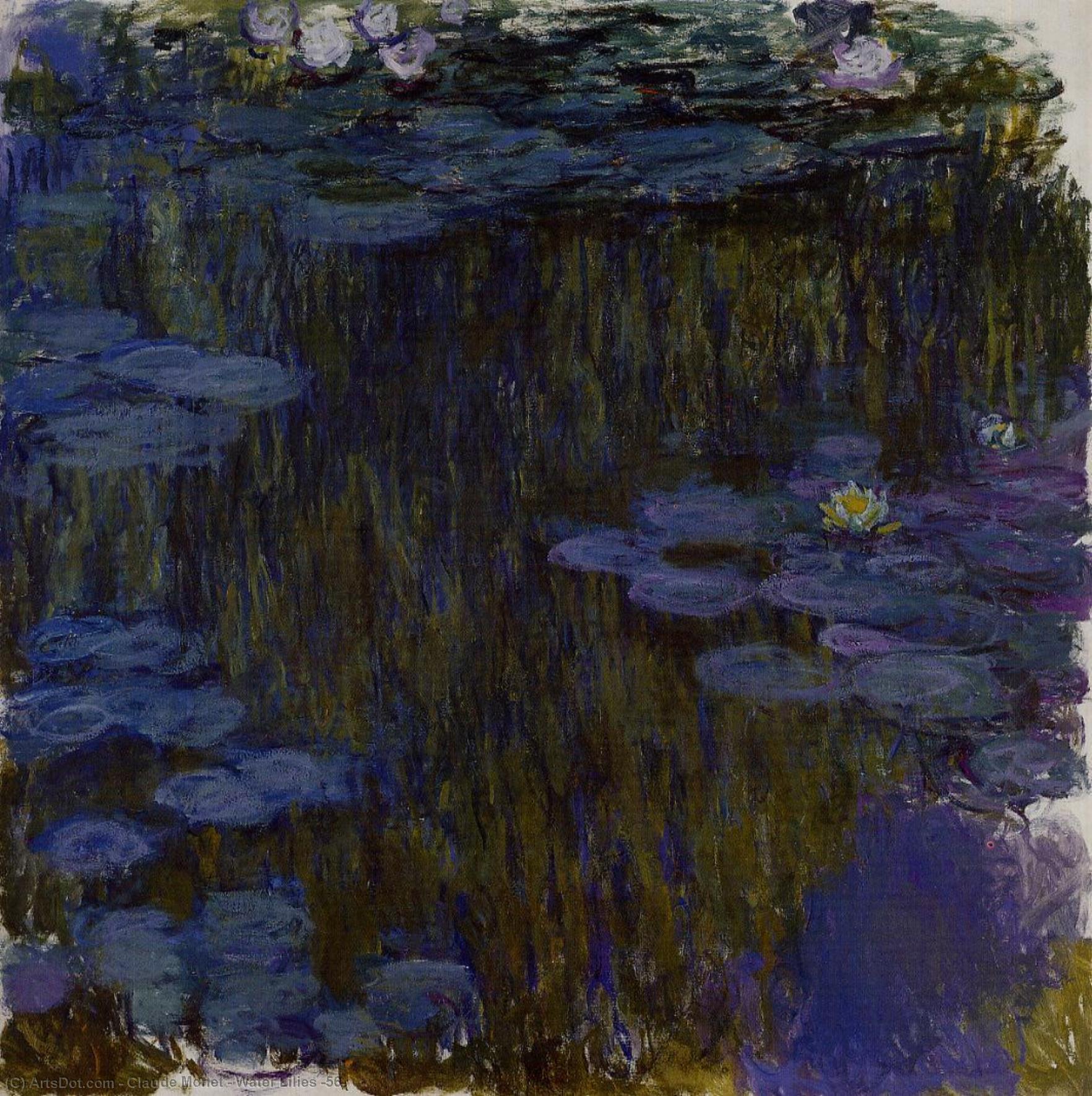
A Glimpse into Monet’s Paradise: Exploring Water Lilies (56)
Claude Monet's *Water Lilies (56)*, painted in 1917, is more than just a depiction of a pond; it’s an invitation to immerse oneself in the tranquil beauty of nature and the very essence of Impressionism. This work, part of his monumental series dedicated to the water lily garden at Giverny, exemplifies Monet's lifelong fascination with capturing fleeting moments of light and atmosphere.
Subject & Composition: A World Reflected
The painting presents a close-up view of water lilies floating serenely on the surface of a pond. Lush green leaves intermingle with the blossoms, creating a tapestry of color and texture. The composition isn’t about precise botanical accuracy; rather, it's an exploration of reflections, light play, and the overall *feeling* of being enveloped by nature. The vertical emphasis draws the eye upwards, suggesting the boundless sky reflected in the water below.
Impressionistic Technique: Brushstrokes of Light
Monet’s technique is quintessential Impressionism. Loose, visible brushstrokes build up layers of color, creating a shimmering effect that mimics the way light dances on water. He eschewed traditional blending techniques, allowing the individual strokes to remain distinct, contributing to the painting's vibrancy and sense of movement. The use of broken color – applying small touches of pure pigment side-by-side – allows the viewer’s eye to blend them optically, enhancing the luminosity.
Historical Context: Late Impressionism & Personal Reflection
Painted during World War I, *Water Lilies (56)* offers a poignant contrast to the turmoil of the era. Monet sought refuge in his garden at Giverny, and these paintings became a personal sanctuary – a testament to the enduring power of beauty even amidst chaos. The series also represents a shift towards larger-scale works and a more abstract approach, foreshadowing later developments in modern art. By the late 1910s, Monet was increasingly focused on creating immersive environments with his water lily paintings, anticipating installations like those he envisioned for the Musée de l'Orangerie.
Symbolism & Emotional Impact: Serenity and Transcendence
The water lily itself carries symbolic weight – often associated with purity, enlightenment, and rebirth. In Monet’s hands, they become symbols of peace and tranquility. The painting evokes a sense of calm contemplation, inviting the viewer to escape the pressures of daily life and connect with the restorative power of nature.
It's not merely a representation of a garden; it’s an emotional landscape.
Monet’s Legacy & Collecting Today
Claude Monet remains one of the most beloved and influential artists in history. His *Water Lilies* series, in particular, has captivated audiences for generations. Original works are held in prestigious museums worldwide, including the Musée Marmottan Monet in Paris and the Art Institute of Chicago.
For those seeking to bring a touch of Impressionistic beauty into their homes or offices, high-quality reproductions offer an accessible way to experience the magic of Monet’s vision.
- Style: Impressionism
- Medium: Oil on Canvas
- Date: 1917
- Current Location (examples): National Museums of Wales, various private collections.
This painting is a timeless masterpiece that continues to inspire and uplift. It’s a reminder of the beauty that surrounds us and the power of art to transport us to another world.