A Glimpse into Monet’s Paradise: Exploring *Water-Lilies (8)*
Claude Monet's *Water-Lilies (8)*, painted in 1907, is more than just a depiction of a pond; it’s an invitation to immerse oneself in the tranquil beauty of his beloved garden at Giverny. This captivating oil on canvas, currently housed at the Musée d'Art et d'Industrie in Saint-Étienne, France, exemplifies Monet’s lifelong dedication to capturing the fleeting effects of light and atmosphere – a hallmark of the Impressionist movement.
Subject & Composition: A Floating World
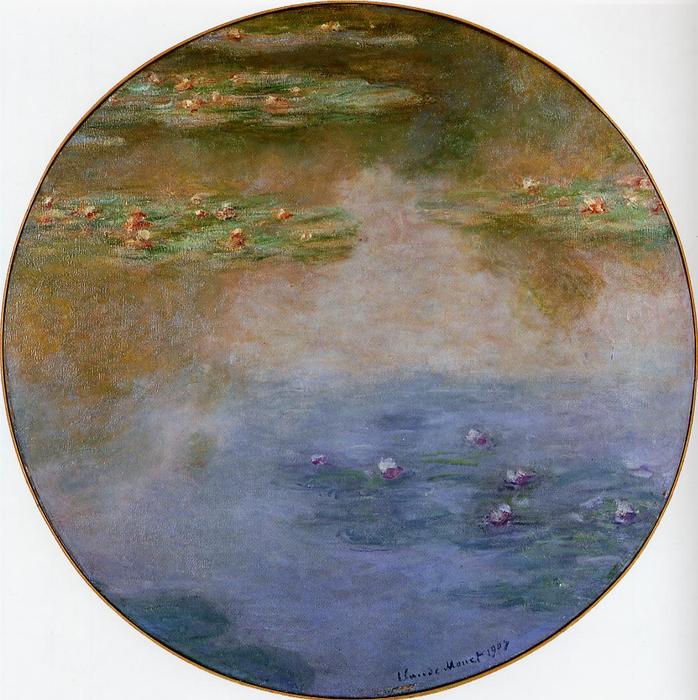
The painting presents a close-up view of water lilies floating serenely on the surface of a pond. The composition is deliberately decentralized, lacking a traditional focal point. Instead, our eye wanders across the canvas, drawn to the interplay of colors and reflections. Delicate lily pads and blossoms in shades of white, pink, yellow, and lavender are scattered across the shimmering water. Subtle hints of vegetation along the edges suggest the surrounding garden, while fleeting glimpses of birds – some in flight, others perched amongst the foliage – add a dynamic element to the otherwise peaceful scene. The circular format further enhances the sense of enclosure and tranquility, drawing the viewer into Monet’s watery world.
Impressionist Technique: Capturing Ephemeral Beauty
Monet's masterful technique is central to the painting’s allure. He employed loose, broken brushstrokes – a defining characteristic of Impressionism – to convey the *impression* of light and color rather than precise detail. The colors are not blended smoothly but applied in distinct touches, allowing them to mix optically in the viewer’s eye. This creates a vibrant, shimmering surface that evokes the play of sunlight on water. The use of layering and glazing builds depth and luminosity, while the soft edges contribute to the painting's dreamlike quality.
This is not about replicating reality; it’s about capturing a feeling, a moment in time.
Historical Context: The Giverny Years
*Water-Lilies (8)* belongs to Monet’s extensive series of *Nymphéas* paintings – works he created during the latter part of his life at Giverny. Having purchased the property in 1883, Monet meticulously designed and cultivated a water garden inspired by Japanese prints. This garden became both his sanctuary and his artistic obsession. The Water Lilies series represents a culmination of his artistic explorations, moving increasingly towards abstraction and focusing almost exclusively on the interplay of light, color, and reflection within this carefully constructed environment. 1907 was a pivotal year in art, witnessing early stirrings of Cubism alongside Monet’s continued refinement of Impressionist principles – a fascinating juxtaposition of artistic innovation.
Symbolism & Emotional Impact: Peace and Reflection
While seemingly simple in subject matter, the Water Lilies carry symbolic weight. The lily itself has long been associated with purity, rebirth, and enlightenment. In Monet’s hands, they become emblems of peace, tranquility, and the restorative power of nature.
The painting evokes a sense of calm contemplation, inviting viewers to escape the stresses of modern life and find solace in the beauty of the natural world. The lack of defined boundaries between water, sky, and vegetation creates a feeling of boundless space and timelessness.
For Collectors & Interior Designers
A reproduction of *Water-Lilies (8)* offers a sophisticated touch to any interior. Its soft color palette – dominated by blues, greens, and delicate floral tones – lends itself well to bedrooms, living rooms, or studies seeking a calming atmosphere. The painting’s circular format makes it particularly striking as a focal point in a room. Its enduring appeal transcends trends, making it a timeless investment for art collectors and those seeking to infuse their spaces with beauty and serenity. Consider pairing it with natural materials like wood and linen to enhance the connection to nature that Monet so beautifully captured.
Further Exploration
- Explore other works in the *Nymphéas* series, including Water Lilies (Nympheas) for a broader understanding of Monet’s vision.
- Discover the Musée de l'Orangerie in Paris, home to a stunning collection of large-scale Water Lilies murals.
- Investigate the influence of Japanese prints on Monet’s garden design and artistic style.