A Symphony of Light and Reflection
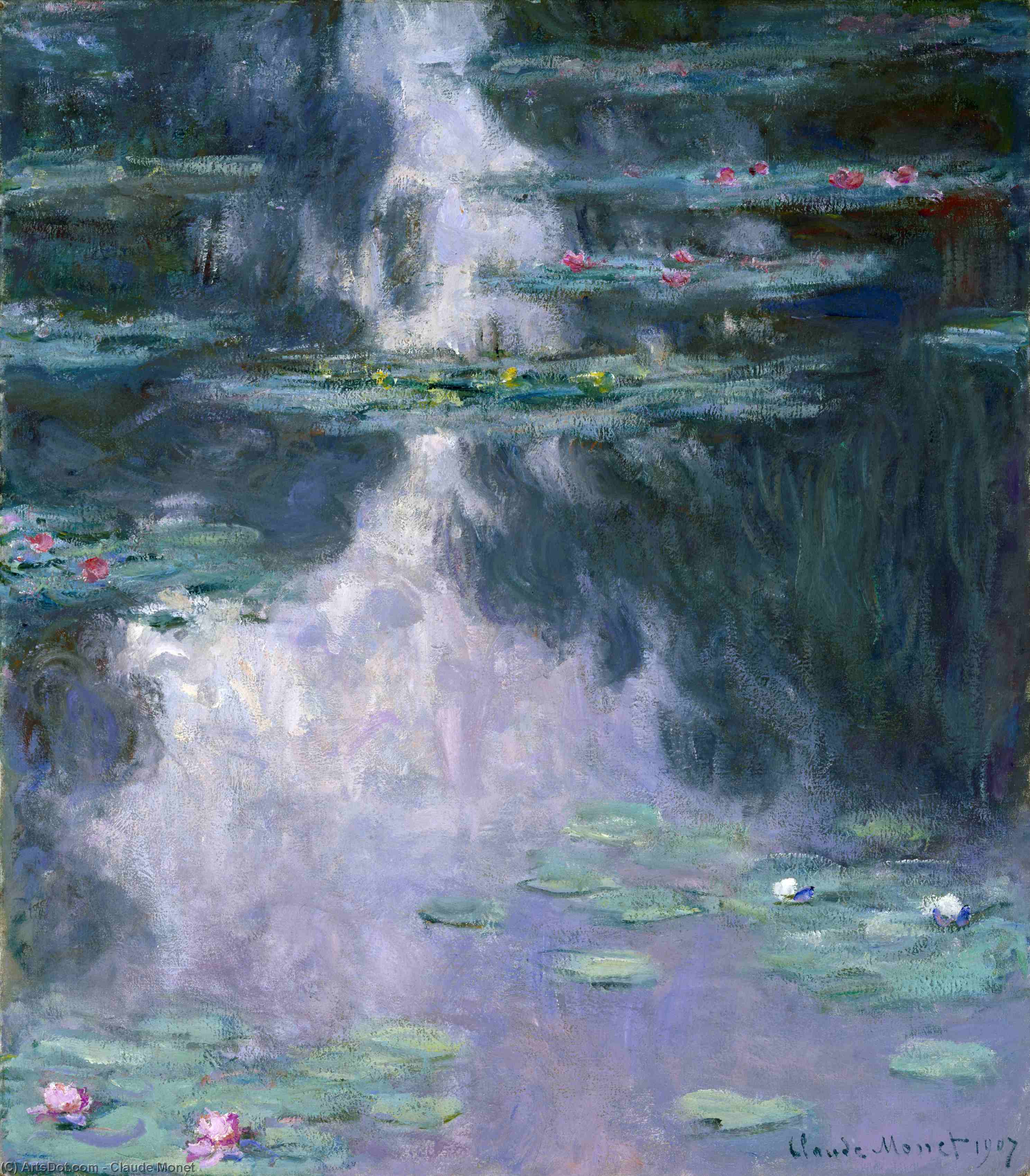
To step into the world of Claude Monet is to abandon the rigid lines of reality and surrender to the dance of light, atmosphere, and color. His Water Lilies (Nymphéas), painted during a transformative period in his life, serves as more than just a depiction of a garden pond; it is a breathtaking meditation on nature’s serenity. In this particular masterpiece, the artist invites us to gaze into a liquid mirror where the boundaries between sky and water dissolve. The composition is a delicate balance of blues, greens, and soft pinks, creating an atmosphere so tranquil that the viewer can almost feel the humid, summer air of Giverny. Through his eyes, we do not merely see flowers floating on a surface; we witness the very breath of a moment captured in time.
The subject matter—the iconic lily pond—is rendered with a profound sense of movement. The foreground is a lush tapestry of reflections, where the surrounding foliage bleeds into the water's surface, creating a layered depth that pulls the eye inward. As the gaze wanders toward the background, the presence of trees and the suggestion of a gentle stream or waterfall add a structural rhythm to the scene. This fluid approach ensures that the painting never feels static; instead, it possesses a rhythmic vitality, as if the water is constantly rippling under a light breeze, forever changing the way the sunlight hits the petals.
The Impressionist Revolution: Technique and Texture
Monet’s mastery lies in his revolutionary departure from traditional academic precision. Rather than seeking to replicate every vein of a leaf or the exact contour of a petal, he embraced the broken brushstroke technique. By applying tiny, irregular marks of pigment side by side, he achieved a textured surface that mimics the shimmering, ephemeral effect of sunlight dancing on water. This method allows colors to blend optically in the viewer's eye, creating a vibrancy that a smooth, blended surface could never achieve. The visible texture of the paint adds a tactile dimension to the work, lending weight and presence to the light itself.
The artist’s use of color is nothing short of poetic. He frequently employed complementary hues—such as the subtle juxtaposition of soft oranges against deep violets—to heighten the visual energy of the canvas. This careful layering of pigment creates a sense of luminosity, making the water appear translucent and the light appear to filter through the canopy above. For collectors and designers, this technique offers an incredible versatility; the painting possesses a depth that changes depending on the lighting of a room, acting as a dynamic focal point that brings a sense of organic life to any interior space.
An Eternal Legacy for the Modern Interior
Beyond its technical brilliance, the Water Lilies carries a profound emotional resonance. It is a work of pure sensation, designed to evoke feelings of peace, introspection, and wonder. In an era often characterized by noise and haste, Monet’s vision offers a sanctuary of stillness. The painting does not demand attention through grand, dramatic gestures; rather, it seduces the viewer through subtle variations in hue and the harmonious arrangement of natural elements.
For the discerning art lover or interior designer, a high-quality reproduction of this work serves as an anchor of elegance. Whether placed in a sun-drenched living room to enhance a sense of openness or in a quiet study to foster contemplation, the Water Lilies brings with it the prestige of the Impressionist movement. It is an investment in atmosphere, providing a timeless window into a garden of light that continues to inspire awe more than a century after its creation.