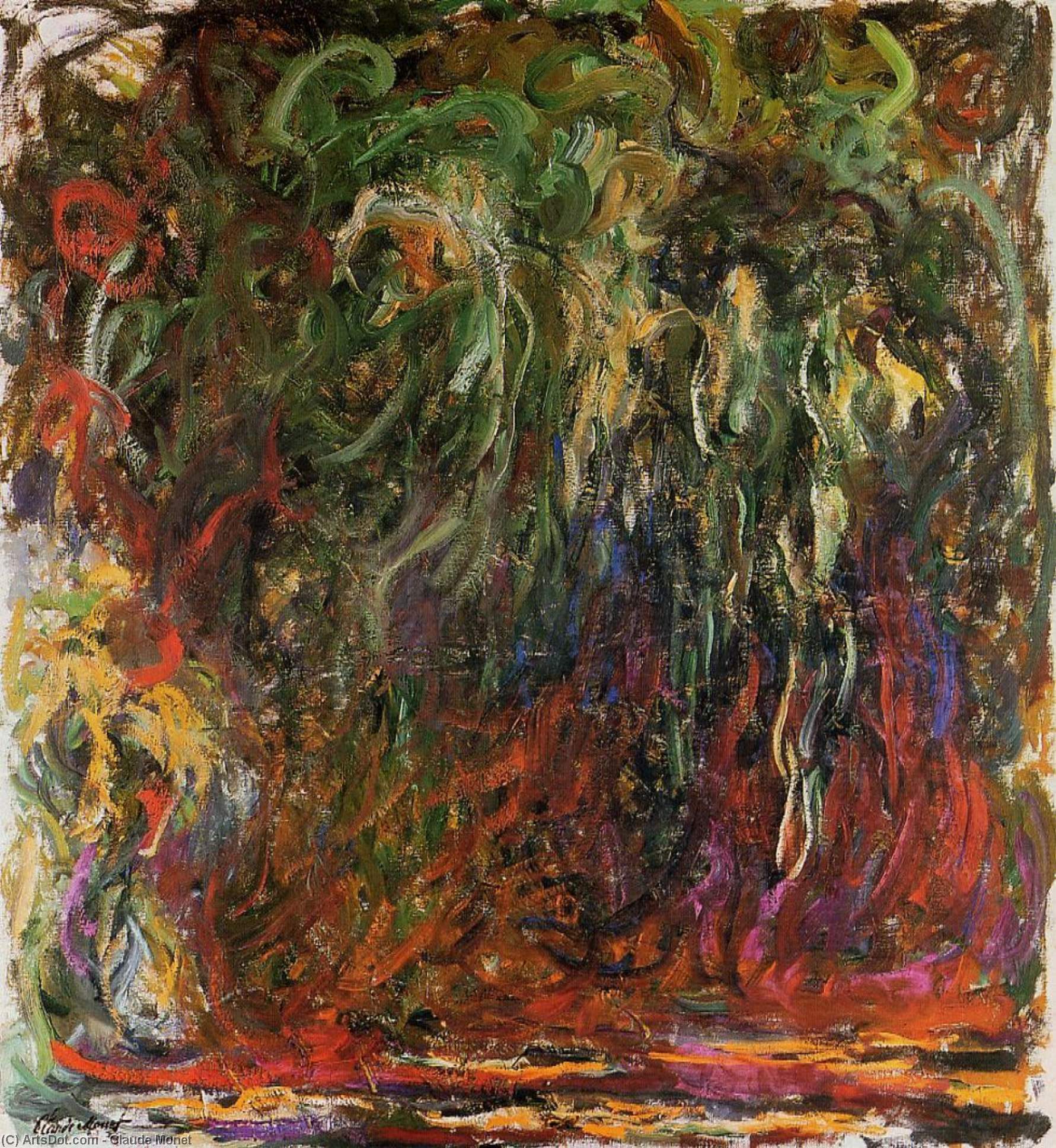
Experience Claude Monet's "Weeping Willow, Giverny" – a poignant Impressionist masterpiece capturing nature’s beauty and emotion. Painted in 1922, it reflects his personal struggles & artistic legacy. Explore light, color, & symbolism in this iconic work.
Explore the world of Claude Monet, the Impressionist master renowned for capturing fleeting light and color through iconic landscapes like Water Lilies & Haystacks.
Weeping Willow, Giverny – A Symphony of Light and Emotion
Claude Monet’s “Weeping Willow, Giverny” isn't merely a depiction of a tree; it’s an embodiment of Impressionism’s core philosophy—capturing the ephemeral beauty of nature as perceived by the artist. Painted in 1922, shortly before his passing, this monumental canvas represents arguably Monet’s most poignant exploration of his beloved Giverny gardens and serves as a cornerstone of his artistic legacy. The painting transcends simple representation, inviting viewers into a meditative experience rooted in observation and emotion.
The Essence of Impressionism: Plein Air Technique
Monet's unwavering commitment to *plein air* painting—working outdoors directly from nature—defined his entire oeuvre. Unlike academic painters who meticulously crafted studio canvases based on idealized forms, Monet sought to record the fleeting effects of sunlight and atmosphere upon the landscape. “Weeping Willow” exemplifies this approach brilliantly. Notice the loose brushstrokes – visible swirls of pigment blending seamlessly together – capturing the dappled light filtering through the willow’s branches and illuminating the surrounding foliage. This technique prioritizes immediacy and sensory experience, mirroring Monet's belief that art should strive to reproduce what the eye sees rather than what the mind imagines. The artist meticulously mixed colors on his palette, layering shades of green, yellow, and brown to create a rich tapestry of tonal variations that convey depth and luminosity.
A Garden Reverie: Symbolism Within Landscape
More than just a botanical study, “Weeping Willow” resonates with profound symbolic meaning. Willows have long been associated with mourning and sorrow in Western culture—a poignant reflection of Monet’s own personal struggles during his later years. However, the willow also symbolizes resilience and grace – its drooping branches bending gracefully under the wind, yet retaining their strength and beauty. Situated within Monet's meticulously designed Giverny gardens—a sanctuary created specifically to inspire artistic creativity—the tree embodies the artist’s desire for harmony between nature and artifice. The inclusion of figures strolling amongst the plants adds a human element, suggesting contemplation and connection with the natural world.
Monet’s Influence: Beyond Impressionism's Boundaries
“Weeping Willow” stands as a testament to Monet’s enduring influence on subsequent generations of artists. His pioneering use of color and light paved the way for movements like Fauvism and Expressionism, demonstrating that art could convey emotion directly without resorting to realistic representation. The National Museum of Modern Art, Tokyo, Japan (The National Museum of Modern Art, Tokyo, Japan), proudly showcases Monet’s work alongside other masterpieces of modern art, ensuring his vision continues to inspire audiences worldwide. Furthermore, the Musée Marmottan Monet in Paris offers visitors a chance to immerse themselves in Monet's artistic universe and appreciate the transformative power of Impressionism.
A Legacy of Light: Reproductions for Inspiration
Today, high-quality reproductions of “Weeping Willow” allow art lovers everywhere to experience Monet’s breathtaking vision. ArtsDot.com presents exceptional prints that faithfully capture the painting’s vibrant colors and textural nuances—bringing a touch of Giverny's serenity into any home or studio space. Explore our collection and discover how you can own a piece of artistic history.