Claude Monet: The Painter of Light
Claude Monet (1840–1926) stands as an undisputed titan amongst Impressionist painters—a figure whose relentless pursuit of capturing fleeting moments and the transformative power of natural light irrevocably altered the course of Western art history. Born Oscar-Claude Monet on November 14, 1840, in Paris, France, his artistic journey began amidst a burgeoning intellectual landscape shaped by Romantic idealism and scientific inquiry. Influenced profoundly by Eugène Boudin’s advocacy for plein air painting—the practice of working outdoors directly from observation—Monet swiftly embraced this revolutionary approach, rejecting the studio conventions favored by academic artists of the time. This decision would prove pivotal in establishing Impressionism as a distinct artistic movement, one characterized by its emphasis on sensory experience and subjective perception.
- Early Influences: Boudin’s encouragement instilled in Monet a deep appreciation for capturing atmospheric conditions—the subtle shifts in sunlight, mist, and temperature—that profoundly impacted the appearance of landscapes.
- Academic Resistance: Monet's rejection of studio painting contrasted sharply with the prevailing artistic dogma of his era, where meticulous detail and idealized representations were deemed paramount.
- The Impressionist Manifesto: In 1874, Monet spearheaded the creation of “Impression, soleil levant,” a painting that served as the catalyst for the Impressionist movement’s debut exhibition—a defiant assertion of artistic autonomy against academic censure.
“Women in the Garden Sun”: An Icon of Impressionistic Harmony
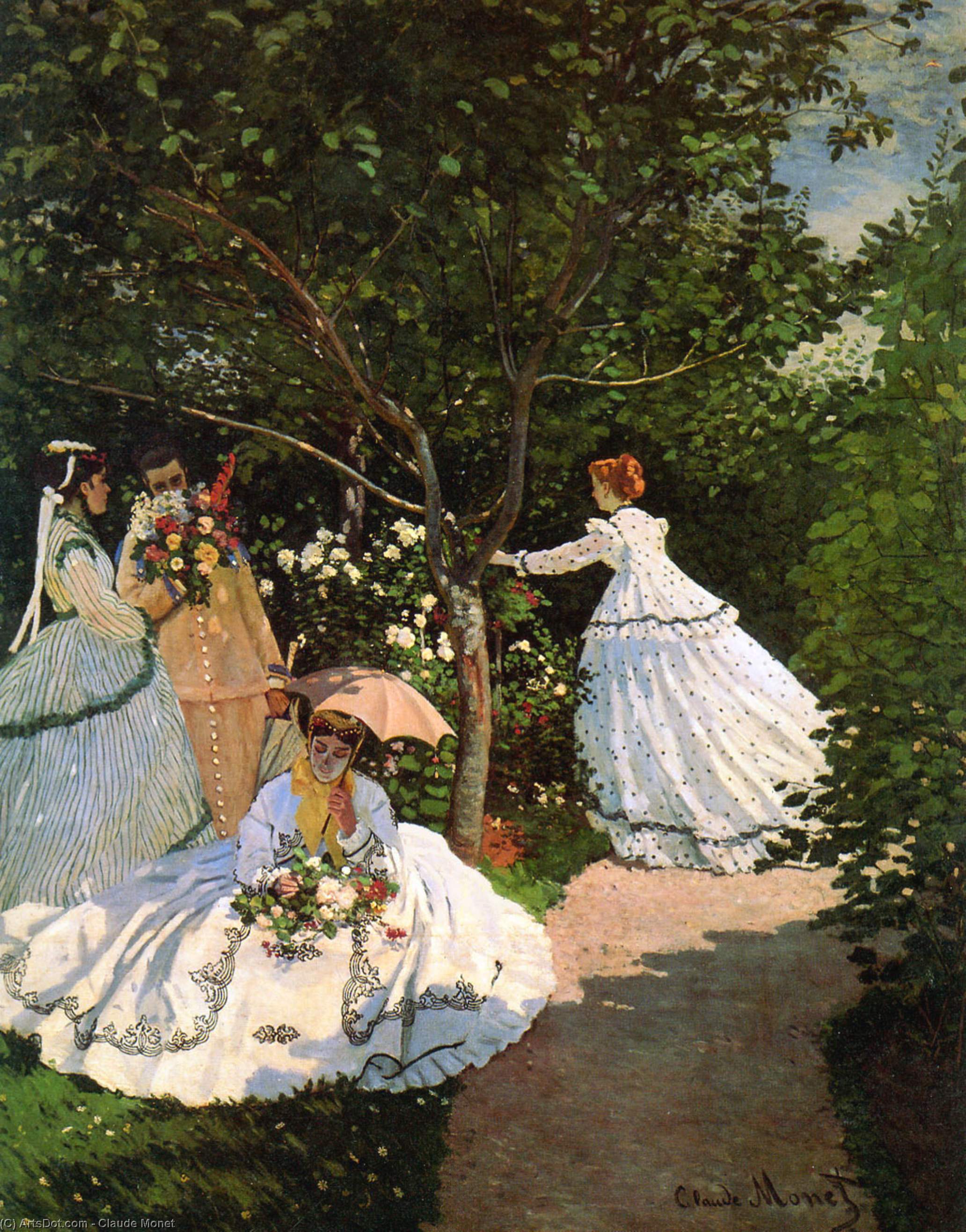
“Women in the Garden Sun” exemplifies Monet's masterful technique and unwavering dedication to portraying the beauty of everyday life through a prism of light and color. Executed in 1866, this serene landscape captures three women enjoying an idyllic afternoon beneath a blossoming tree—a scene rendered with characteristic Impressionistic brushstrokes that prioritize atmospheric effects over precise topographical accuracy. Monet’s palette vibrates with vibrant hues—warm yellows and oranges illuminate the sunlit foliage, while cooler greens and blues convey the tranquility of the shaded undergrowth. The loose, expressive strokes create an illusion of movement and shimmer, mirroring the dappled sunlight filtering through the branches.
- Technique: Monet employed a layering technique—applying thin glazes of color over successive layers of oil paint—to achieve remarkable luminosity and depth.
- Color Harmony: The painting’s harmonious blend of complementary colors—yellow and violet, orange and blue—enhances its visual impact and contributes to its overall sense of serenity.
- Composition: Monet skillfully positioned the women within the frame, creating a balanced composition that draws attention to the central tree and its radiant blossoms.
Symbolism Beyond Surface Beauty
Beyond its captivating aesthetic qualities, “Women in the Garden Sun” resonates with deeper symbolic meanings—reflecting Monet’s fascination with themes of femininity, leisure, and communion with nature. The blossoming tree symbolizes fertility and renewal—a motif frequently explored by Impressionist artists as a counterpoint to the rigid formalism of academic painting. The women themselves embody grace and tranquility—figures engaged in an activity that celebrates the simple pleasures of life and fosters connection with the natural world. Monet’s intention was not merely to depict a picturesque landscape but to convey an emotional experience—a feeling of profound beauty and contentment derived from observing the sublime grandeur of nature.
- Nature as Inspiration: Monet viewed nature as an inexhaustible source of artistic inspiration—believing that it possessed the capacity to evoke emotions and sensations beyond rational comprehension.
- The Pursuit of Beauty: The painting embodies Impressionism’s core ethos—the unwavering commitment to capturing beauty in its purest form—regardless of convention or expectation.
- A Legacy of Light: “Women in the Garden Sun” stands as a testament to Monet's enduring legacy—a masterpiece that continues to inspire artists and captivate audiences worldwide with its luminous palette and evocative portrayal of human experience amidst the splendor of the natural world.
Experiencing Monet’s Masterpiece
If you aspire to immerse yourself in the captivating atmosphere of “Women in the Garden Sun,” consider visiting Musée Marmottan Monet, located in Paris—a pilgrimage for any devotee of Impressionist art. This prestigious museum houses an unparalleled collection of Monet’s paintings—including iconic works such as “Impression, soleil levant” and “Water Lilies”—providing visitors with an unforgettable encounter with one of the most celebrated artists of the 19th century. Alternatively, ArtsDot offers high-quality canvas prints and oil-painted reproductions that faithfully recreate Monet's luminous vision—allowing you to bring a fragment of Impressionistic brilliance into your own home or studio.
Conclusion
Claude Monet’s “Women in the Garden Sun” remains an indelible emblem of Impressionism’s artistic triumph—a testament to his pioneering spirit and unwavering devotion to portraying nature's ephemeral splendor through light and color. As a cornerstone of modern art, it continues to inspire artists and admirers alike—affirming Monet’s enduring influence on subsequent generations of painters and solidifying his place among the titans of Western artistic heritage.