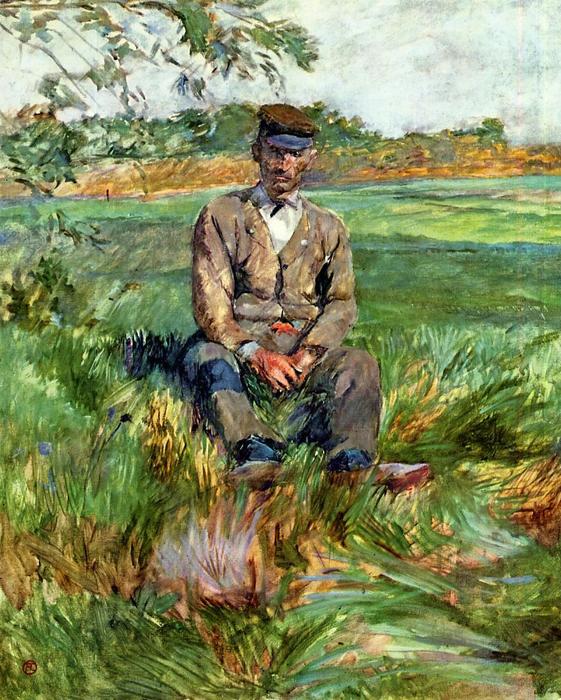
A Laborer at Celeyran: A Glimpse into Rural Solitude
Henri de Toulouse-Lautrec's "A Laborer at Celeyran," painted in 1882, offers a poignant portrayal of rural life and introspection. This work, rendered in oil on canvas, captures a solitary figure resting amidst the natural landscape. The painting exemplifies Post-Impressionism, moving beyond mere representation to explore subjective perception and emotional resonance.
Style and Technique: Embracing Impressionistic Nuances
"A Laborer at Celeyran" showcases Toulouse-Lautrec's distinctive artistic style, characterized by loose brushstrokes and a muted color palette. The artist masterfully employs oil paint to create texture and depth within the grassy field setting. Notice how the forms are not sharply defined but rather blend seamlessly into one another, evoking a sense of atmosphere and fleeting moments. This technique aligns with the broader Post-Impressionist movement, which sought to capture impressions and emotions rather than strict realism. The visible brushwork contributes to the painting's overall dynamism and invites viewers to engage closely with its surface.
Historical Context: Rural Life in Late 19th Century France
The late 19th century witnessed significant social and economic changes in France, including a shift from rural agrarian societies towards industrialization. Toulouse-Lautrec's painting reflects this transition by depicting a laborer—a figure representing the traditional working class—in a natural setting. The work provides a glimpse into the lives of those who remained connected to the land, offering a contemplative perspective on their existence. The choice of Celeyran, his mother’s family estate, adds a personal dimension to the artwork, suggesting a connection to his own roots and perhaps a reflection on familial history.
Symbolism and Emotional Impact: Solitude and Contemplation
Beyond its visual appeal, "A Laborer at Celeyran" carries symbolic weight. The solitary figure evokes feelings of solitude, introspection, and quiet contemplation. The man's posture—relaxed yet observant—suggests a moment of respite from labor, allowing for reflection on his surroundings and perhaps his place within them. The presence of two birds in the scene adds a subtle element of movement and life, contrasting with the stillness of the figure. Overall, the painting conveys a sense of melancholy beauty, inviting viewers to consider themes of human connection, isolation, and the enduring power of nature.
Materials and Location
- Medium: Oil on canvas
- Date: 1882
- Current Location: Musée Toulouse-Lautrec, France