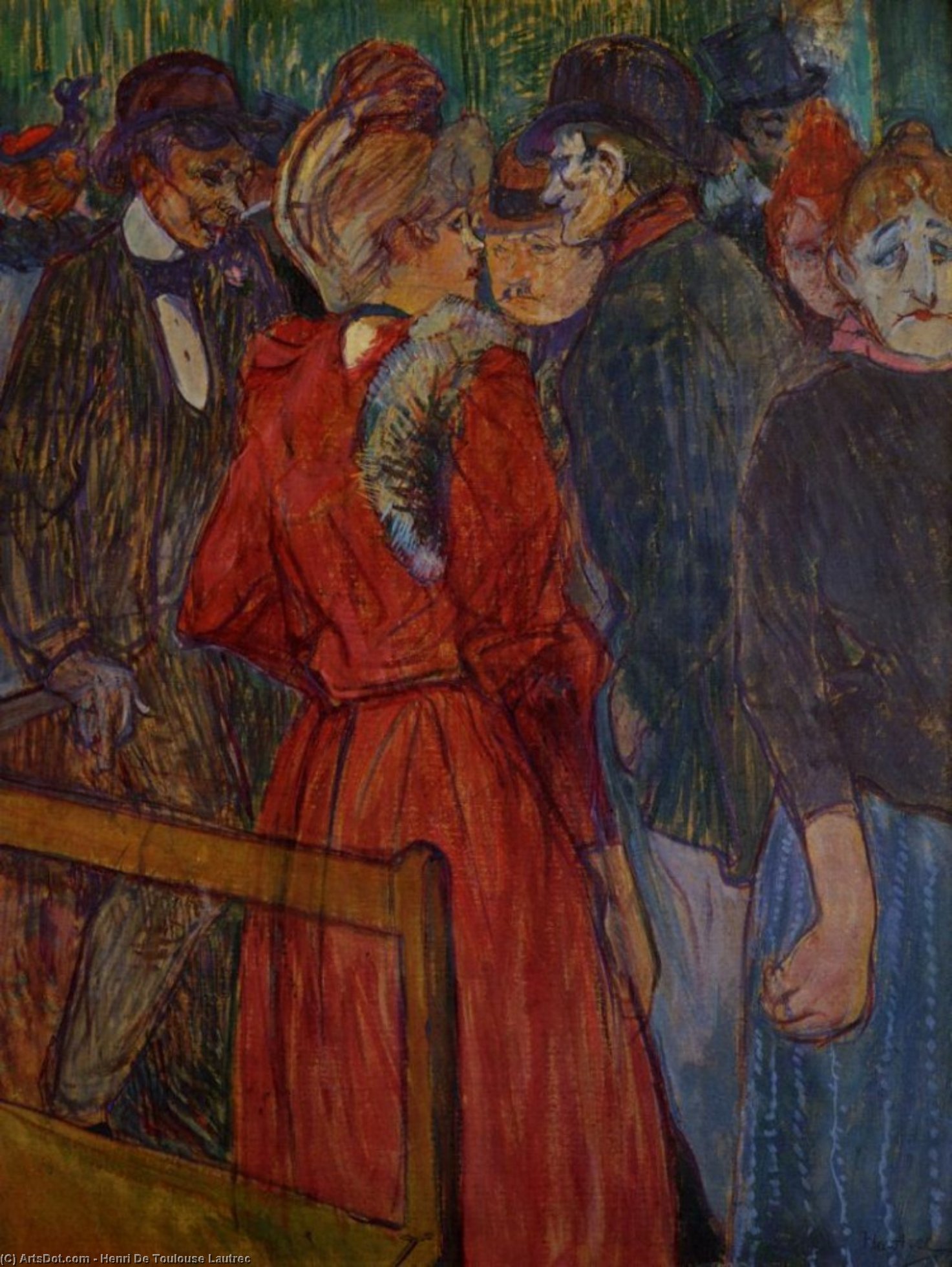
At the Moulin de la Galette: A Parisian Snapshot of Joy
Henri de Toulouse-Lautrec’s “At the Moulin de la Galette” (1876) isn't merely a painting; it’s a vibrant, almost palpable slice of life captured in Montmartre. This iconic work, housed within the Musée d'Orsay in Paris, offers an unparalleled glimpse into the social fabric of late 19th-century France – a world of dancing, laughter, and the intoxicating energy of a Sunday afternoon at one of Paris’s most beloved guinguettes.
The scene unfolds with remarkable immediacy. Renoir masterfully depicts a group of figures engaged in a spontaneous celebration within the Moulin de la Galette, a windmill that served as both a milling site and a popular entertainment venue. The composition is brilliantly casual, eschewing rigid formality for an impression of relaxed enjoyment. We see men in stylish attire – ties, hats, and jackets – mingling with women adorned in vibrant dresses, including the instantly recognizable red gown worn by a woman who becomes the focal point of the scene. The artist’s keen eye captures not just their appearances but also the subtle nuances of their interactions: animated conversations, shared smiles, and the general air of convivial delight.
Impressionism at its Finest: Technique and Light
Toulouse-Lautrec, working within the broader Impressionist movement, employs a technique that is both revolutionary and exquisitely delicate. He utilizes short, broken brushstrokes – a hallmark of the style – to capture the fleeting effects of light and atmosphere. The dappled sunlight filtering through the trees casts a warm glow upon the figures and the surrounding environment, creating an illusion of shimmering vibrancy. Note how he doesn’t attempt to render every detail with photographic precision; instead, he focuses on conveying the *impression* of movement, color, and emotion.
The artist's use of complementary colors – particularly the juxtaposition of blues and oranges – adds to the painting’s dynamism and visual richness. The overall effect is one of luminous beauty, a testament to Renoir’s ability to translate fleeting moments into enduring works of art. It’s important to note that this work was created during a pivotal moment for Impressionism, as artists were increasingly challenging traditional academic conventions and exploring new ways of representing the world around them.
Symbolism and Social Commentary
“At the Moulin de la Galette” transcends a simple depiction of leisure; it offers a subtle commentary on Parisian society. The guinguettes like this one were popular gathering places for diverse social classes, providing an opportunity for people to escape the constraints of urban life and enjoy themselves. The painting subtly captures the spirit of inclusivity and social mixing that was characteristic of Montmartre at the time – a world where artists, musicians, and ordinary Parisians could come together in celebration.
The central figure in her red dress has become an enduring symbol of Parisian joie de vivre. Her pose, caught mid-kiss, embodies the carefree spirit of the scene and adds a layer of romanticism to the work. It’s a moment frozen in time, inviting us to imagine the conversations, laughter, and shared experiences that unfolded within those walls.
A Timeless Masterpiece for Your Collection
ArtsDot offers meticulously crafted hand-painted reproductions of “At the Moulin de la Galette,” allowing you to bring this iconic masterpiece into your home or office. Our skilled artisans employ traditional techniques and high-quality materials to faithfully recreate Renoir’s original vision, ensuring that every reproduction captures the painting's vibrant colors, dynamic brushstrokes, and emotional impact.
Whether you are an art enthusiast, a collector seeking to expand your collection, or an interior designer looking for a statement piece, this reproduction offers a unique opportunity to own a tangible connection to one of Impressionism’s most beloved works. Experience the joy and energy of “At the Moulin de la Galette” – a timeless celebration of Parisian life.