At the Moulin Rouge: A Dance with Parisian Shadows – An Exploration of Toulouse-Lautrec’s Vision
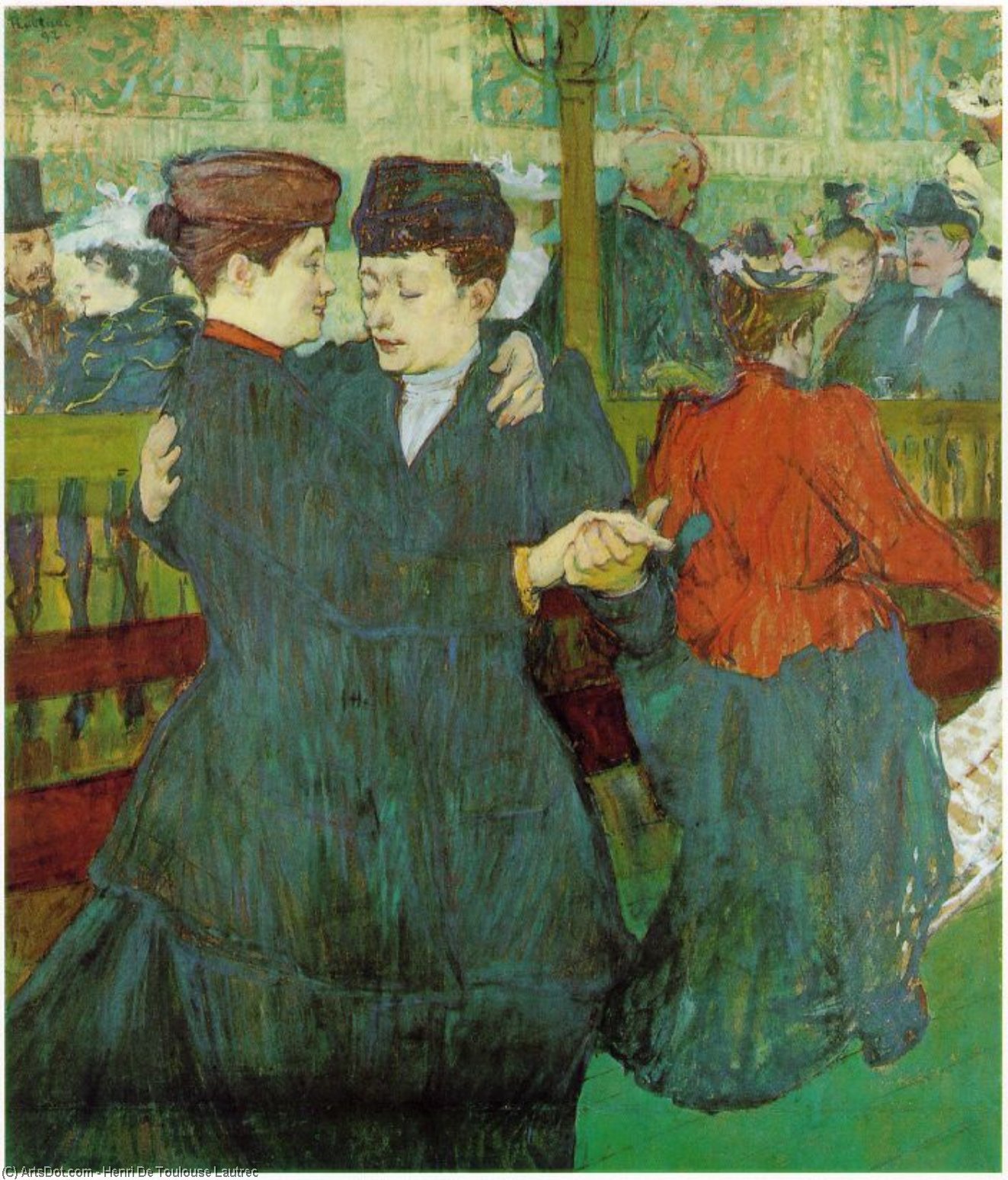
“At the Moulin Rouge: Two Women Waltzing” (18) by Henri de Toulouse-Lautrec offers a captivating glimpse into the heart of Montmartre's vibrant nightlife in the late 19th century. This remarkable painting, executed primarily in oil on cardboard and currently residing within the National Gallery in Prague, transcends a simple depiction of a dance; it’s a meticulously crafted portrait of an era, imbued with the artist’s unique perspective shaped by both his aristocratic lineage and his profound physical challenges.
Toulouse-Lautrec's genius lay not just in his technical skill – evident in the remarkably detailed rendering of fabrics, faces, and movement – but in his ability to capture the raw energy and social currents of Parisian life. The scene unfolds within the legendary Moulin Rouge, a venue synonymous with spectacle, music, and a certain degree of bohemian transgression. The composition is dominated by two women lost in their dance, their figures bathed in the warm glow of the cabaret’s interior, while surrounding them are a cast of characters – some observing intently, others engaged in conversation or perhaps enjoying a drink – each contributing to the painting's bustling atmosphere.
A Study in Color and Movement: Lautrec’s Technique
Toulouse-Lautrec employed a distinctive technique characterized by rapid brushstrokes and a bold use of color. He favored complementary colors—blues and oranges, greens and reds—to heighten the sense of movement and drama within the scene. Notice how he uses short, choppy strokes to depict the swirling fabric of the women’s dresses and the energetic flow of their dance. This technique wasn't simply about realism; it was a deliberate choice to convey the dynamism and excitement of the Moulin Rouge. The use of cardboard as his support allowed for a certain flatness of tone that he skillfully manipulated, creating an almost theatrical effect.
Symbolism Within the Scene: More Than Just a Dance
Beyond its immediate depiction of a dance, “At the Moulin Rouge” is rich in symbolic meaning. The Moulin Rouge itself represented a space where social boundaries blurred – a place for artists, performers, and patrons from all walks of life to converge. The two women dancing could be interpreted as representing fleeting romance or perhaps simply the shared joy of the moment. The inclusion of various figures—a bench suggesting weary spectators, hints of musicians—adds layers to the narrative, hinting at the complex social dynamics at play within this iconic venue. Toulouse-Lautrec was keenly interested in portraying the lives of ordinary people, and here he captures a slice of Parisian society with remarkable honesty.
Emotional Resonance and Artistic Legacy
Toulouse-Lautrec’s work continues to resonate deeply with viewers today because it transcends mere representation. It evokes a powerful sense of nostalgia for a bygone era, capturing the spirit of artistic innovation and social change that defined late 19th-century Paris. His ability to translate fleeting moments into enduring images is a testament to his artistic vision. A hand-painted reproduction of “At the Moulin Rouge” offers an unparalleled opportunity to bring this captivating scene into your home or office, allowing you to experience the energy and allure of Toulouse-Lautrec’s masterpiece firsthand.