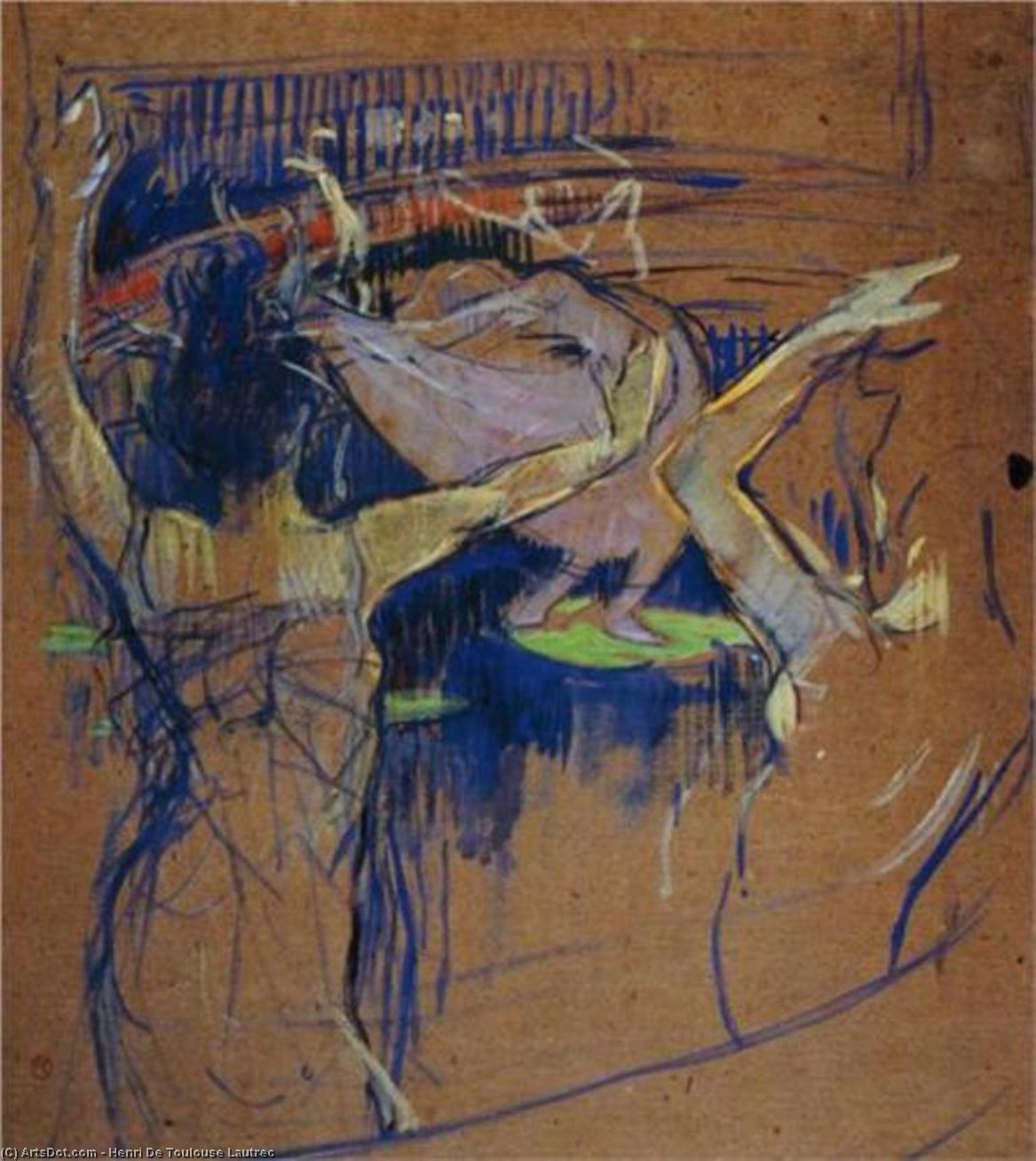
A Night in Montmartre: Ballet de Papa Chrysanthème by Toulouse-Lautrec
This captivating pastel drawing, “Ballet de Papa Chrysanthème,” offers a vibrant glimpse into the heart of 1892 Paris – a city teeming with artistic energy, bohemian nightlife, and a raw, unvarnished beauty. Created by the masterful Henri de Toulouse-Lautrec, this piece transcends mere representation; it’s an immersive experience, a fleeting moment captured in delicate pastel strokes that evoke the intoxicating atmosphere of Montmartre.
The scene unfolds with a captivating chaos – a group of figures engaged in various activities within what appears to be a garden or park setting. Nude and partially clothed dancers intertwine with observers, creating a dynamic tableau brimming with movement and suggestion. Toulouse-Lautrec’s genius lies not in precise realism but in his ability to distill the essence of the scene, prioritizing emotional resonance over photographic accuracy. The composition itself is deliberately flattened, eschewing traditional perspective for a more immediate, almost theatrical effect – mirroring the stage-like quality of the cabaret world he so often depicted.
Technique and Materials: Layers of Impression
Toulouse-Lautrec’s technique is immediately recognizable. He employs layered pastel strokes with remarkable skill, building up color and form through meticulous application. The grainy texture resulting from this process isn't a flaw but a deliberate choice – it adds to the painting’s tactile quality and reinforces its impressionistic style. Note the careful rendering of light and shadow; diffused lighting casts soft shadows, highlighting certain figures while obscuring others, contributing to the overall sense of mystery and movement. The use of a toned ground—likely brown or tan—provides a rich foundation for the pastel colors, allowing them to truly pop against the background.
The artist’s choice of materials – primarily pastel sticks on paper – speaks volumes about his approach. Pastels offered him unparalleled freedom and fluidity, enabling him to capture the ephemeral qualities of light and atmosphere with remarkable sensitivity. This technique aligns perfectly with the Impressionist movement's focus on capturing fleeting moments and subjective perceptions.
Symbolism and Emotional Resonance
Beyond its aesthetic beauty, “Ballet de Papa Chrysanthème” is rich in symbolic meaning. The nude figures themselves are not simply representations of the human form; they embody themes of leisure, beauty, and perhaps even a touch of melancholy. Toulouse-Lautrec’s fascination with the marginalized figures of Parisian society – dancers, prostitutes, and performers – reflects his empathy for those living on the fringes of respectable life. The painting evokes a powerful sense of joyful movement, spontaneity, and nostalgia—a feeling that is amplified by the artist's masterful use of color and composition.
This artwork isn’t just a depiction; it’s an invitation to step into a world of vibrant energy and artistic passion. A hand-painted reproduction offers a unique opportunity to own a piece of this iconic work, bringing its captivating beauty and evocative atmosphere directly into your space.