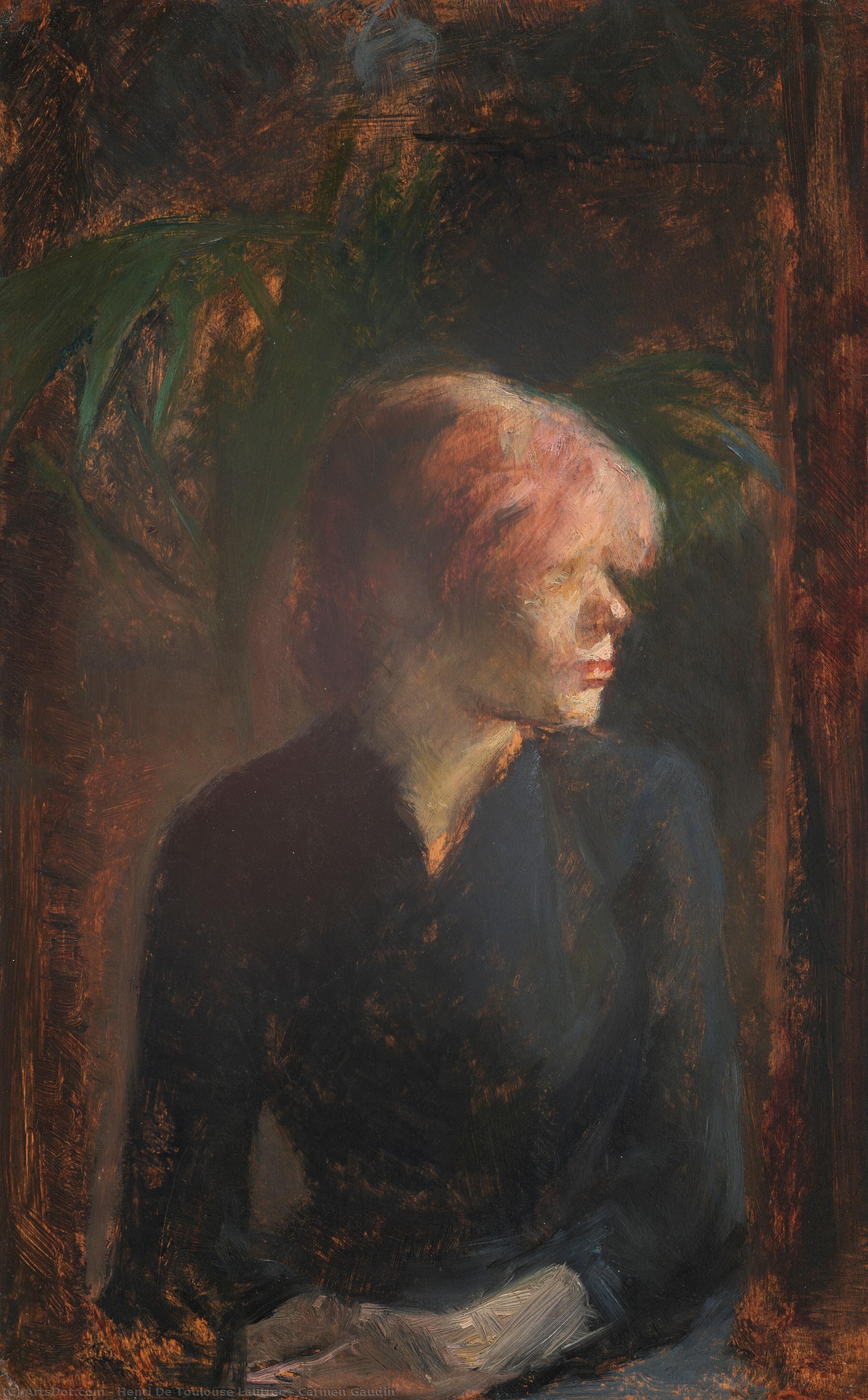
This painting depicts a woman with red hair seated by a window, reflecting Toulouse-Lautrec’s fascination with Parisian nightlife and marginalized figures. Executed in 1885 on wood, it showcases his distinctive Post-Impressionist style characterized by dynamic movement and textured impasto.
Experience Henri de Toulouse-Lautrec's "Carmen Gaudin," a vibrant Parisian portrait capturing elegance and
A Bohemian Vision Captured in Color: Toulouse-Lautrec’s “Carmen Gaudin”
Henri Marie Raymond de Toulouse-Lautrec-Monfa, universally recognized as Toulouse-Lautrec, stands as one of the most distinctive voices of late 19th-century French art. Born into a crumbling aristocratic lineage in Albi on November 24, 1864, his life unfolded against a backdrop of both privilege and profound physical adversity – a condition resulting from congenital pycnodysostosis severely restricting bone growth, leaving him with an unusually diminutive lower body. Rather than succumbing to despair, Toulouse-Lautrec channeled this inherent difference into an unwavering gaze upon the vibrant pulse of Parisian society, particularly its marginalized inhabitants. His aristocratic upbringing provided access to artistic training, yet it was Montmartre’s intoxicating atmosphere—a crucible of bohemian creativity and scandalous spectacle—that truly cemented his artistic identity.
- Subject Matter: Toulouse-Lautrec's “Carmen Gaudin” depicts a woman seated by a window, gazing outwards with an expression of contemplative melancholy. The figure embodies the quintessential Parisian woman of his era – independent, alluring, and imbued with a quiet dignity despite societal constraints.
- Style: The painting exemplifies Toulouse-Lautrec’s signature Post-Impressionist style, characterized by bold color palettes, expressive brushstrokes, and a deliberate rejection of photographic realism. He prioritized conveying emotion and atmosphere above meticulous detail, aligning himself firmly with the artistic currents challenging academic conventions.
Technique: Impressionistic Brushwork and Textured Surfaces
Toulouse-Lautrec’s masterful technique is immediately apparent upon observation. Employing thick impasto—a technique involving applying paint in heavily textured layers—he achieved a palpable sense of physicality, mirroring the dynamism of Montmartre itself. The artist utilized short, choppy brushstrokes to capture the fleeting effects of light and shadow, creating an illusionistic depth that transcends mere representation. Notably, he favored complementary colors – orange and purple – to heighten visual impact and imbue the canvas with warmth and vibrancy. Careful attention was paid to tonal variations, subtly modulating hues to convey nuanced emotional states.
- Historical Context: Toulouse-Lautrec’s work emerged during a period of significant social upheaval in Paris—the Belle Époque (Beautiful Era)—a time marked by rapid industrialization, burgeoning artistic experimentation, and a loosening of moral restraints. His depictions of Parisian nightlife reflected the anxieties and aspirations of this era, capturing both its glamour and its underlying tensions.
- Symbolism: The window serves as a powerful symbol of introspection and observation—the woman’s gaze outward represents her engagement with the world beyond her immediate surroundings while simultaneously hinting at inner contemplation. The honey orange and plum purple background contributes to the painting's mood, evoking feelings of serenity and mystery.
Emotional Resonance: Capturing Transient Beauty
“Carmen Gaudin” transcends mere visual depiction; it succeeds in conveying a profound emotional resonance. Toulouse-Lautrec’s ability to distill complex psychological states into evocative imagery is evident in the woman's serene countenance and her subtle gesture of repose. The painting speaks to themes of solitude, contemplation, and perhaps even longing—qualities that resonate deeply with viewers seeking beauty amidst the complexities of human experience. It remains a testament to Toulouse-Lautrec’s unwavering commitment to capturing fleeting moments of artistic inspiration and conveying genuine emotion.
This artwork exemplifies Toulouse Lautrec's distinctive style and offers an exceptional glimpse into Parisian life during the Belle Époque. Its textured surface, vibrant colors, and contemplative subject matter continue to captivate audiences today.