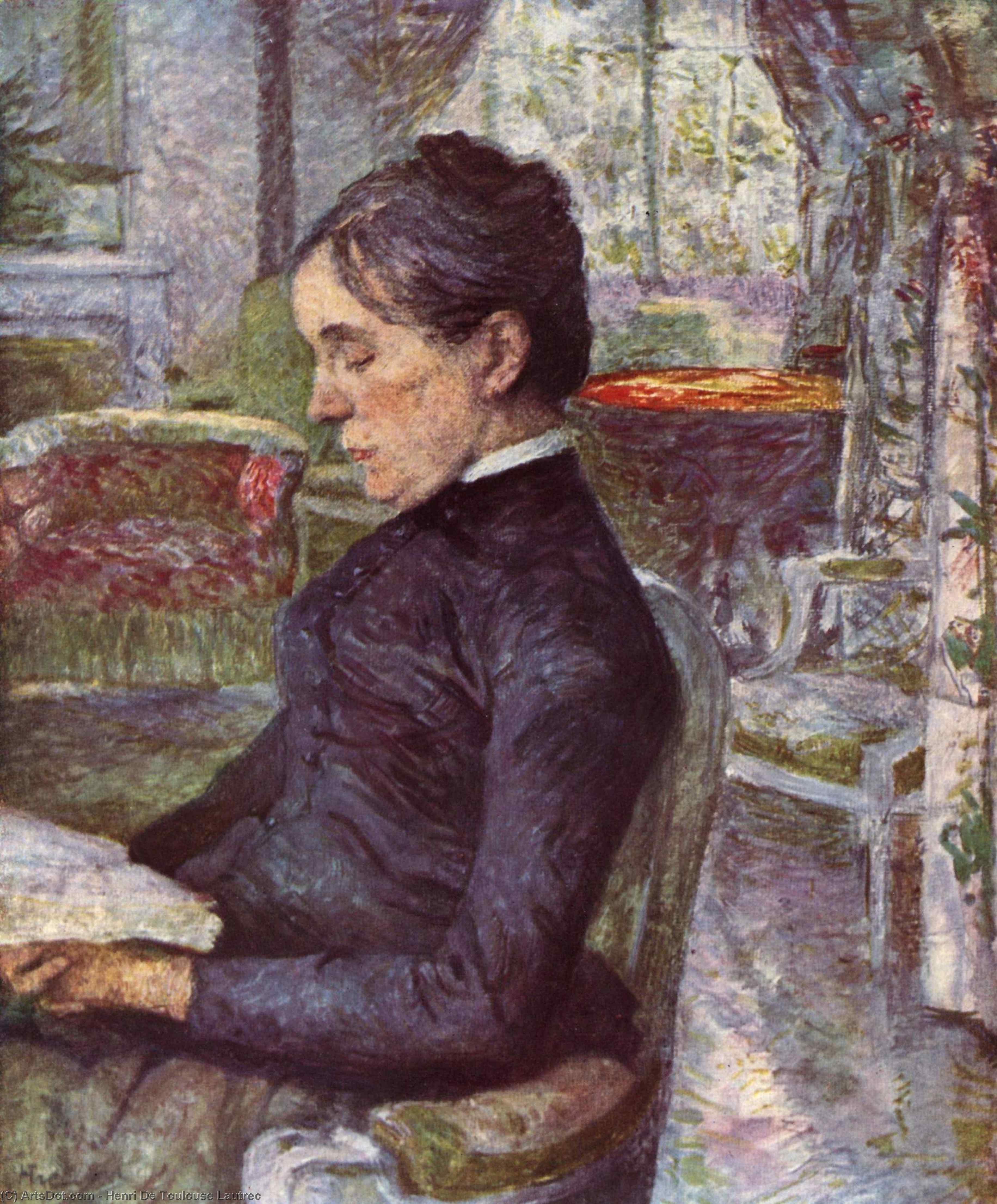
Portrait of Countess A. de Toulouse Lautrec – An Intimate Glimpse into Parisian Life
This exquisite hand-painted reproduction captures the essence of Henri de Toulouse-Lautrec’s masterful ability to distill the vibrant, often melancholic beauty of late 19th-century Paris. The “Portrait of Countess A. de Toulouse Lautrec,” painted in 1886, offers a remarkably intimate glimpse into a world of quiet leisure and refined sensibilities – a world meticulously rendered with the artist’s signature attention to detail and evocative atmosphere. Measuring 59 x 54 cm, this piece is not merely a depiction; it's an invitation to step back in time and experience the subtle charm of Montmartre.
The Artist and His World
Created by Henri Marie Raymond de Toulouse-Lautrec-Monfa (1864-1901), a figure as complex as his art, this portrait reflects the artist’s profound connection to the bohemian heart of Paris. Born into an aristocratic family burdened by physical challenges – a condition likely pycnodysostosis that stunted his growth – Toulouse-Lautrec found solace and inspiration not in courtly life, but in the raw energy of the city's marginalized figures and artistic circles. His upbringing afforded him access to formal training, yet it was his unwavering empathy and keen observational skills that truly defined his artistic vision. Notably, this work was created during a period when Toulouse-Lautrec was collaborating with Maxime Dethomas, a prominent theater designer whose influence can be subtly detected in the composition’s careful arrangement of elements – mirroring Dethomas' own expertise in theatrical set design.
A Study in Light and Atmosphere
The painting’s success lies not just in its subject matter, but in Toulouse-Lautrec’s masterful manipulation of light and atmosphere. The soft, diffused illumination suggests a late afternoon or early evening setting within a comfortably furnished room. Notice the careful rendering of textures – the plushness of the chairs, the worn leather of the book, the subtle sheen on the vase. These details contribute to a sense of realism that is both intimate and slightly dreamlike. The composition itself—the seated Countess, surrounded by carefully placed furniture—creates a feeling of quiet contemplation, inviting the viewer to share in her moment of peaceful solitude.
Symbolism and Context
Beyond its immediate beauty, the portrait speaks volumes about the social context of the time. The Countess’s posture – seated with hands folded, engrossed in a book – represents a burgeoning middle-class ideal of leisure and intellectual pursuit. The surrounding furniture, though modest, reflects an appreciation for comfort and refinement. This scene is emblematic of the growing influence of Parisian salons and the rise of a new artistic patronage system. The painting’s creation aligns with Toulouse-Lautrec's broader exploration of urban life, capturing a fleeting moment of tranquility amidst the bustling energy of Montmartre.
A Timeless Masterpiece – A Perfect Addition to Your Collection
This hand-painted reproduction offers an unparalleled opportunity to own a piece of art history. Its exquisite detail and evocative atmosphere will undoubtedly enhance any interior space, bringing a touch of Parisian elegance and artistic sophistication to your home or office. As with all ArtsDot reproductions, this artwork is created using archival materials and techniques, ensuring its longevity and preserving the beauty of Toulouse-Lautrec’s vision for generations to come.