A Glimpse into Parisian Nights: Toulouse-Lautrec’s “Portrait of Helen”
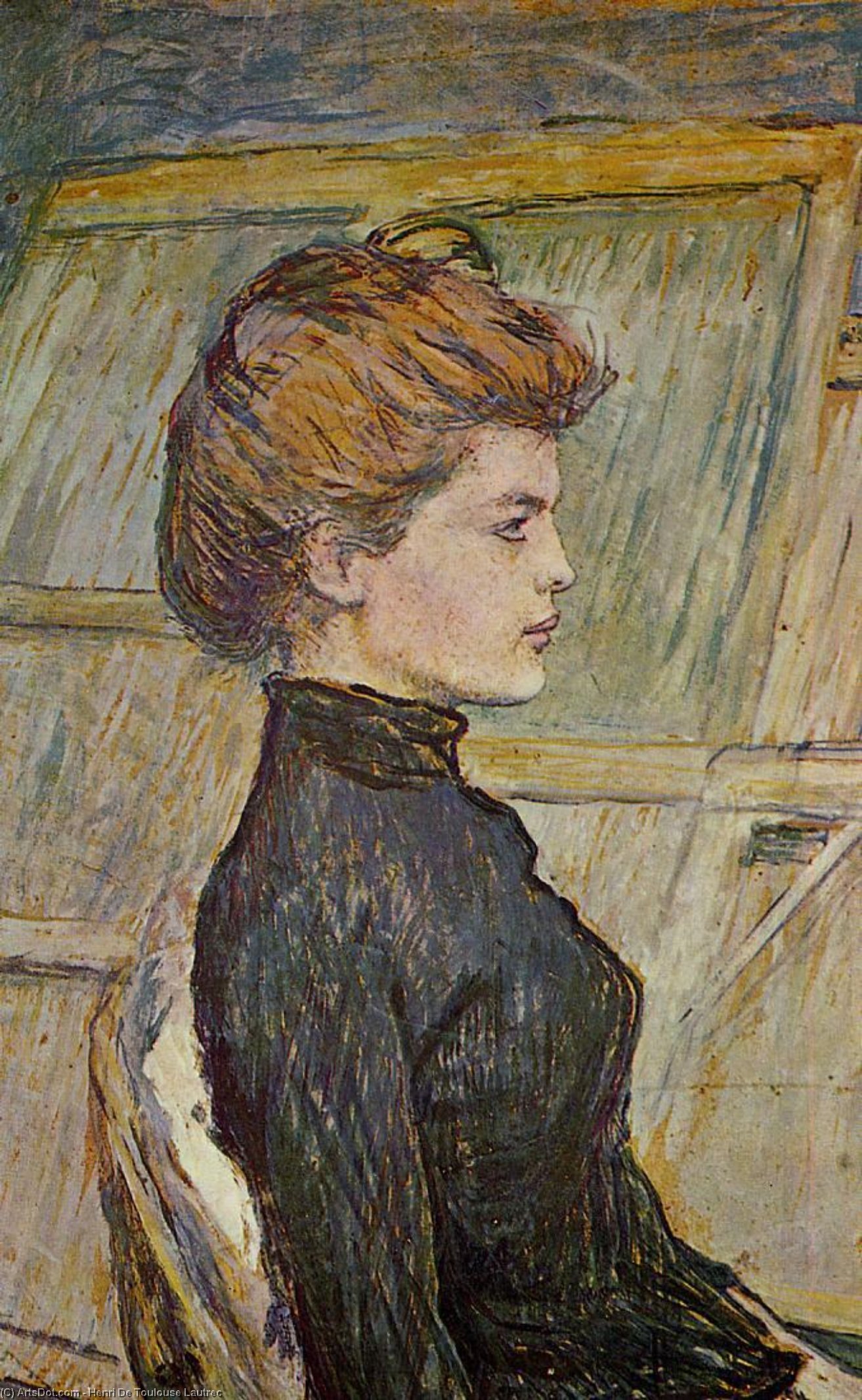
Henri de Toulouse-Lautrec's "Portrait of Helen," a captivating detail from the larger composition, offers a poignant window into the artist’s world and his unique perspective on late 19th-century Paris. Painted in 1888, this intimate study transcends mere portraiture; it’s a distillation of emotion, a fleeting capture of contemplation within a vibrant, often decadent, urban landscape. The painting isn't simply a likeness of a woman; it’s an exploration of mood and the quiet intensity of observation – a hallmark of Lautrec’s distinctive style.
Lautrec, burdened by a physical condition that stunted his growth and profoundly shaped his perception, found solace and artistic expression in documenting the lives of those on the fringes of Parisian society. He wasn't interested in idealized beauty or grand narratives; instead, he sought to reveal the truth of human experience – the vulnerability, the loneliness, and the subtle joys hidden within everyday moments. “Portrait of Helen” embodies this approach perfectly. The subject, a woman with striking red hair, is presented not as a static object but as a figure lost in thought, her gaze directed towards an unseen horizon.
The Language of Line and Color
Technically, the painting showcases Lautrec’s masterful command of line and color. He employs loose, expressive brushstrokes – a characteristic of Post-Impressionism – to create a sense of movement and immediacy. The colors are muted yet evocative; deep blues and greens suggest a somber atmosphere, while subtle hints of red in the woman's hair draw the eye and inject a spark of vitality into the scene. Lautrec’s use of charcoal and pastel creates a delicate texture, lending the portrait an almost tactile quality – as if you could reach out and feel the softness of her dress or the weight of her contemplation.
Notice particularly how he renders the shadows; they aren't simply areas of darkness but are imbued with color and form. This technique contributes significantly to the painting’s atmospheric depth, creating a sense of space and drawing the viewer into the woman’s inner world. The simplified forms and flattened perspective, reminiscent of Japanese prints (a significant influence on Lautrec), further enhance the portrait's emotional impact.
Symbolism and Context
The painting is deeply rooted in the social and cultural context of its time. Paris at the end of the 19th century was a city of contrasts – immense wealth alongside grinding poverty, artistic innovation juxtaposed with moral decay. Lautrec’s frequent depictions of Parisian nightlife, including brothels and dance halls, reflected this duality. “Portrait of Helen,” however, offers a respite from the boisterous energy of those scenes. It's a moment of quiet introspection, suggesting a deeper layer beneath the surface of urban life.
The woman’s posture – seated, gazing into the distance – speaks to themes of solitude and longing. Some art historians interpret her expression as one of melancholy or perhaps even resignation. The setting, though indistinct, evokes a sense of domesticity, hinting at a private space within the bustling city. It's possible that Helen represents Lautrec’s own feelings of isolation and his struggle to find acceptance in a world that often rejected him.
A Timeless Portrait of Human Emotion
“Portrait of Helen” is more than just a beautiful painting; it’s a powerful meditation on the human condition. Lautrec's ability to capture fleeting emotions with such precision and sensitivity remains remarkably relevant today. The portrait invites us to contemplate our own experiences of solitude, reflection, and the search for meaning in an often chaotic world. Reproductions of this work offer a chance to bring this evocative image into your home, serving as a constant reminder of the beauty and complexity of human emotion.
Consider commissioning a hand-painted reproduction from ArtsDot.com – a faithful recreation that preserves the original’s delicate textures and atmospheric depth. It's a way to own a piece of art history and celebrate the enduring legacy of Henri de Toulouse-Lautrec.