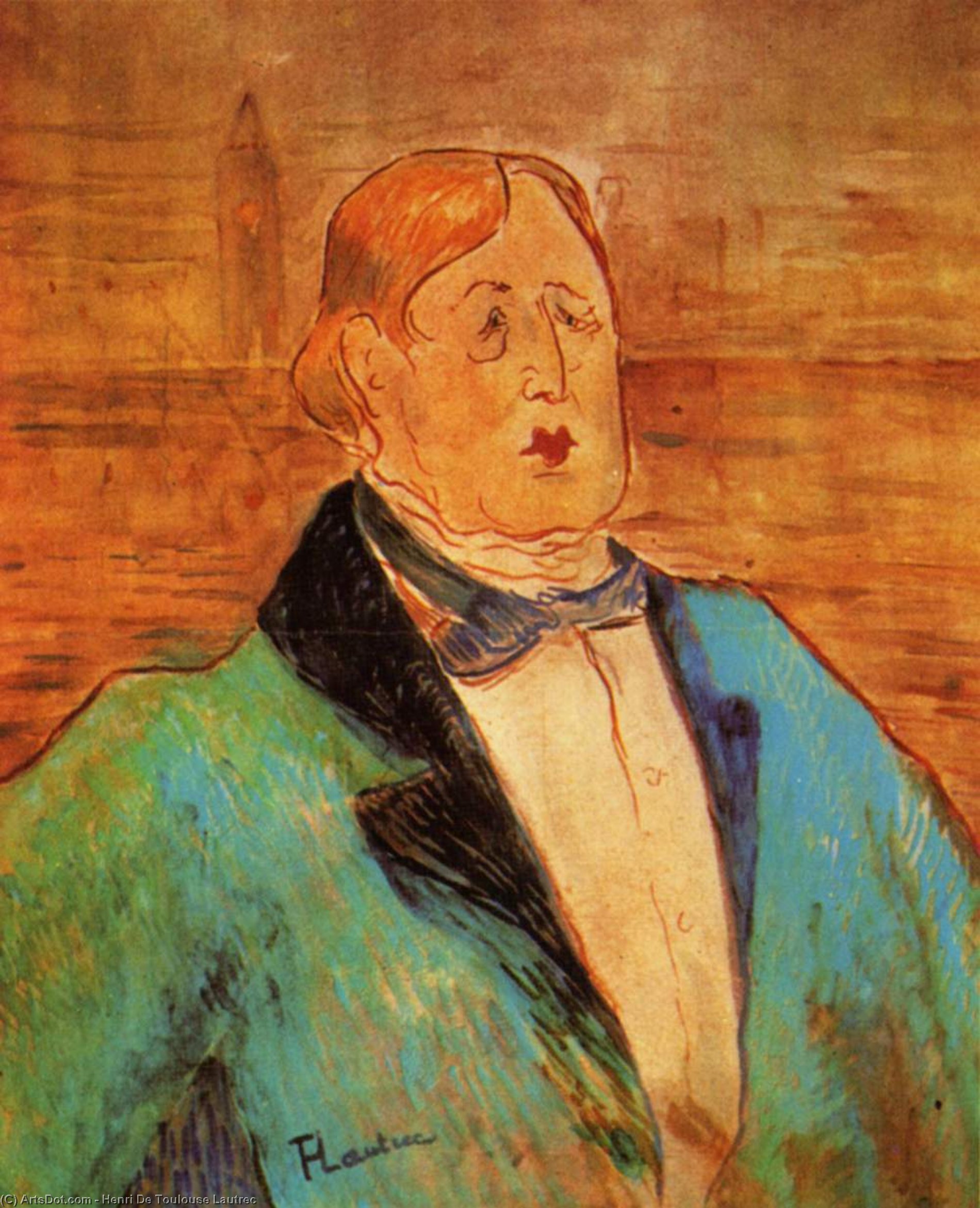
Portrait of Oscar Wilde – A Post-Impressionist Masterpiece
Henri de Toulouse-Lautrec’s “Portrait of Oscar Wilde” is more than just a likeness; it's a potent distillation of the artist’s unique vision and his profound engagement with the vibrant, often turbulent world of Montmartre. Completed in 1895, this intimate portrait captures not merely Wilde’s physical presence but also the intellectual intensity and enigmatic charm that defined him as a literary icon. Measuring just 58 x 48 cm, the painting's scale forces a direct connection with the viewer, amplifying the sense of intimacy and observation central to Lautrec’s artistic practice.
The Artist & His Vision
Born Henri Marie Raymond de Toulouse-Lautrec-Monfa in Albi, France, in 1864, Lautrec's life was inextricably linked with physical adversity. A genetic condition severely impacted his skeletal development, resulting in a distinctive and instantly recognizable physique. This physical difference profoundly shaped his artistic perspective – he wasn’t seeking to overcome it through conventional beauty standards but rather to meticulously observe and portray the overlooked corners of Parisian society. His aristocratic background provided access to training, yet it was his empathy for the marginalized, particularly artists and performers, that fueled his most celebrated work. The portrait itself reflects this deeply personal connection; Lautrec clearly sought to capture not just Wilde’s appearance but also a glimpse into his soul.
Post-Impressionist Style & Technique
“Portrait of Oscar Wilde” firmly establishes Lautrec within the Post-Impressionist movement. Rejecting the purely optical focus of Impressionism, Lautrec employed bolder brushstrokes and a more expressive use of color to convey mood and emotion. Notice the deliberate roughness of the paint application – it’s not about photographic realism but rather an attempt to capture the essence of Wilde's character through texture and tone. The composition itself is carefully constructed: the slightly off-kilter gaze, the formal suit juxtaposed with the casual pose, all contribute to a sense of unease and intellectual stimulation. Lautrec’s masterful use of light and shadow further enhances this effect, creating a dramatic interplay that draws the viewer into Wilde's world.
Symbolism & The Portrait as Narrative
Beyond its aesthetic qualities, the portrait is laden with symbolic meaning. Wilde himself was a master of symbolism, and Lautrec’s depiction subtly echoes this. The glasses – a signifier of intellect and perhaps even eccentricity – combined with the bow tie, suggest a cultivated gentleman. The off-kilter gaze hints at a hidden thought, inviting speculation about Wilde's inner world. Furthermore, the painting was created just days before Wilde’s infamous trial, adding a layer of tragic irony to the scene. It is believed Lautrec captured this moment, reflecting on Wilde’s predicament and the precariousness of fame and fortune. The portrait becomes not simply a representation of a man but a visual meditation on themes of beauty, morality, and the consequences of ambition – all central concerns within Wilde's own life and work, particularly evident in his novel *The Picture of Dorian Gray*.