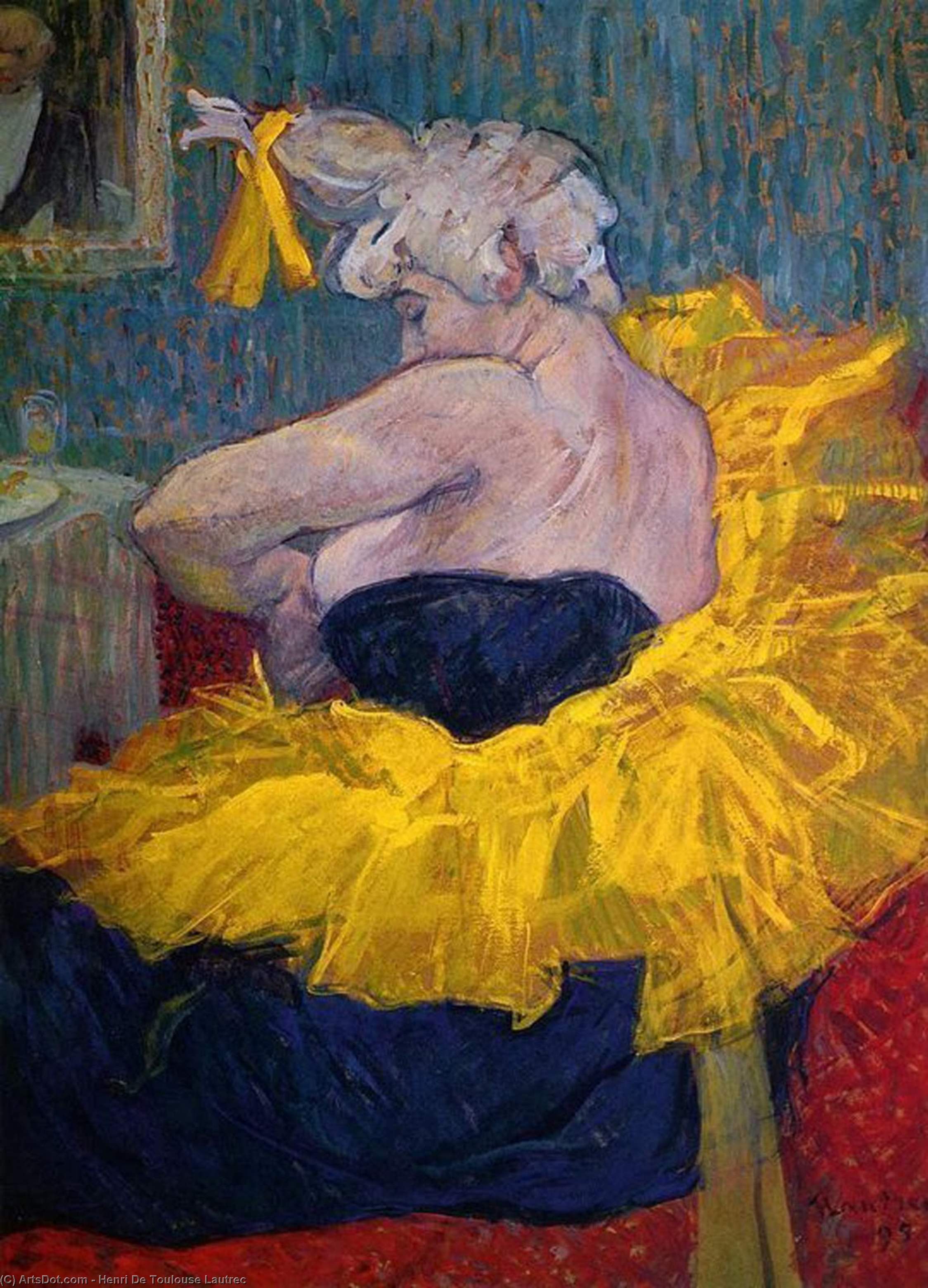
A Private Moment in the Heart of Montmartre
In the flickering candlelight of late 19th-century Paris, few artists captured the raw, unvarnished soul of the Belle Époque quite like Henri de Toulouse-Lautrec. His masterpiece, "The Clowness Cha-U-Kao Fastening Her Bodice," painted in 1895, invites the viewer to step behind the velvet curtains of the Moulin Rouge and into a rare, intimate sanctuary. While much of Lautrec’s fame rests upon his vibrant lithographs of crowded dance halls, this oil on panel offers a profound departure from the spectacle. Here, we find Cha-U-Kao, a celebrated dancer and clown, caught in a quiet, solitary moment of preparation. As she leans forward to secure the large, luminous yellow ruffle of her costume, the frantic energy of the chahut dance is replaced by a heavy, contemplative stillness.
The subject herself carries a fascinating history; her very name is a phonetic play on the French words for acrobatic chaos and uproar. Yet, in this composition, there is no chaos—only the delicate, almost vulnerable task of dressing. The way she interacts with her costume creates a sense of tactile reality that draws the observer into her personal space. This piece does not merely depict a performer; it captures the human being beneath the greasepaint, offering a glimpse into the private rituals that precede the public persona.
Mastery of Color and Expressive Texture
Toulouse-Lautrec’s technical prowess is on full display through his signature use of impasto and bold, emotive color palettes. The painting is anchored by a striking contrast between the brilliant, sun-drenched yellow of the woman's bodice and the deep, cool blues of her hair accessories. These hues are not merely decorative; they vibrate against the more muted, earthy tones of the background, creating a visual tension that keeps the eye moving across the canvas. His brushwork is famously energetic, utilizing thick applications of paint to create a surface that feels alive with texture and movement.
The artist employs a sophisticated use of light and shadow to build depth within the small, enclosed space. Notice how the light catches the folds of the yellow fabric, lending it a sculptural quality, while the background figures—partially obscured and softly rendered—provide a sense of environmental context without distracting from the central figure. This technique of chiaroscuro-inspired layering allows Lautrec to direct the viewer's focus with surgical precision, ensuring that the emotional weight of Cha-U-Kao’s expression remains the undisputed heart of the work.
A Timeless Addition for the Discerning Collector
For the art enthusiast or interior designer, a reproduction of this caliber offers more than just aesthetic beauty; it brings a piece of Parisian history into the modern home. The painting serves as a sophisticated focal point that complements both classical and contemporary decor. Its ability to evoke nostalgia for the bohemian spirit of Montmartre makes it an ideal choice for spaces designed to inspire creativity and conversation. Whether placed in a sunlit study or a moody, dimly lit gallery wall, the work radiates a sense of aristocratic elegance blended with bohemian grit.
Investing in a high-quality hand-painted reproduction allows one to possess the emotional depth and historical significance of Lautrec’s vision. The interplay of the bright yellow ruffles against the darker, more somber tones of the room provides a versatile color palette that can anchor a room's design. To own this piece is to hold a fragment of the nocturnal soul of Paris—a permanent tribute to the beauty found in life's most fleeting and private moments.