A Quiet Intimacy: The Soul of Parisian Solitude
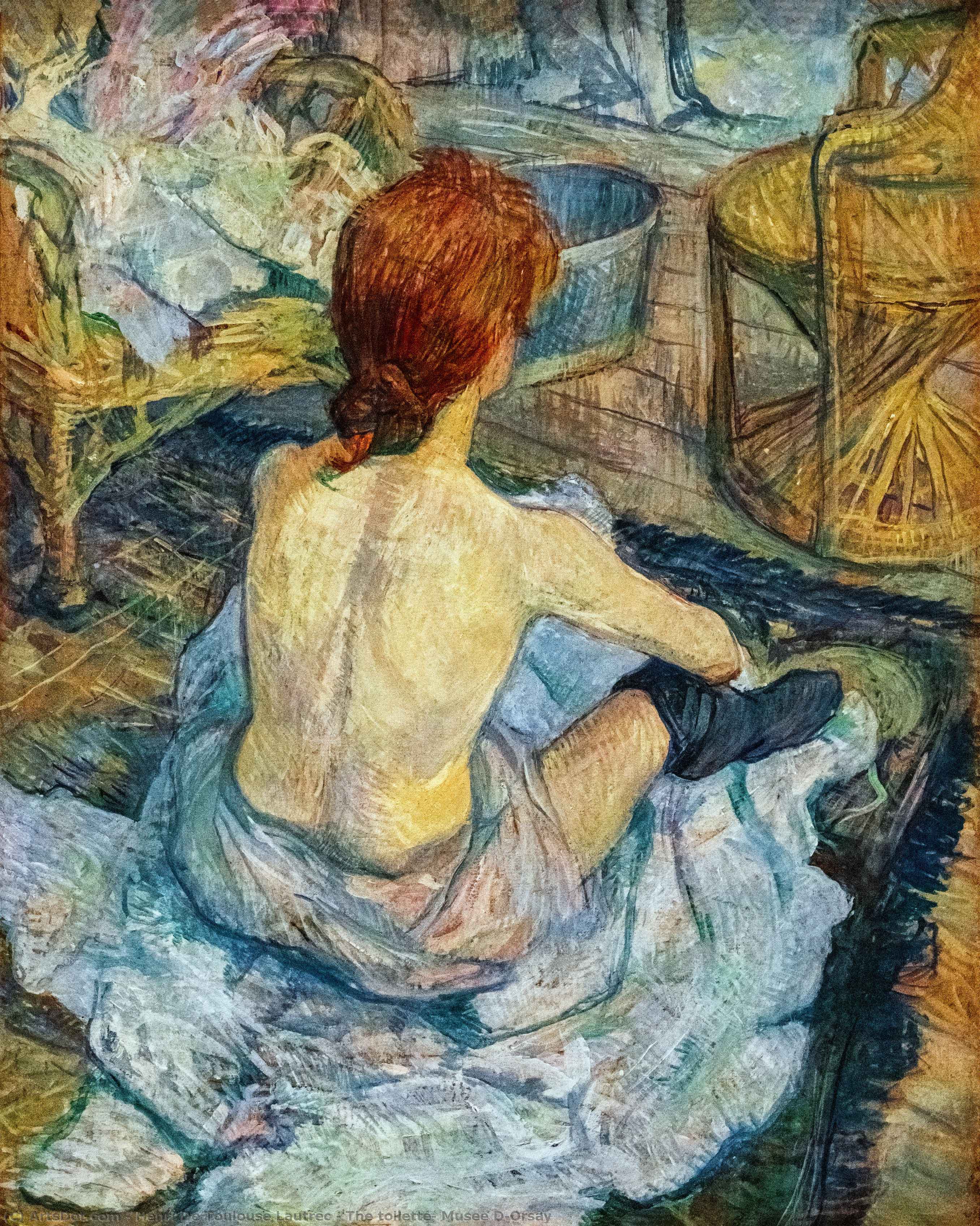
In the heart of the Musée d’Orsay lies a masterpiece that whispers rather than shouts, a profound meditation on femininity and private ritual captured by Henri de Toulouse-Lautrec in 1896. The Toilette is far more than a mere depiction of a woman preparing herself; it is a window into the very soul of late 19th-century Paris. The scene unfolds with a deceptive simplicity, presenting a woman seated on the floor, her back turned to the viewer in a gesture that suggests both vulnerability and a sacred sense of privacy. There is no grand theatricality here, only the quiet, unvarnished reality of a domestic moment. Through his masterful use of light, Toulouse-Lautrec invites us into this intimate sphere, making the viewer feel less like an intruder and more like a silent witness to a fleeting, beautiful moment of introspection.
The composition is anchored by a careful arrangement of everyday objects that breathe warmth into the sparse room. A chair with a patterned backrest stands to the left, draped with clothing that hints at the life lived beyond this single frame, while a simpler chair on the right provides a sense of domestic stability. The floor, covered in a geometrically patterned rug, adds a layer of tactile depth to the scene. As light filters through an unseen window, it illuminates the woman’s skin and the soft drapery around her, creating a cocoon of comfort. This strategic placement of elements—the vase on the wall, the scattered bowls, the play of shadows—speaks to the artist's desire to find extraordinary beauty within the ordinary, turning a mundane morning routine into a poetic tableau.
Post-Impressionist Mastery and the Language of Color
Technically, The Toilette stands as a brilliant testament to the Post-Impressionist movement. Moving away from the fleeting light-studies of his Impressionist predecessors, Toulouse-Lautrec utilized a more expressive and emotive palette to convey psychological depth. He employs a sophisticated range of ochre, amber, and rose tones to bathe the subject in a warm, inviting glow, contrasted beautifully by cooler blues and yellowish greens that define the shadows and the room's atmosphere. His technique is characterized by loose, impasto brushstrokes—thickly applied paint that lends a physical texture to the canvas, making the light feel as though it is vibrating against the skin of the subject.
For the discerning collector or interior designer, this painting offers an unparalleled emotional resonance. The way the artist uses color to create an illusion of warmth makes the piece an ideal centerpiece for spaces designed for relaxation and contemplation. Whether placed in a sun-drenched morning room or a moody, sophisticated study, the artwork brings with it a sense of timeless elegance and a calm, grounded energy. It is a piece that does not demand attention through noise, but rather commands it through its profound ability to evoke a sense of peace, making it an exquisite choice for those looking to infuse their homes with the storied, bohemian spirit of Montmartre.