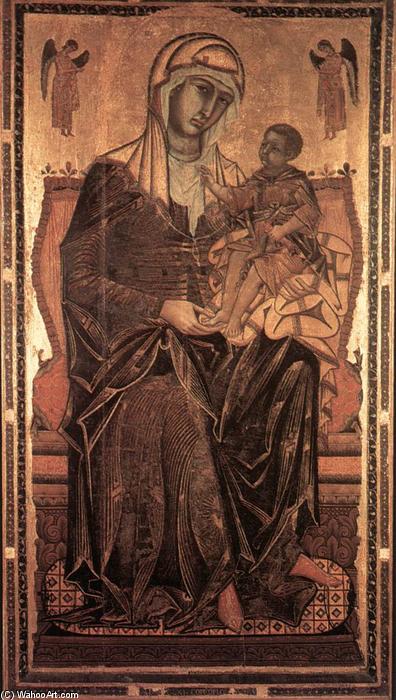
The
Madonna del Bordone is a stunning example of medieval art, created by the renowned artist
Coppo Di Marcovaldo in 1261. This tempera on wood painting measures 225 x 125 cm and is housed in the
Santa Maria dei Servi museum in Siena, Italy. The painting's beauty and historical significance make it a must-see for art enthusiasts.
Artistic Style and Composition
The
Madonna del Bordone showcases
Coppo Di Marcovaldo's mastery of the Gothic style, characterized by elongated necks and faces, and a sense of verticality. The painting's composition is balanced and harmonious, with the Virgin Mary and Child at its center. The use of earth tones and gold adds to the overall sense of opulence and spirituality.
Key Features of the painting include:
- The intricate border with patterns and designs that frame the central scene
- The two angels on either side of the composition, adding to the religious atmosphere
- The use of tempera on wood, a technique typical of medieval art
Historical Significance and Preservation
The
Madonna del Bordone is not only a beautiful work of art but also an important part of history. Created in 1261, it has been well-preserved or restored, with vibrant colors and clear details still visible today. For more information on the painting and its artist, visit
Coppo Di Marcovaldo: Madonna del Bordone on ArtsDot.com. To learn more about the
Santa Maria dei Servi museum, where the painting is housed, visit
The Museum Santa Maria dei Servi (Siena, Italy).
The
Madonna del Bordone is a testament to the skill and devotion of
Coppo Di Marcovaldo and a remarkable example of medieval art. Its beauty and historical significance make it a must-see for anyone interested in art and history. Visit ArtsDot.com to explore more artworks, including those by other renowned artists like
Ambrogio Lorenzetti and
Jacopo Della Quercia.