A Symphony of Opulence: The Luminous World of Cornelis de Heem
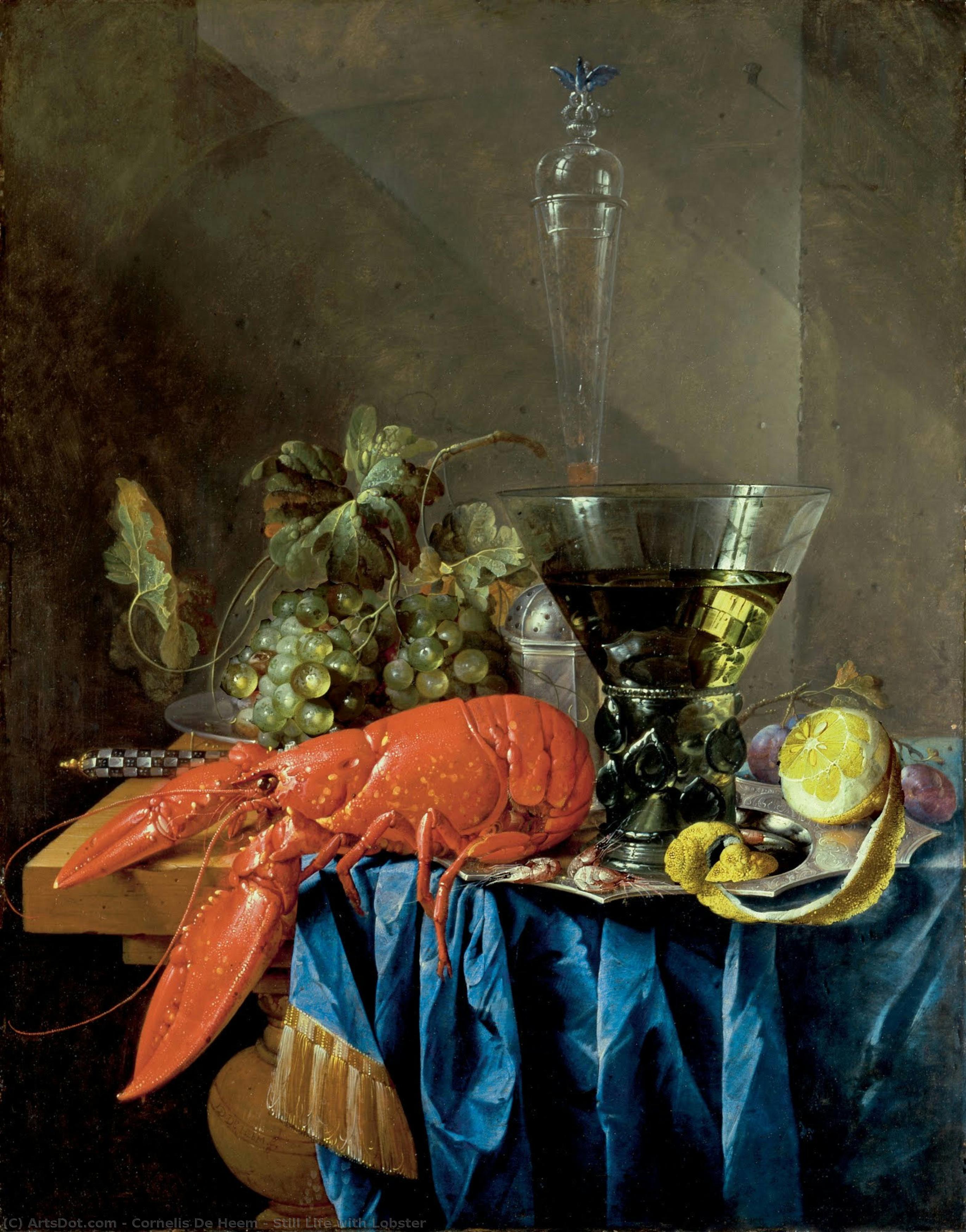
In the quiet, shadowed corners of the Dutch Golden Age, few artists possessed the ability to command the viewer's gaze with such visceral intensity as Cornelis de Heem. His masterpiece, Still Life with Lobster, is not merely a depiction of food; it is a theatrical performance captured in oil. At first glance, the eye is immediately arrested by the vibrant, fiery orange of a lobster, which sits center stage upon a meticulously rendered table. This creature, though lifeless, possesses a startling vitality that seems to pulse against the surrounding shadows. De Heem’s brushwork achieves a level of precision so profound that one feels an almost tactile urge to reach into the frame, to feel the cool smoothness of the silver cutlery or the delicate, translucent skin of the scattered grapes.
The technical brilliance of this work is inextricably linked to its medium. Painted upon a copper plate—an expensive and demanding support—the artwork benefits from a unique luminosity. The non-porous surface of the copper allows for incredibly fine layers of glaze, which enhances the saturation of the primary tones. This technique results in a breathtaking interplay of red, blue, and yellow that feels fresh and dew-kissed, as if the feast were laid out only moments ago. The artist masterfully balances the heavy, opulent textures of taffeta and mother pearl with the delicate, ephemeral nature of ripening fruit, creating a composition that is rich yet remarkably poised, never allowing the abundance to descend into clutter.
Symbolism and the Vanitas Tradition
Beyond its surface-level beauty, Still Life with Lobster serves as a profound meditation on the fleeting nature of existence. Within the context of 17th-century Dutch culture, such paintings often functioned as vanitas—reminders of the transience of life and the inevitability of decay. While the lemons, grapes, and silver appear eternal in their perfection, they are inherently subject to time. The lobster, though rendered with a lifelike brilliance, is a silent testament to mortality. De Heerm invites the viewer into a sensory feast that simultaneously whispers of the ephemeral nature of earthly pleasures. This duality creates a captivating emotional tension, making the piece much more than a decorative object; it is an intellectual journey through the concepts of luxury and loss.
For the discerning collector or interior designer, this painting offers a timeless elegance that transcends eras. Its ability to anchor a room with its dramatic chiaroscuro—the masterful contrast between deep, velvety shadows and brilliant highlights—makes it an ideal centerpiece for sophisticated spaces. Whether placed in a contemporary gallery setting or a classic study, a high-quality reproduction of this work brings with it the prestige of the Old Masters. It serves as a conversation piece that celebrates the meticulous craftsmanship of the Dutch Golden Age, offering a window into a world where every grape, every drop of moisture, and every glint of silver tells a story of splendor and the inevitable passage of time.