The
Tavern Scene painting by
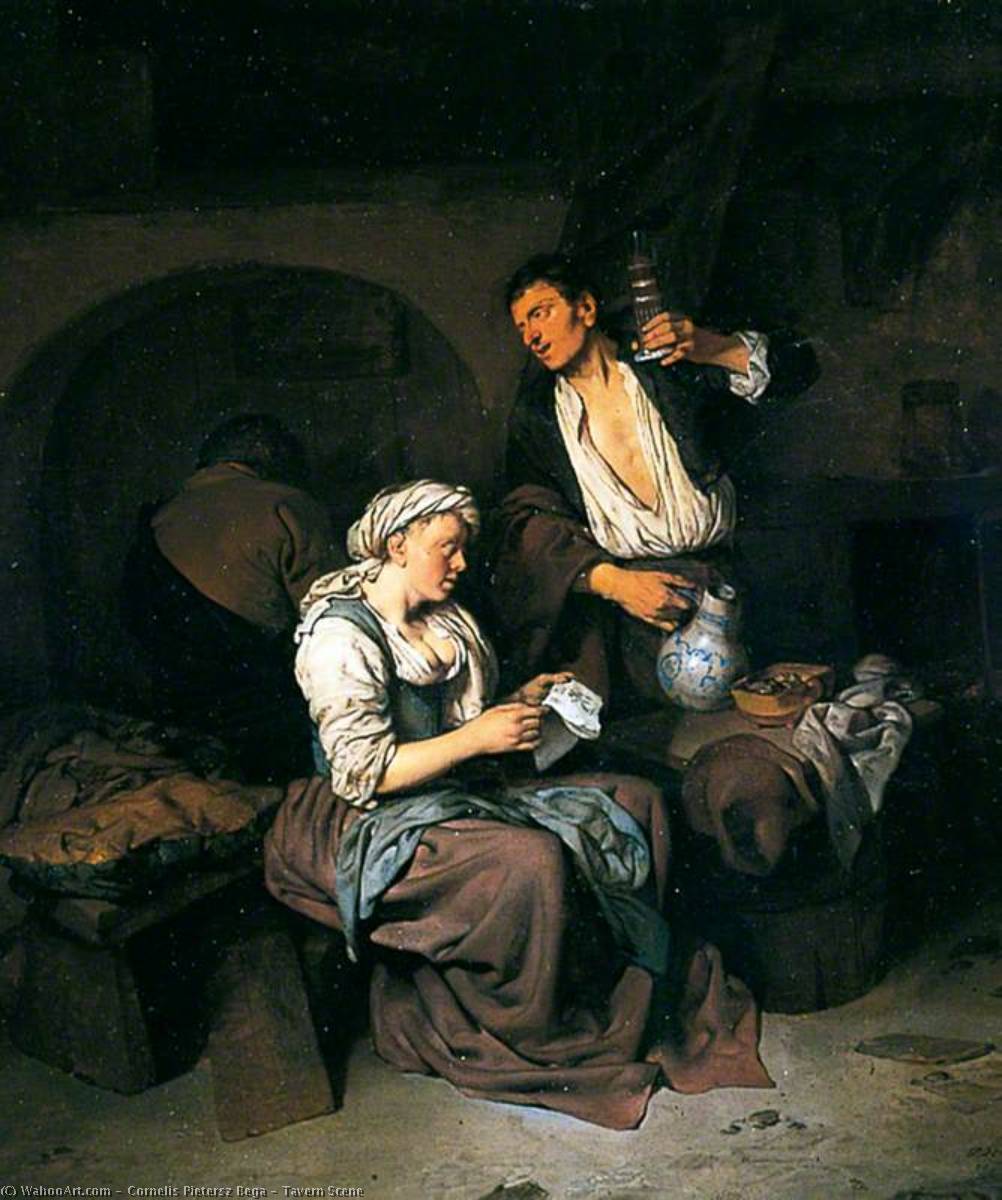
Cornelis Pietersz Bega is a masterpiece of Dutch Golden Age art, showcasing the artist's exceptional skill in capturing the essence of everyday life. Created in 1662, this oil on canvas painting measures 38 x 34 cm and is a remarkable example of the artist's ability to convey the warmth and intimacy of a social gathering.
Composition and Style
The composition of the
Tavern Scene is characterized by a sense of harmony and balance, with the figures arranged in a circular pattern around the table. The use of warm colors, such as golden brown and beige, creates a cozy atmosphere, while the subtle play of light and shadow adds depth and dimension to the scene. The artist's brushstrokes are bold and expressive, imbuing the painting with a sense of energy and vitality.
Key Elements of the painting include:
- The central figure of the man pouring wine into a glass, which serves as a focal point for the composition
- The woman sitting nearby, who appears to be engaged in conversation with the man
- The bowl on the table, which adds a sense of abundance and generosity to the scene
Artist and Context
Cornelis Pietersz Bega was a Dutch painter who was active during the 17th century. His work is characterized by a focus on everyday life, and he is known for his ability to capture the warmth and intimacy of social gatherings. The
Tavern Scene is a prime example of his skill in this regard, and it can be seen as part of a larger tradition of Dutch Golden Age painting that emphasizes the importance of community and social bonding. For more information on
Cornelis Pietersz Bega and his work, visit
/art/list/?Filter=AQR53U-Cornelis-Pietersz-Bega-Tavern-Scene or
https://en.wikipedia.org/wiki/Cornelis_Pietersz_Bega The
Szépmûvészeti Múzeum in Budapest, Hungary, is home to a number of notable works by
Cornelis Pietersz Bega, including the
Tavern Scene. For more information on the museum and its collection, visit
/art/list/?Filter=tavern+scene,tavern,scene&