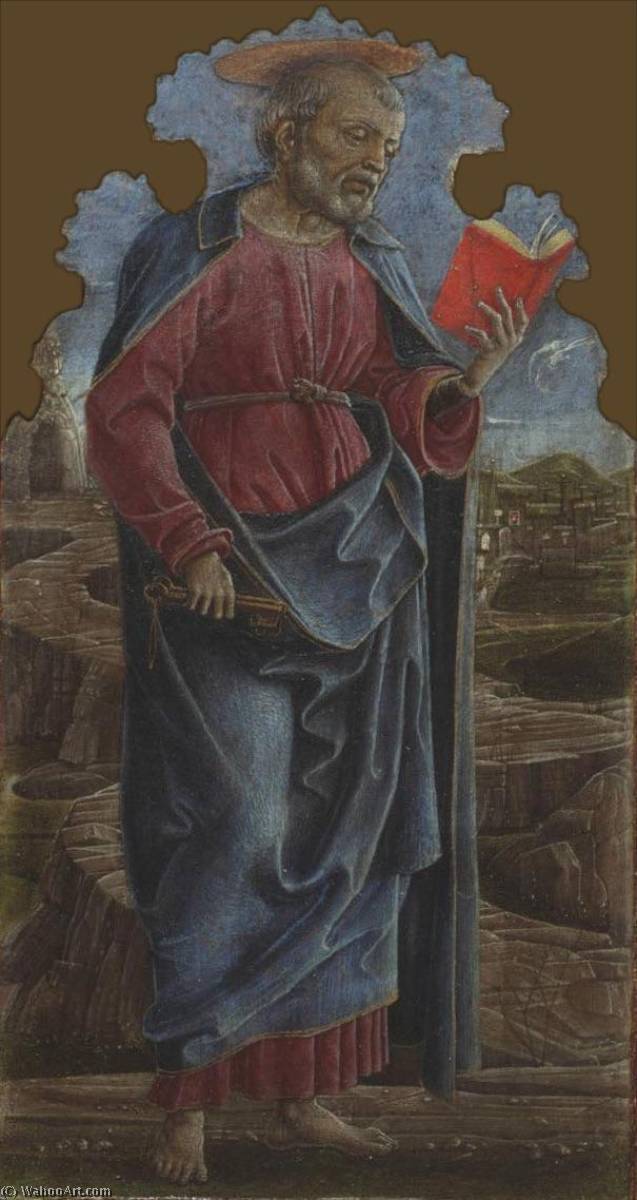
Cosmè Tura was a renowned Italian painter from the early Renaissance period, and his work
Saint Peter is a testament to his exceptional skill and artistry. Created in 1474, this oil on panel painting measures 24 x 14 cm and is currently housed at the
Philadelphia Museum of Art.
The Painting's Significance
Saint Peter is a remarkable example of
Quattrocento art, characterized by its use of symbolism, intricate details, and masterful composition. The painting depicts Saint Peter standing on rocks, holding a book in his hand, with two birds visible in the scene. The level of detail and realism achieved by
Cosmè Tura is impressive, making this painting a standout piece from the 15th century.
Artistic Style and Influences
Cosmè Tura's style was influenced by the
Ferrarese school, which emphasized realism, harmony, and balance in art. His work
Saint Peter showcases these characteristics, with a focus on creating a sense of depth and dimensionality. The use of oil on panel allowed for greater detail and texture, adding to the overall impact of the painting.
Discover more about Cosmè Tura and his contributions to the art world on Wikipedia.
Saint Peter is a masterpiece that continues to inspire and awe art lovers today, and its significance in the history of art is undeniable. As a testament to
Cosmè Tura's skill and artistry, this painting remains an important part of our cultural heritage.