A Vision of Renaissance Grace
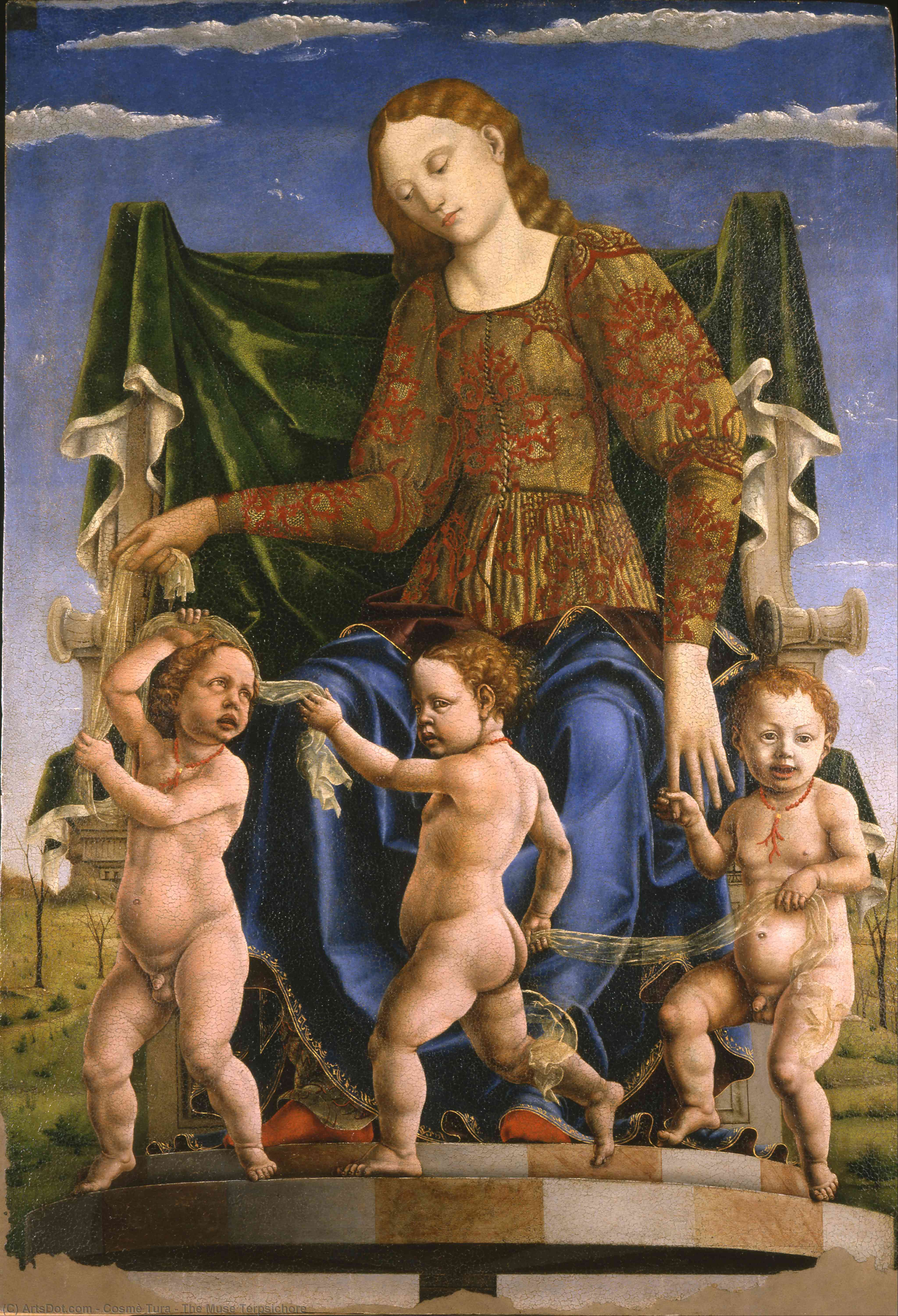
In the delicate, intimate scale of The Muse Terpsichore, we encounter a profound moment of Early Renaissance tenderness captured by the Ferrarese master, Cosmè Tura. Painted around 1460, this exquisite work transcends its small dimensions to present a scene of deep spiritual and maternal resonance. At first glance, the composition draws the eye to a central figure of ethereal beauty, a woman whose presence radiates a quiet, divine authority. Clad in a striking blue dress accented with shimmering gold trim, she cradles two children within her lap, their forms intertwined in a moment of innocent play. While the title evokes the Muse of dance, the visual language—the way she holds the infants and the solemnity of her gaze—strongly suggests the iconography of the Virgin Mary, transforming a classical theme into a poignant devotional experience.
The painting is far more than a simple portrait; it is a complex tapestry of figures that invites the viewer to linger and explore. Beyond the central maternal bond, Tura populates the periphery with secondary figures that lend a sense of narrative depth and architectural mystery to the scene. A figure stands sentinel in the background, while others emerge from the shadows near the edges of the frame, creating a layered composition that pulls the observer into a larger, unseen world. This arrangement of bodies creates a rhythmic movement across the 12 x 8 cm surface, mirroring the very essence of Terpsichore herself—the spirit of harmony and motion.
The Mastery of the Ferrara School
To behold this work is to witness the burgeoning genius of the Ferrara School. Cosmè Tura, a pioneer of this movement, was renowned for his ability to blend robust, sculptural forms with an almost metallic, decorative precision. In The Muse Terpsichore, one can observe his signature use of expressive, sinuous lines and a meticulous attention to detail that defines the period. The way light catches the gold trim of the blue drapery and the soft, rounded contours of the children's skin demonstrates a sophisticated command of texture and luminosity. Tura’s technique, likely refined through his exposure to the innovative workshops of Padua and the classical influences of the era, allows him to imbue even the smallest detail with a sense of monumental importance.
For the discerning collector or interior designer, this piece offers an unparalleled opportunity to introduce a touch of historical grandeur into a contemporary space. The emotional impact of the work lies in its duality: it is simultaneously a study of delicate human connection and a display of formidable artistic skill. Whether placed as a focal point in a curated gallery wall or used to add a layer of classical sophistication to a refined study, a high-quality reproduction of this masterpiece serves as a window into the soul of the 15th century. It is an invitation to contemplate the enduring power of beauty, movement, and the timeless bond of care.