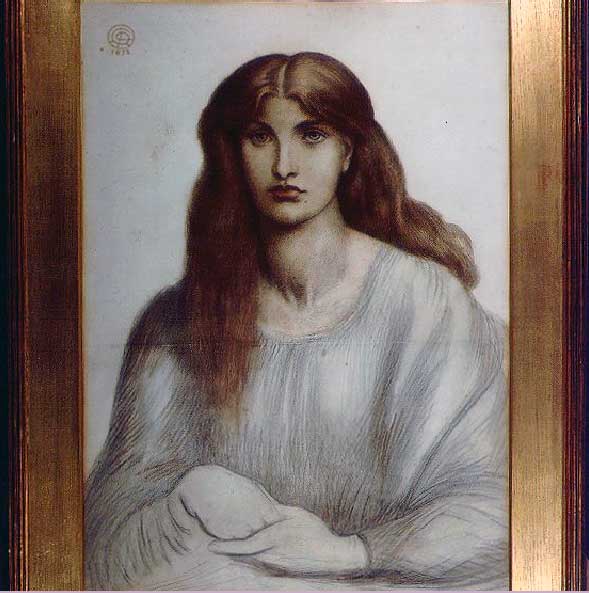
Discover Dante Gabriel Rossetti's captivating portrait of Alexa Wilding (1877). This Pre-Raphaelite masterpiece showcases Rossetti’s romantic style and exquisite detail.
Explore the Pre-Raphaelite art of Dante Gabriel Rossetti (1828-1882). Discover his sensual paintings, symbolic poetry & medieval themes – a key figure in Aestheticism & Symbolism.
A Glimpse into Rossetti’s World: Alexa Wilding
Dante Gabriel Rossetti's portrait of Alexa Wilding, completed in 1877, is more than just a likeness; it’s a window into the Pre-Raphaelite soul. The painting captures a woman of quiet intensity, her gaze meeting the viewer with an almost unsettling directness. Rendered in delicate chalk, the work possesses a softness that belies its underlying strength. Wilding, draped in a simple white dress, is presented not as a figure of flamboyant display but as a study in contemplative beauty. Her dark hair, pulled back to reveal the graceful line of her neck, frames a face imbued with both vulnerability and resolve. The choice of chalk lends an ethereal quality to the portrait, enhancing the romantic sensibility that defines Rossetti’s oeuvre. It's a technique that allows for subtle gradations of tone and texture, perfectly suited to capturing the nuances of human emotion.
The Muse and the Movement
Alexa Wilding was no fleeting fancy in Rossetti’s artistic life; she became one of his most frequent models, surpassing even the celebrated Elizabeth Siddal and Jane Morris in the sheer number of finished works she graced. Unlike her predecessors, whose relationships with Rossetti were often entangled with passionate affairs, Wilding's connection to the artist appears to have been more professional, yet no less significant. This distinction is crucial when understanding the character of the portraits themselves. Where Siddal and Morris frequently embodied tragic or overtly sensual themes, Wilding’s presence tends towards a more restrained, introspective quality. She represented a different facet of Rossetti's artistic vision – one that valued quiet dignity and inner life. The Pre-Raphaelite Brotherhood, which Rossetti co-founded in 1848, sought to reject the academic conventions of their time, returning instead to the detailed realism and vibrant colors found in early Italian art. This pursuit of authenticity extended beyond technique; it encompassed a desire to portray subjects with psychological depth and emotional honesty.
Symbolism and Emotional Resonance
While seemingly straightforward as a portrait, *Alexa Wilding* is steeped in subtle symbolism characteristic of Rossetti’s work. The object held delicately in her hand remains ambiguous, inviting speculation about its meaning – perhaps a flower representing fleeting beauty, or a symbol of hidden desires. The simplicity of the composition focuses all attention on the sitter's face and expression. Her serious demeanor isn’t cold but rather suggests a thoughtful interiority, a sense of being lost in contemplation. Rossetti was fascinated by the complexities of female psychology, often portraying women as enigmatic figures possessing both strength and fragility. This painting exemplifies that fascination, offering a glimpse into a world of unspoken emotions and hidden depths. The overall effect is one of melancholic beauty, a hallmark of the Pre-Raphaelite aesthetic.
A Legacy of Beauty for Modern Interiors
Today, *Alexa Wilding* continues to captivate viewers with its timeless appeal. A reproduction of this work brings a touch of Victorian elegance and artistic sophistication to any space. The muted color palette and delicate lines make it a versatile addition to various interior styles, from traditional to contemporary. Imagine this portrait gracing the wall of a study, lending an air of intellectual refinement, or adding a romantic touch to a bedroom. Its intimate scale makes it equally suitable for smaller spaces, creating a focal point that invites quiet contemplation. For collectors and art enthusiasts alike, owning a hand-painted reproduction allows one to connect with Rossetti’s artistic genius and the enduring legacy of the Pre-Raphaelite movement. It is an investment in beauty, history, and emotional resonance—a piece that will undoubtedly enrich any collection or home for generations to come.