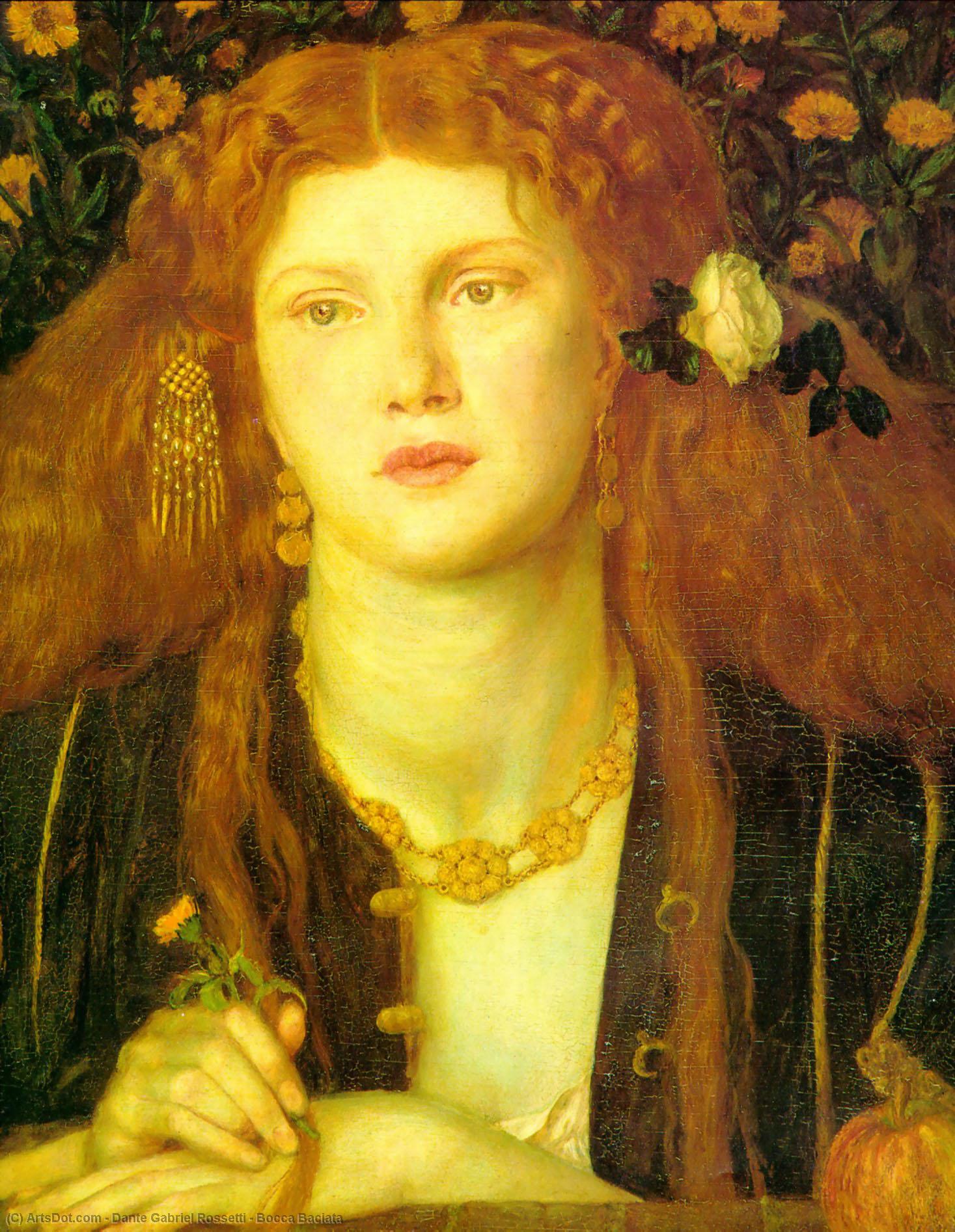
Delve into Dante Gabriel Rossetti's masterpiece 'Bocca Baciata,' a sensual Pre-Raphaelite portrait capturing beauty and longing through vibrant colors, intricate detail, and Venetian influences.
Bocca Baciata - Dante Gabriel Rossetti’s Sensuous Exploration of Desire
Dante Gabriel Rossetti's *Bocca Baciata*, completed in 1859, stands as a cornerstone of Pre-Raphaelite art and embodies the movement’s fascination with beauty, mythology, and psychological depth. More than just a portrait, it’s an embodiment of Romantic ideals translated into visual form—a testament to Rossetti's masterful command of color, texture, and composition.
- Subject Matter: The painting depicts Fanny Cornforth, Rossetti’s muse and lover, posed in a luxurious gown adorned with opulent floral decorations. This deliberate choice aligns perfectly with Pre-Raphaelite conventions—the depiction of idealized female figures within richly ornamented settings—reflecting an interest in reviving medieval artistic traditions.
- Style & Technique: Rossetti employed oil paint on panel, utilizing a technique characterized by visible brushstrokes that contribute to the artwork’s tactile quality and imbue it with a sense of immediacy. The artist meticulously rendered fabric textures, mirroring the meticulous attention to detail prevalent throughout Pre-Raphaelite painting.
- Color Palette: Dominating the canvas is a vibrant palette dominated by warm hues—deep reds, oranges, yellows, and browns—creating an atmosphere of sensual warmth and inviting contemplation. Cooler greens and subtle blues appear in the floral arrangement, providing crucial visual contrast and enhancing the overall harmony of the composition.
- Composition & Perspective: The portrait’s central placement emphasizes Fanny Cornforth's gaze directly toward the viewer, fostering a connection between subject and observer—a hallmark of Romantic art. Despite a relatively flat perspective, Rossetti skillfully utilizes flowing lines to guide the eye across the canvas, creating a dynamic visual flow that draws attention to the woman’s face and hair.
Symbolism: Lips That Whisper Secrets
The title itself—*Bocca Baciata*, meaning “lips that have been kissed”—holds profound symbolic significance rooted in Italian folklore. Rossetti drew inspiration from a proverb stating, “The mouth that has been kissed does not lose its good fortune; rather, it renews itself just as the moon does,” reflecting an exploration of themes related to desire, passion, and eternal beauty—concepts central to Pre-Raphaelite spirituality.
Historical Context: A Reaction Against Academic Conventions
Rossetti’s *Bocca Baciata* emerged during a period marked by significant artistic upheaval. Rejecting the rigid formalism of academic painting, the Pre-Raphaelites championed a return to naturalism and emotional expression—a deliberate defiance of prevailing artistic trends. Rossetti's work exemplifies this ethos, prioritizing beauty and sensual experience over intellectual abstraction.
Emotional Impact: Capturing Transient Beauty
Ultimately, *Bocca Baciata* succeeds in conveying a palpable sense of romantic longing and idealized femininity. The soft lighting and meticulous rendering of texture contribute to an atmosphere of serene contemplation—a reminder that Rossetti’s artistic vision sought not merely to depict reality but to evoke emotion and capture the fleeting beauty of human experience.