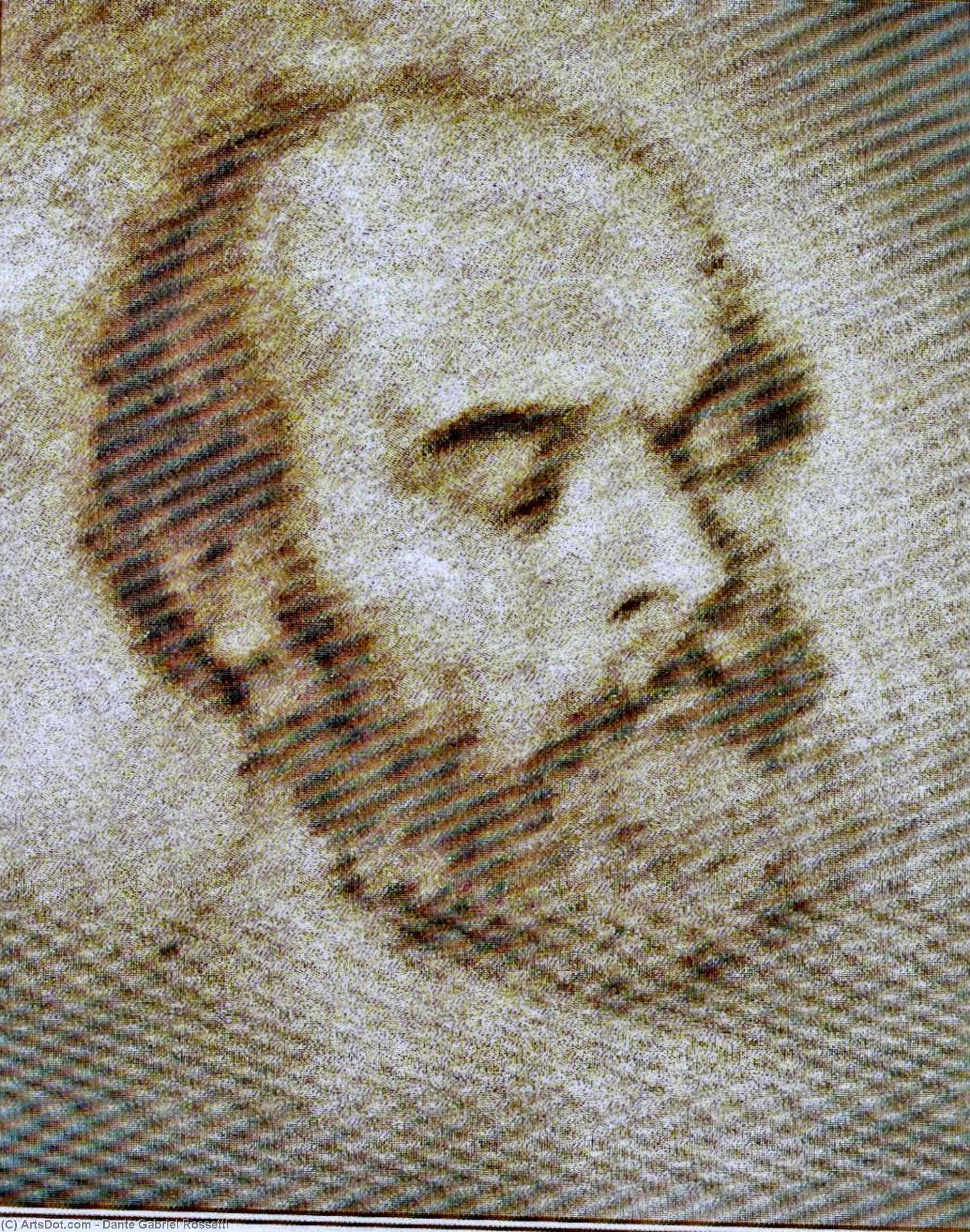
A captivating black and white photograph by Dante Gabriel Rossetti from 1882 depicts a serious man with a beard and mustache alongside a matching portrait, showcasing the artist's Victorian era style and offering a timeless aesthetic to own.
A Portrait of Introspection: Rossetti’s ‘Drawing’ – A Window into Victorian Soul
Dante Gabriel Rossetti's “Drawing,” created in 1882, is more than just a portrait; it’s a meticulously crafted meditation on identity and the anxieties of a rapidly changing era. The photograph itself, depicting a man with a distinguished beard and mustache – likely Rossetti himself – immediately evokes the sensibilities of the late Victorian period. His serious gaze, framed by spectacles, speaks volumes about the intellectual currents swirling around him, mirroring the burgeoning interest in psychology and self-reflection that characterized the time. The inclusion of a smaller painting depicting the same subject within the larger image creates a layered narrative, inviting viewers to contemplate the complexities of representation itself – is it a faithful likeness or a carefully constructed illusion?
- Subject: The central figure embodies the Romantic ideal of the introspective artist, a common theme in Rossetti’s oeuvre.
- Style: The work exemplifies Rossetti's signature Pre-Raphaelite style – characterized by rich color palettes, meticulous detail, and an emphasis on emotional resonance rather than strict realism.
Technique and Materials: A Pre-Raphaelite Masterclass
Rossetti’s technique in “Drawing” is a testament to his mastery of the medium. The photograph captures the subtle nuances of light and shadow, indicative of his careful attention to detail. The painting within the photograph likely employs oil paints on canvas, utilizing layering techniques – a hallmark of Pre-Raphaelite art – to achieve depth and luminosity. Notice the delicate rendering of the facial features, the texture of the beard, and the subtle gradations in tone; these elements contribute to the overall sense of realism while simultaneously imbuing the portrait with an ethereal quality. The use of dark backgrounds further emphasizes the subject’s presence, drawing the viewer's eye directly to his face.
Historical Context: Victorian Doubt and Artistic Rebellion
Created in 1882, “Drawing” exists within a period of profound social and intellectual upheaval. The Victorian era was marked by rapid industrialization, scientific advancements, and growing anxieties about morality and faith. Rossetti, along with other Pre-Raphaelite artists, reacted against the perceived artificiality of academic art, seeking instead to reconnect with medieval aesthetics and explore themes of beauty, spirituality, and mortality. The inclusion of a painting within a photograph was itself a deliberate artistic statement – a nod to the conventions of portraiture while simultaneously questioning its authority. The image reflects the Victorian fascination with psychology and the exploration of the inner self, themes that would become increasingly prominent in late 19th-century art.
Symbolism and Emotional Impact: A Portrait of Contemplation
The man’s serious expression suggests a profound contemplation – perhaps a reflection on his own mortality, or a deeper engagement with the spiritual questions of the age. The glasses, a common symbol of intellect and observation, reinforce this impression. Rossetti's ability to capture such nuanced emotion is remarkable, inviting viewers to connect with the subject on a deeply personal level. “Drawing” transcends a simple portrait; it’s an evocative representation of Victorian sensibility – a testament to Rossetti’s artistic vision and his profound understanding of the human condition.