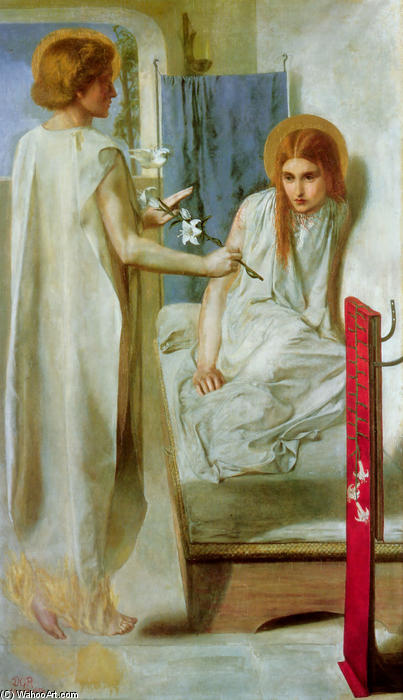
Ecce Ancilla Domini! – A Romantic Encounter with Divine Grace
Dante Gabriel Rossetti’s *Ecce Ancilla Domini*, painted in 1850, stands as a cornerstone of Pre-Raphaelite art—a movement dedicated to recapturing the spirit of early Renaissance painting and rejecting the academic conventions that dominated Victorian artistic circles. More than just a depiction of the Annunciation, it embodies Rossetti’s profound engagement with theological themes and his masterful command of visual language.
- Composition & Perspective: The artwork centers around two figures—Mary and Gabriel—seated on a bed, bathed in soft, diffused light emanating from an unseen source. This shallow perspective draws the viewer into the intimate scene, prioritizing emotional resonance over precise spatial realism. Rossetti deliberately avoids dramatic depth cues, fostering a contemplative atmosphere that mirrors the serenity of the biblical narrative.
- Style & Technique: Rossetti’s style firmly aligns with Romanticism—characterized by heightened emotion and idealized beauty—a reaction against the rationalism prevalent in Enlightenment thought. He employs oil paint with meticulous attention to detail, utilizing smooth brushstrokes and subtle gradations of color to achieve a luminous effect. The impasto technique—thickly applied paint—adds textural richness, particularly noticeable on Gabriel’s robes and Mary’s hair, conveying a sense of palpable presence.
- Color Palette & Symbolism: Dominating the palette are pale yellows, whites, and blues—colors associated with purity, divinity, and tranquility—reflecting Rossetti's artistic sensibilities. The lilies symbolize Mary’s virginity and grace, while the dove represents the Holy Spirit’s blessing upon her conception. Gabriel’s robe is adorned with a golden sphere containing cherubim and seraphim, symbolizing divine majesty and protection.
- Historical Context: Rossetti's artistic vision was profoundly influenced by the Pre-Raphaelite Brotherhood’s rejection of academic art and their admiration for Early Renaissance artists like Jan van Eyck and Simone Martini. The Brotherhood sought to revive medieval artistic ideals—truthfulness, beauty, and spiritual contemplation—a quest that found its expression in works such as *Ecce Ancilla Domini*.
- Emotional Impact: Ultimately, *Ecce Ancilla Domini* evokes feelings of peace, vulnerability, and quiet contemplation. Rossetti’s masterful portrayal captures the moment of divine intervention—the Angel Gabriel announcing Mary's pregnancy—with sensitivity and grace, inviting viewers to immerse themselves in a scene steeped in spiritual significance.
This exquisite reproduction allows you to experience the beauty and depth of Rossetti’s artistic legacy firsthand, bringing the serene stillness of this iconic Pre-Raphaelite masterpiece into your home.