A Lament for Innocence: Exploring Dante Gabriel Rossetti’s “Ecce Ancilla Domini!”
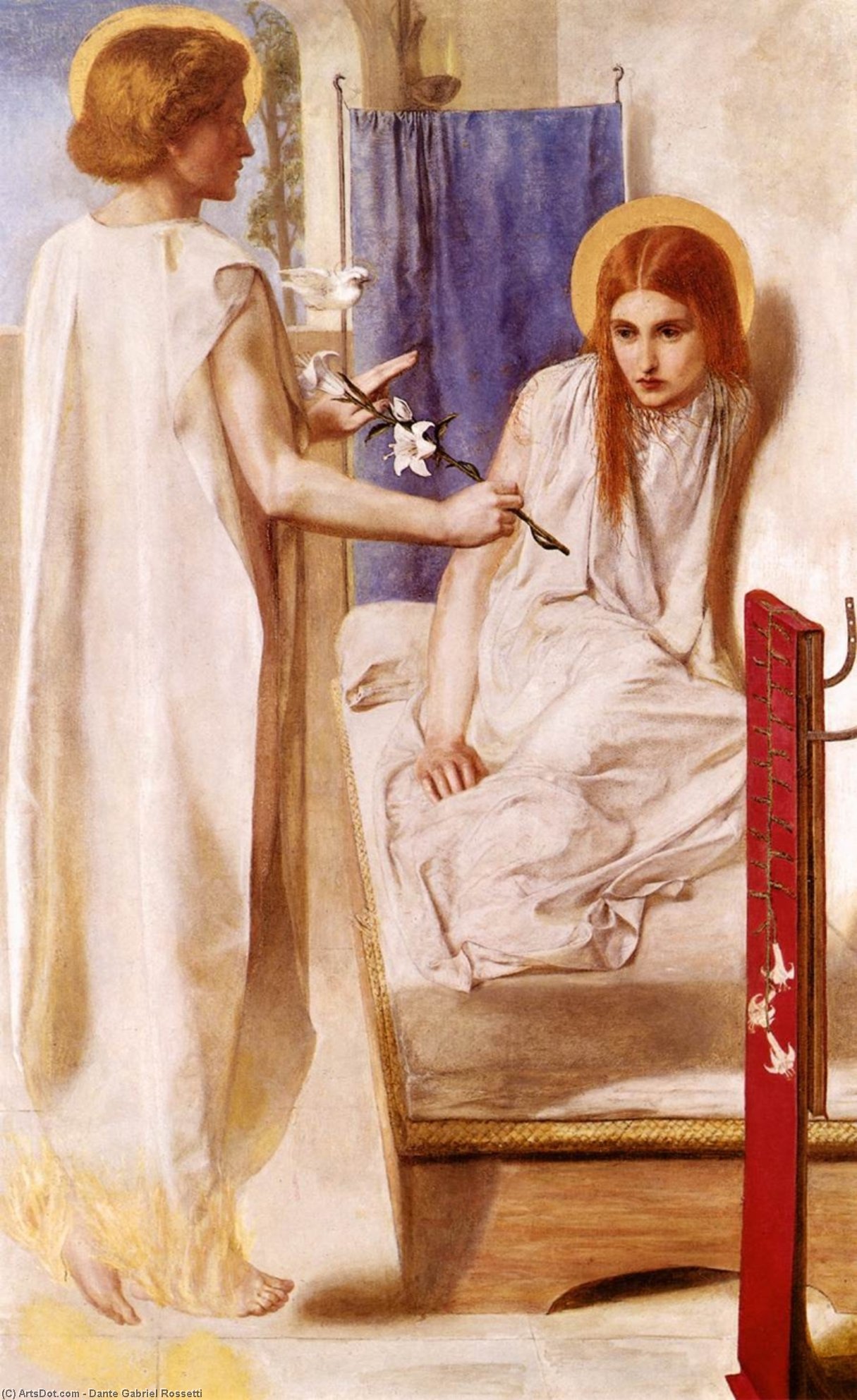
“Ecce Ancilla Domini!”, painted in 1850 by Dante Gabriel Rossetti, stands as a haunting meditation on mortality and faith—a cornerstone of Victorian Romanticism rendered with exquisite detail and imbued with profound symbolic resonance. This arresting depiction captures a moment of agonizing vulnerability, presenting a woman lying supine upon a bed, her head resting against the wall in a posture conveying both physical illness and spiritual despair. The scene is dominated by a palpable sense of sorrow, skillfully conveyed through Rossetti’s masterful use of color and texture.
- Style & Technique: Rossetti's approach aligns perfectly with the tenets of Romanticism, prioritizing emotion and imagination over strict realism. He employs oil paints on canvas—a technique favored by artists of his era—allowing for nuanced tonal gradations that heighten the dramatic effect. The brushstrokes are deliberate yet fluid, capturing the softness of flesh tones and conveying a palpable sense of movement within the stillness of the composition.
- Historical Context: Created during the Victorian period, “Ecce Ancilla Domini!” reflects anxieties surrounding death and disease prevalent in society at the time. The painting emerged from a broader artistic dialogue concerning themes of suffering, redemption, and divine compassion—subjects frequently explored by Romantic poets and painters alike.
Symbolism: Layers of Meaning Beyond Appearances
The symbolism woven into “Ecce Ancilla Domini!” is particularly striking. The woman herself embodies innocence and vulnerability – a poignant representation of the human condition facing inevitable decline. Her position against the wall symbolizes confinement, both physical and spiritual; she seeks solace in an unreachable sanctuary. Crucially, the presence of the dead bird held by the man introduces a powerful motif of decay and loss—a visual metaphor for mortality and the futility of earthly endeavors. The knife represents judgment and divine retribution, hinting at the inescapable consequences of sin and imperfection.
Emotional Impact: A Portrait of Quiet Suffering
Rossetti’s ability to evoke emotion is undeniable. The muted palette—dominated by earthy browns and pale yellows—contributes to the painting's somber mood, mirroring the woman’s internal torment. The artist’s meticulous attention to detail – from the subtle shading on the woman’s face to the delicate rendering of the bird’s plumage – compels viewers to confront uncomfortable truths about human fragility and the inevitability of death. It is a piece that lingers in the mind long after viewing, prompting contemplation on themes of faith, grief, and acceptance.
- Interior Design Considerations: “Ecce Ancilla Domini!”’s melancholic beauty lends itself particularly well to interior spaces seeking an atmosphere of contemplative elegance. Its muted tones harmonize beautifully with neutral palettes—creating a serene backdrop for artistic expression.