A Study in Quiet Reverence: Exploring Dante Gabriel Rossetti’s “Ecce Ancilla Domini!”
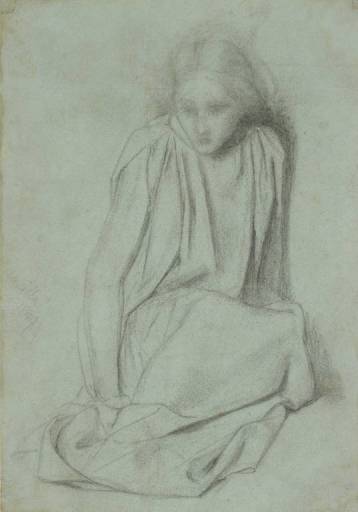
The drawing, titled "Ecce Ancilla Domini!" – Latin for “Behold the Maid!”, – stands as a poignant testament to Dante Gabriel Rossetti's Romantic sensibilities and his masterful command of artistic expression. Created in 1849, this unassuming sketch transcends its modest size, offering a glimpse into the artist’s profound contemplation of femininity and spirituality. It isn’t merely an image; it’s a carefully considered meditation on beauty and grace, rendered with meticulous detail that speaks volumes about Rossetti's artistic vision.
- Subject Matter: The central figure is depicted as a woman seated upon the ground, her gaze averted from the viewer. This deliberate positioning invites introspection, prompting us to consider her inner world and conveying a sense of serene solitude.
- Style & Technique: Rossetti’s style aligns perfectly with the Romantic movement's preoccupation with emotion and imagination. The drawing employs a charcoal technique—a medium favored by Rossetti for its ability to capture subtle tonal variations and convey texture—resulting in an image imbued with atmospheric depth.
The historical context surrounding “Ecce Ancilla Domini!” is crucial to understanding its significance. Produced during the Victorian era, a period marked by moral conservatism yet simultaneously fueled by artistic innovation, Rossetti’s work reflects the broader cultural anxieties of his time concerning notions of womanhood and religious devotion. The Latin phrase itself – taken from Matthew 28:19 – underscores this thematic concern; it references Jesus instructing Mary Magdalene to proclaim the Gospel, symbolizing purity, faith, and divine grace.
- Symbolism: Beyond its immediate visual appeal, the drawing is laden with symbolic resonance. The woman’s posture embodies humility and receptiveness – qualities considered essential for spiritual contemplation. Her averted gaze suggests a preoccupation with inner reflection, hinting at a deeper exploration of faith and femininity.
- Emotional Impact: Rossetti's masterful rendering captures a palpable sense of tranquility and contemplative beauty. The drawing evokes feelings of reverence and serenity, inviting viewers to pause and appreciate the quiet dignity of human experience.
“Ecce Ancilla Domini!” exemplifies Rossetti’s ability to distill complex ideas into a deceptively simple visual form. It serves as an enduring reminder that true artistic achievement lies not merely in technical proficiency but also in conveying profound emotional truths—a quality that continues to resonate with audiences captivated by Rossetti's legacy and appreciated for its timeless beauty. This drawing is more than just a sketch; it’s a window into the soul of a Romantic artist at his peak, offering an unparalleled opportunity to experience the essence of Victorian artistic idealism.