Explore the Pre-Raphaelite art of Dante Gabriel Rossetti (1828-1882). Discover his sensual paintings, symbolic poetry & medieval themes – a key figure in Aestheticism & Symbolism.
A Portrait of Serenity: Exploring Dante Gabriel Rossetti’s “Golden Water”
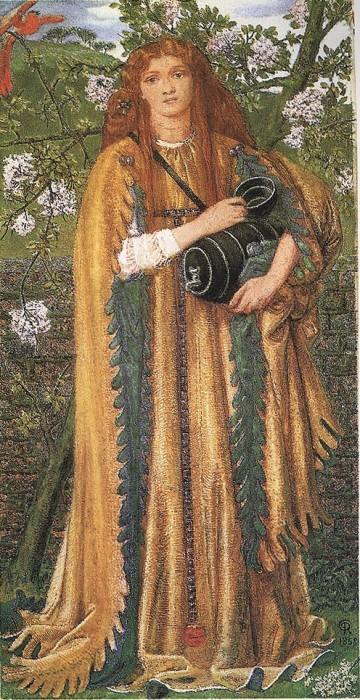
Dante Gabriel Rossetti's "Golden Water," completed in 1858, stands as a cornerstone of Pre-Raphaelite art—a movement that championed idealized beauty and meticulous detail against the prevailing Victorian aesthetic. More than just a depiction of a woman amidst foliage, this painting embodies a profound exploration of femininity, observation, and the symbolic power of nature itself. Let’s delve into what makes this artwork so enduringly captivating.
Composition & Visual Narrative
The canvas presents a vertically oriented portrait, immediately establishing a sense of grandeur and focusing attention on its central figure—a woman radiating quiet dignity. Rossetti skillfully employs compositional techniques characteristic of the Pre-Raphaelite style: she occupies the dominant position within a densely populated garden scene. The arrangement isn’t merely decorative; it serves to frame her presence, enhancing her isolation yet simultaneously connecting her to the vibrant energy of the natural world. Her gaze directs towards the viewer, inviting contemplation and fostering an intimate connection between subject and observer—a deliberate tactic designed to convey both vulnerability and strength.
Color Palette & Texture: Echoes of Byzantium
The artwork’s color palette is dominated by warm earth tones – golds, browns, ochres – mirroring the opulent hues favored in Byzantine iconography and reflecting Rossetti's fascination with medieval art. These rich pigments are punctuated by splashes of emerald green from the foliage, creating a luminous effect that imbues the scene with an ethereal quality. Delicate pinks and whites adorn the blossoms, adding subtle accents of color that heighten the painting’s visual splendor. Crucially, Rossetti achieves this luminosity through painstaking brushwork—layers upon layers of paint meticulously applied to build up texture and depth. The fabric folds ripple softly, capturing the tactile sensation of luxurious drapery, while individual flower petals are rendered with astonishing precision, conveying a remarkable level of realism.
Symbolism & Interpretation: Beyond Mere Representation
“Golden Water” transcends mere visual representation; it’s laden with symbolic significance rooted in Pre-Raphaelite beliefs about art's ability to communicate spiritual truths. The woman herself is interpreted as an allegorical figure representing idealized beauty and contemplation—a reflection of Rossetti’s own artistic ideals. Her holding a camera – an incongruous element for the period – speaks to a broader theme: the artist’s role in documenting and preserving the sublime wonders of the natural world. Flowers, ubiquitous throughout Pre-Raphaelite art, symbolize fertility, renewal, and divine grace—elements that resonate powerfully within the painting's serene atmosphere. The woman’s posture exudes calmness and introspection, hinting at a deeper emotional resonance beyond surface appearances.
Historical Context & Artistic Influence
Rossetti’s “Golden Water” emerged during the height of Aestheticism – a movement that prioritized beauty for its own sake and rejected didactic moralizing. Influenced by writers like Tennyson and Newman, Rossetti sought to evoke emotion and inspire contemplation through meticulously crafted imagery. This painting exemplifies the Pre-Raphaelite preoccupation with medieval art and literature—particularly Dante Alighieri’s “Divine Comedy”—drawing inspiration from Byzantine mosaics and illuminated manuscripts. Its meticulous technique and evocative symbolism cemented Rossetti's legacy as one of the most important artists of his era, establishing him as a pivotal figure in British Romanticism and profoundly impacting subsequent artistic movements.