A Vision of Medieval Grace: Dante Gabriel Rossetti’s Saint Catherine
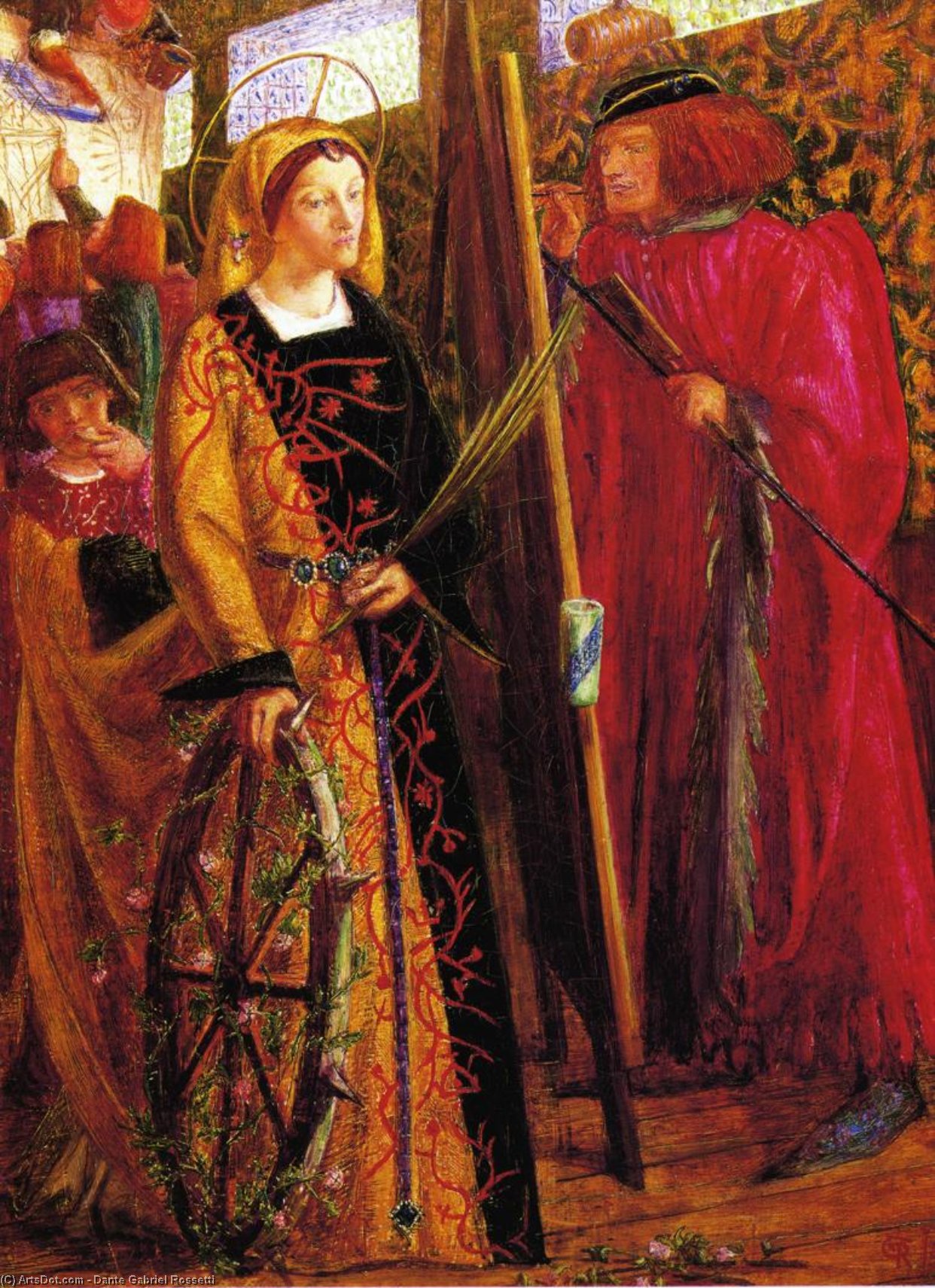
Dante Gabriel Rossetti's "Saint Catherine," painted in 1857, is more than just a depiction of a biblical figure; it’s a shimmering portal into the Pre-Raphaelite movement’s fascination with medieval aesthetics and symbolic depth. This oil on canvas, now residing at Tate Britain, immediately captivates with its rich palette – deep reds bleeding into golden yellows and verdant greens – creating an atmosphere both opulent and dreamlike. The composition itself is carefully orchestrated: Saint Catherine, rendered in serene repose, dominates the central space, her gaze fixed forward, radiating a quiet strength. To her right stands a figure cloaked in crimson, holding what appears to be an arrow and a cylindrical vessel—elements that invite speculation about temptation, divine intervention, or perhaps simply the tools of a medieval craftsman. The partially visible figure on the left, draped in yellow robes, hints at a hidden narrative, while glimpses of architectural detail and foliage suggest a chamber steeped in history and spiritual significance.
Rossetti’s artistic vision is deeply rooted in the Pre-Raphaelite ethos, a rebellion against the academic conventions that had dominated art for decades. Rejecting the idealized forms and polished surfaces of earlier Renaissance painting, the Brotherhood sought to revive the vibrant colors, intricate detail, and symbolic imagery of medieval art—particularly Italian works from before Raphael. “Saint Catherine” exemplifies this approach perfectly; observe the meticulous rendering of fabric folds, the delicate brushstrokes that capture the texture of skin, and the painstaking attention to detail in recreating a sense of atmospheric depth. The flattened perspective, characteristic of Pre-Raphaelite work, contributes to the painting’s dreamlike quality, drawing the viewer into a world where reality and symbolism intertwine seamlessly.
The Symbolism of Light, Color, and Medieval Legend
Beyond its aesthetic beauty, “Saint Catherine” is laden with symbolic meaning. The saint herself, martyred for her unwavering faith and intelligence, represents resilience and spiritual fortitude. Her wheel, a potent symbol of suffering and endurance, is prominently displayed by the figure on the left—a visual reminder of her tragic fate. The arrow held by the man in red could be interpreted as a representation of temptation or divine guidance, adding another layer of complexity to the scene. The choice of colors is particularly deliberate; the reds evoke passion and sacrifice, while the yellows suggest enlightenment and spiritual growth. The overall effect is one of profound emotional resonance, inviting contemplation on themes of faith, martyrdom, and the enduring power of the human spirit.
Rossetti’s debt to medieval legend is undeniable. Saint Catherine's story, as recounted in *The Golden Legend* by Jacobus de Voragine, details her conversion, marriage to Christ, and subsequent persecution. The painting subtly echoes this narrative, incorporating elements such as the depiction of a painter working on a portrait of the saint—a visual representation of artistic devotion and the attempt to capture divine beauty. Furthermore, the inclusion of the wheel itself is a direct reference to Catherine’s martyrdom, solidifying the painting's connection to its source material. The artist’s meticulous attention to detail in recreating this medieval legend speaks volumes about his deep respect for the past and his desire to imbue his work with timeless significance.
A Window into Victorian Sensibility
“Saint Catherine” offers a fascinating glimpse into the artistic and intellectual currents of Victorian England. Rossetti, like many artists of his time, was deeply influenced by the Romantic poets—particularly Dante Alighieri and Christina Rossetti (his sister)—whose works explored themes of beauty, spirituality, and the power of imagination. The Pre-Raphaelite Brotherhood, to which Rossetti belonged, sought to create a new aesthetic language that combined artistic innovation with moral seriousness. The painting’s emphasis on detailed observation, symbolic imagery, and emotional intensity reflects this broader Victorian sensibility—a desire for beauty, truth, and spiritual fulfillment in an increasingly complex world.
Reproductions of “Saint Catherine” by ArtsDot offer a remarkable opportunity to experience the artistry and symbolism of this iconic Pre-Raphaelite masterpiece. Each hand-painted reproduction faithfully captures the painting’s rich colors, intricate details, and evocative atmosphere, allowing you to bring this timeless work of art into your own home or office. Whether you are an art collector, interior designer, or simply a lover of beautiful things, a ArtsDot reproduction of “Saint Catherine” is sure to be a treasured addition to your collection.