A Vision in Gold: Exploring Dante Gabriel Rossetti’s *Sancta Lilias* (1874)
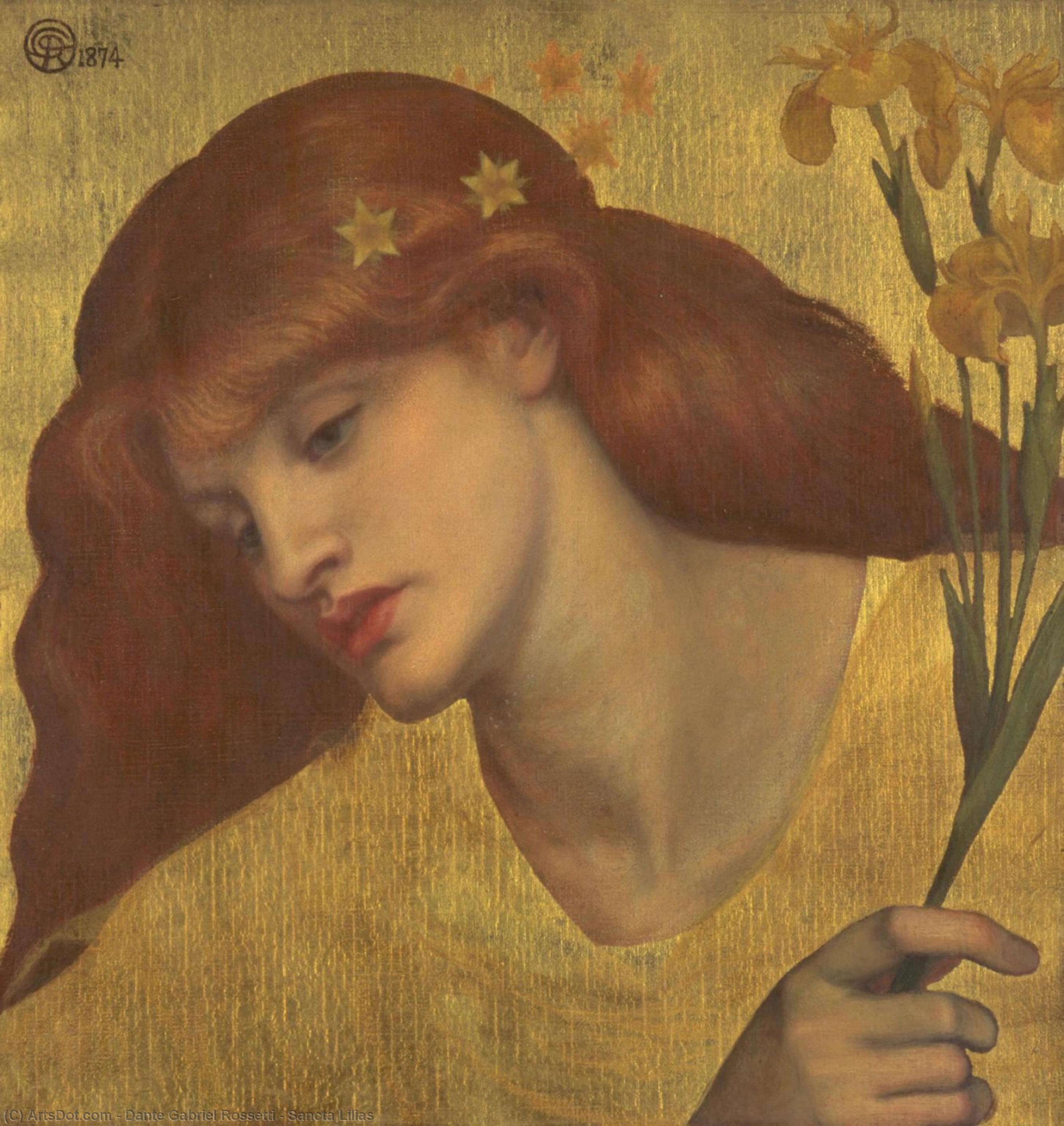
Sancta Lilias*, painted in 1874 by the Pre-Raphaelite master Dante Gabriel Rossetti, is a captivating portrait that embodies the aesthetic and emotional complexities of the Victorian era. This artwork isn’t merely a depiction of a woman; it's an evocation of mood, symbolism, and idealized beauty—hallmarks of Rossetti’s distinctive style.
Subject & Composition
The painting presents a close-up view of a young woman in profile, her gaze cast downwards with a palpable sense of melancholy. Her most striking feature is her cascade of fiery red hair, a recurring motif in Rossetti's work often associated with passion and vitality. She delicately holds a bouquet of daffodils, their bright yellow offering a subtle contrast to the overwhelmingly golden background. The composition focuses intensely on the woman’s face and upper body, creating an intimate and almost dreamlike quality. This shallow depth of field draws the viewer into her private world of contemplation.
Style & Technique
*Sancta Lilias* is firmly rooted in the Pre-Raphaelite aesthetic. Rossetti and his fellow Brotherhood members rejected the academic conventions of their time, seeking inspiration from the art *before* Raphael – hence the name. This meant a return to detailed observation of nature, vibrant colors, and a focus on emotional sincerity.
- Oil Paint & Gold Leaf: Rossetti masterfully employs oil paint with meticulous brushwork, achieving soft transitions between tones and textures. The lavish use of gold leaf as a background isn’t merely decorative; it elevates the subject to an almost iconic status, reminiscent of Byzantine mosaics.
- Organic Forms & Subtle Lines: The artwork is characterized by flowing, organic shapes – from the curves of the woman's head and neck to the delicate petals of the daffodils. Lines are used subtly to define features rather than creating harsh outlines.
- Diffused Lighting: The soft, diffused lighting enhances the three-dimensionality of the subject while contributing to the overall mood of quiet introspection.
Historical Context & Symbolism
Dante Gabriel Rossetti was a pivotal figure in the Pre-Raphaelite movement and later influenced the Aesthetic and Symbolist movements. His work often explored themes of love, loss, beauty, and spirituality. *Sancta Lilias* is believed to be inspired by a real woman, Lillian Treffers, who became Rossetti’s model and muse during his time in Cornwall.
- Daffodils: These flowers traditionally symbolize rebirth and new beginnings, but can also represent unrequited love or remembrance.
- Red Hair: As mentioned previously, Rossetti frequently used red hair to signify passion, vitality, and a rebellious spirit.
- Downward Gaze: The woman’s averted gaze suggests introspection, sadness, or perhaps a secret sorrow.
- The Title “Sancta” : Meaning "holy" in Latin, the title adds an aura of reverence and mystery to the subject. It hints at a spiritual dimension, suggesting she may represent an idealized figure of feminine virtue or saintly beauty.
Emotional Impact & Interior Design Considerations
*Sancta Lilias* evokes a powerful sense of quiet contemplation and delicate beauty. The painting’s melancholic mood is balanced by the richness of its colors and textures, creating a captivating visual experience.
For interior design, this artwork would be stunning in:
- A Victorian-inspired study or library.
- A boudoir with rich fabrics and muted tones.
- A dining room seeking an air of refined elegance.
The gold leaf background will reflect light beautifully, adding warmth and sophistication to any space. A high-quality reproduction would capture the intricate details and emotional depth of Rossetti’s masterpiece, bringing a touch of Pre-Raphaelite splendor into your home.