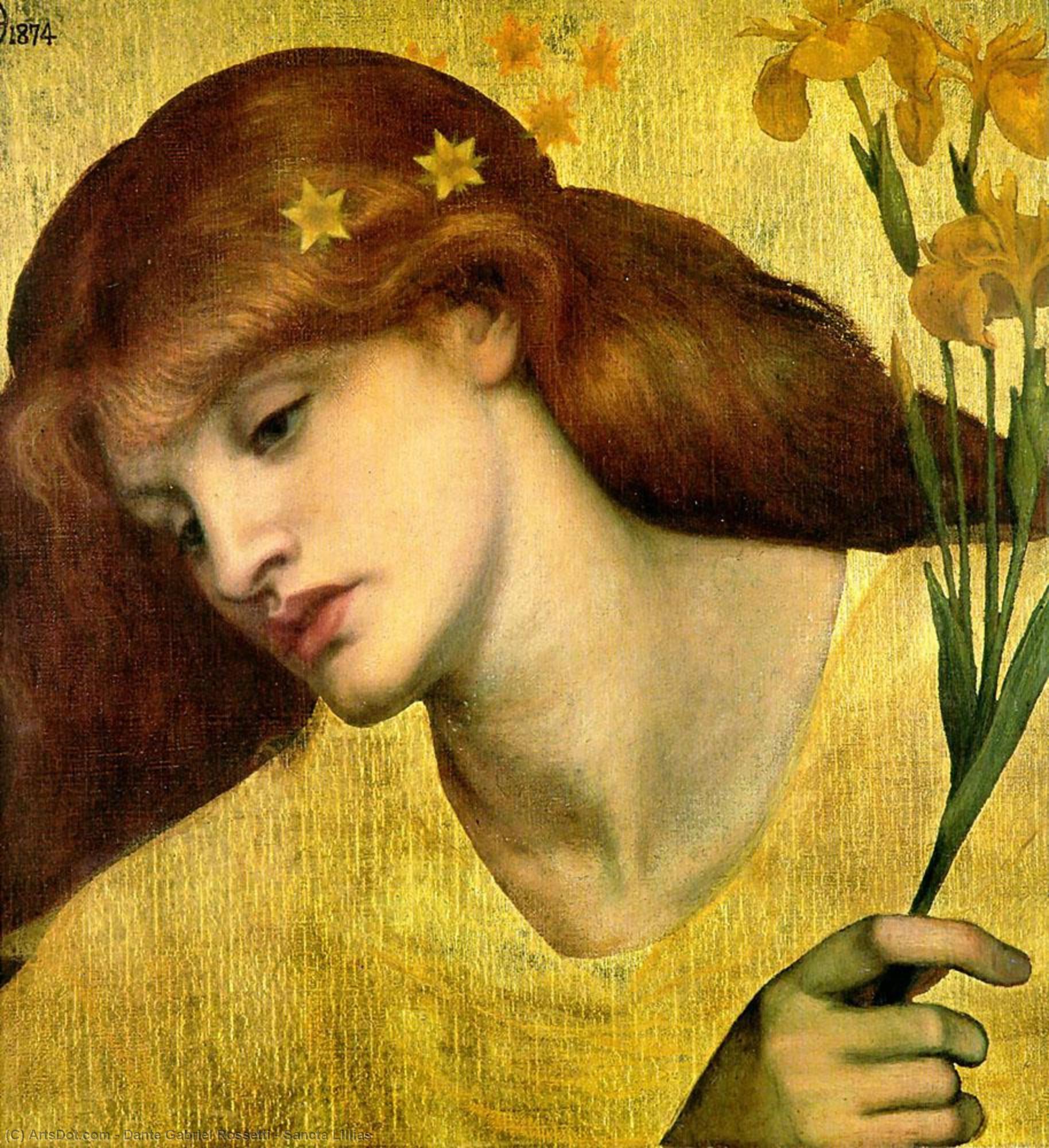
A Vision of Floral Grace: Unveiling Rossetti’s *Sancta Lillias*
Dante Gabriel Rossetti's 1874 painting, *Sancta Lillias*, is not merely a portrait; it’s an immersion into a dreamscape of Victorian beauty and symbolic richness. The subject, a woman with arresting red hair crowned with a profusion of yellow flowers, immediately draws the viewer in, her downward gaze hinting at both vulnerability and profound contemplation. This isn't a straightforward likeness but rather a carefully constructed tableau designed to evoke a specific mood – one of ethereal serenity intertwined with an undercurrent of melancholy. Rossetti, deeply influenced by Pre-Raphaelite ideals, sought to capture not just the outward appearance but also the inner spirit of his subjects, and *Sancta Lillias* exemplifies this ambition perfectly.
The Pre-Raphaelite Palette and Technique
Rossetti’s artistic lineage is inextricably linked to the Pre-Raphaelite Brotherhood, a group dedicated to reviving the aesthetics of early Italian art. This movement profoundly shaped his approach to painting, emphasizing meticulous detail, vibrant color palettes, and a fascination with medieval legends and literary themes. In *Sancta Lillias*, this influence is immediately apparent in the luminous quality of the pigments – particularly the rich yellows and reds that dominate the composition. Rossetti employed a technique characterized by smooth brushstrokes and a layering of glazes to achieve an almost velvety texture, creating a sense of depth and luminosity rarely seen in contemporary portraiture. The delicate rendering of the flowers, each petal meticulously painted, speaks volumes about his dedication to capturing the beauty of the natural world with unparalleled precision.
- Color Harmony: The dominant yellows are juxtaposed against the fiery red hair, creating a dynamic visual tension.
- Brushwork: Rossetti’s signature smooth, blended brushstrokes contribute to the painting's dreamlike quality.
- Detail: The intricate rendering of the floral crown demonstrates his commitment to meticulous observation and execution.
Symbolism Woven into the Scene
Beyond its aesthetic beauty, *Sancta Lillias* is laden with symbolic meaning. The woman’s name itself, “Sanctified Lily,” immediately establishes a connection to purity, innocence, and spiritual grace – qualities frequently associated with lilies in Victorian art. The flowers adorning her hair are not simply decorative; they represent a potent symbolism of rebirth, resurrection, and the cyclical nature of life. Yellow, specifically, carries connotations of joy, hope, and enlightenment, yet also hints at melancholy and remembrance. The stars on her ears, a striking detail, could be interpreted as celestial markers, suggesting a connection to the divine or perhaps representing lost innocence. The background, populated with indistinct figures, adds to the painting’s sense of mystery and isolation, further emphasizing the subject's contemplative state.
A Portrait of Victorian Longing
Considering the historical context of 1874, *Sancta Lillias* offers a poignant reflection on the anxieties and aspirations of the Victorian era. The rise of industrialization and urbanization had profoundly impacted society, leading to a yearning for simpler times and a renewed interest in romantic ideals. Rossetti’s work taps into this sentiment, presenting a vision of beauty and serenity that stands in stark contrast to the realities of modern life. The woman's downward gaze suggests a wistful longing—a desire for something beyond the confines of her present experience. *Sancta Lillias* is more than just a portrait; it’s a visual poem capturing the emotional landscape of a generation grappling with change and searching for meaning in a rapidly evolving world. A reproduction allows us to appreciate Rossetti's masterful ability to evoke such profound emotion through color, form, and symbolism.