A Vision of Melancholy Beauty: Unveiling Rossetti’s ‘Study for The Blessed Damozel’
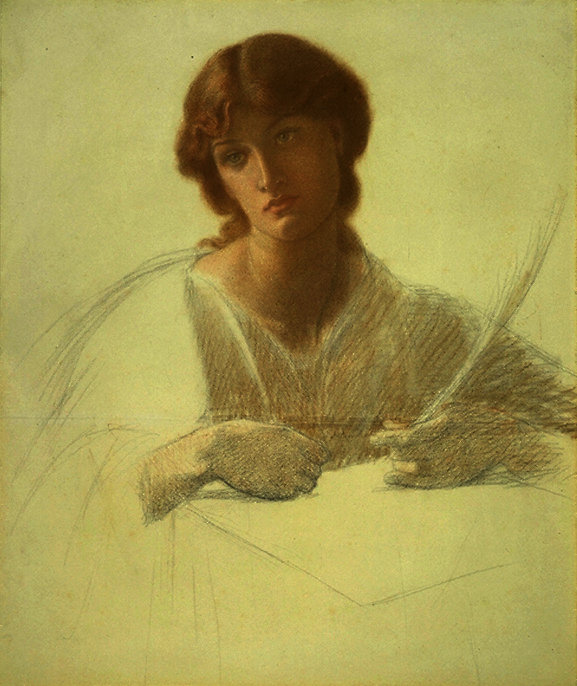
Dante Gabriel Rossetti’s “Study for ‘The Blessed Damozel’,” painted in 1874, isn't merely a preparatory sketch; it’s a concentrated distillation of the Pre-Raphaelite movement’s core tenets – a poignant exploration of beauty, loss, and the ethereal realm. This intimate work offers a glimpse into Rossetti’s creative process, revealing the meticulous layering of color, texture, and symbolic detail that would ultimately culminate in his monumental masterpiece. The painting depicts a young woman seated at a table, bathed in diffused light, her gaze directed downwards – an expression simultaneously contemplative and slightly sorrowful. The composition is remarkably restrained, focusing entirely on this single figure, inviting the viewer to contemplate her inner world.
Rossetti’s Pre-Raphaelite style is immediately evident. The palette is rich and luminous, dominated by soft blues, greens, and creams – colors evocative of twilight and memory. He employs a technique of meticulous detail, rendering every strand of hair, the folds of her dress, and the textures of the writing implements with astonishing precision. Note the delicate brushstrokes that capture the sheen on the ivory of the pen and the subtle variations in the fabric’s weave. This isn't simply representation; it’s an attempt to recreate a feeling, a mood—a sense of yearning and quiet melancholy.
The Symbolism of Loss and Longing
“The Blessed Damozel” itself, the larger painting for which this study serves as preparation, embodies Rossetti's fascination with medieval legend and his exploration of idealized beauty. The “Blessed Damozel” is a woman who waits in paradise for her beloved, eternally beautiful but tragically separated from him. This particular study captures the essence of that longing—the quiet sadness of a soul suspended between earthly existence and an unattainable ideal. The table upon which she sits holds not just writing implements, but also books – symbols of knowledge, experience, and perhaps, the futile attempts to bridge the gap between the mortal and the divine.
The woman’s downward gaze is crucial. It suggests a retreat into introspection, a turning away from the world and towards an inner realm of memory and emotion. The lighting, soft and diffused, further enhances this sense of melancholy, creating an atmosphere of quiet contemplation. Rossetti was deeply influenced by medieval poetry and symbolism, particularly Dante’s *Divine Comedy*, which provided a rich source of imagery and themes for his work. This study echoes those influences, hinting at the spiritual journey and the bittersweet beauty of unattainable love.
A Window into Rossetti's Process
It’s important to remember that this “Study” wasn’t intended as a finished artwork in itself. Instead, it functioned as a crucial stepping stone for Rossetti, allowing him to experiment with composition, color, and detail before committing his vision to canvas. The loose brushwork and the unfinished quality of the study reveal the artist's working method—a process of layering, refining, and constantly revising until he achieved the desired effect. The small scale of the piece also suggests a personal, intimate work, intended for private contemplation rather than public display.
Rossetti’s legacy extends far beyond this single study. He was a pivotal figure in the development of modern art, influencing generations of artists with his innovative approach to color, composition, and subject matter. “Study for ‘The Blessed Damozel’,” therefore, offers not just a glimpse into Rossetti's artistic genius but also a window into the broader cultural context of Victorian England—a period marked by both profound beauty and deep melancholy.