Sybilla Palmifera: A Vision of Pre-Raphaelite Beauty & Intellect
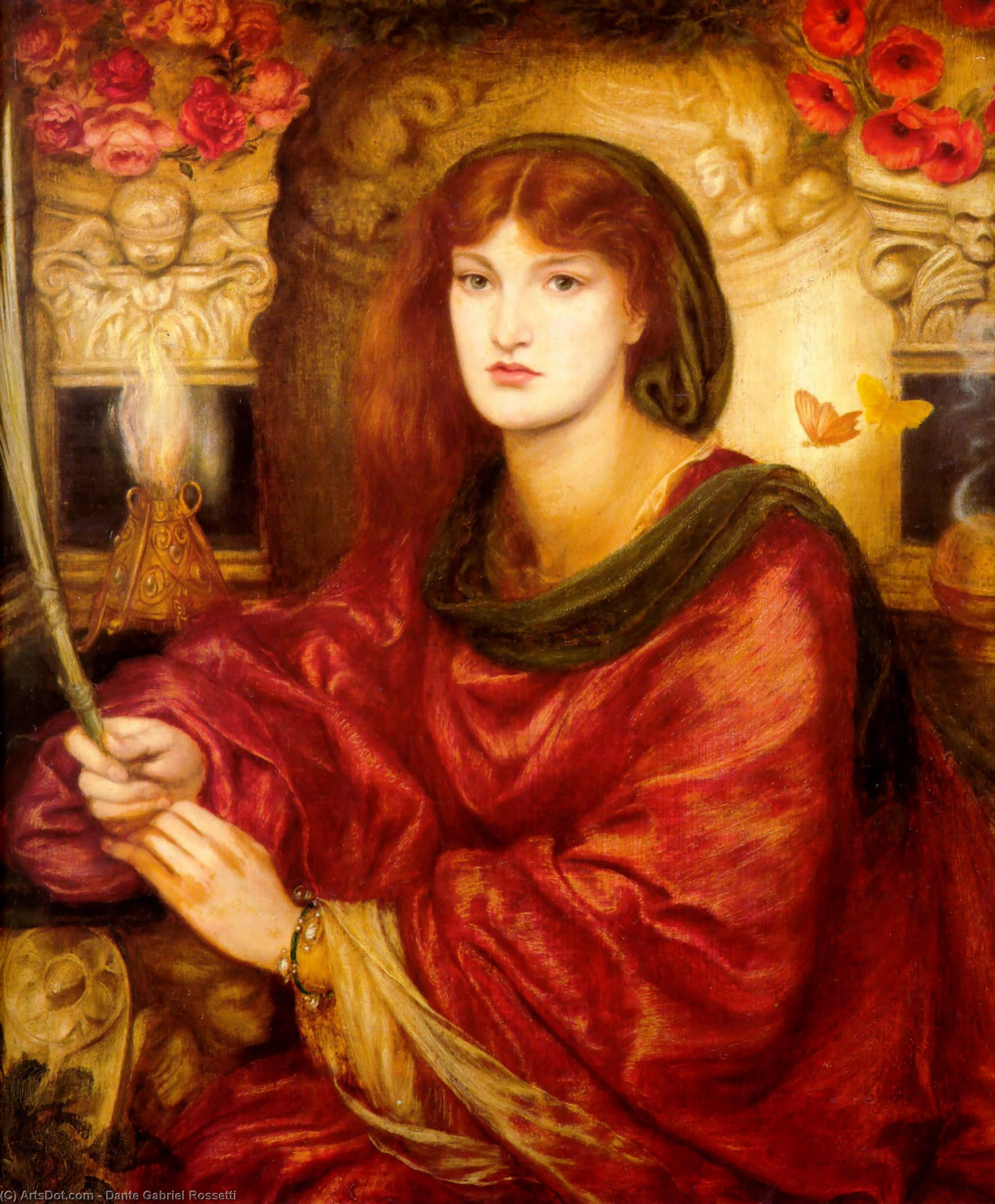
Dante Gabriel Rossetti’s *Sybilla Palmifera*, painted in 1866, is a quintessential example of the Pre-Raphaelite aesthetic – a captivating blend of sensuality, symbolism, and meticulous detail. This portrait transports viewers to a dreamlike realm, inviting contemplation on themes of creativity, beauty, and the fleeting nature of life.
A Muse in Stone & Bloom
The artwork centers around a striking young woman with cascading, fiery red hair – a hallmark of Rossetti’s favored models. She is seated within an intricately carved stone niche, overflowing with lush floral arrangements dominated by roses and poppies. A delicate butterfly alights nearby, and a decorative urn adds to the opulent, almost surreal setting. Her poised posture and focused gaze, directed slightly off-canvas, suggest a woman deeply engaged in thought or creative work. She holds a large feather quill pen, firmly establishing her as an intellectual – a writer, poet, or artist.
Pre-Raphaelite Style & Technique
Rossetti’s masterful technique is immediately apparent. The painting exemplifies the Pre-Raphaelite commitment to vibrant color and painstaking realism.
Rich, saturated reds dominate both her clothing and skin tones, creating a sense of warmth and passion. Lines are soft and flowing, particularly in the rendering of fabrics and hair, while shapes lean towards organic forms – rounded flowers and architectural details contrasted by the sharp precision of the quill. The texture is layered and impasto-like, achieved through visible brushwork, lending depth and tactility to the canvas. The perspective is deliberately flattened, prioritizing decorative effect over strict realism—a characteristic trait of the movement.
Historical Context & The Pre-Raphaelite Brotherhood
To fully appreciate *Sybilla Palmifera*, it’s crucial to understand its place within the Pre-Raphaelite Brotherhood (founded 1848). Rossetti, along with William Holman Hunt and John Everett Millais, rebelled against the academic art of their time. They sought inspiration in the art produced
before Raphael – specifically, the detailed observation and intense colors of early Italian and Flemish painting. Rossetti’s work, alongside his fellow Brotherhood members, aimed to reform English art by rejecting what they perceived as the artificiality of prevailing artistic conventions.
Symbolism & Emotional Resonance
The symbolism within *Sybilla Palmifera* is rich and layered:
- The Quill Pen: Represents creativity, intellect, and the power of writing.
- Roses: Traditionally symbolize love, beauty, and passion.
- Poppies: Often associated with sleep, death, and remembrance – hinting at mortality and the ephemeral nature of beauty.
- The Niche & Urn: Suggest a sacred space dedicated to artistic inspiration and perhaps, a contemplation of legacy.
The overall emotional tone is one of romanticism, mystery, and a subtle melancholy. The subject’s introspective expression invites viewers to project their own emotions onto the scene, creating a deeply personal connection with the artwork.
A Timeless Masterpiece for Collectors & Designers
*Sybilla Palmifera* is more than just a beautiful painting; it's a window into a pivotal moment in art history and a testament to Rossetti’s enduring vision. Its captivating imagery, rich symbolism, and exquisite technique make it an ideal addition to any collection or interior space. A high-quality reproduction of this masterpiece will undoubtedly bring a touch of Pre-Raphaelite elegance and intellectual depth to your home or office.