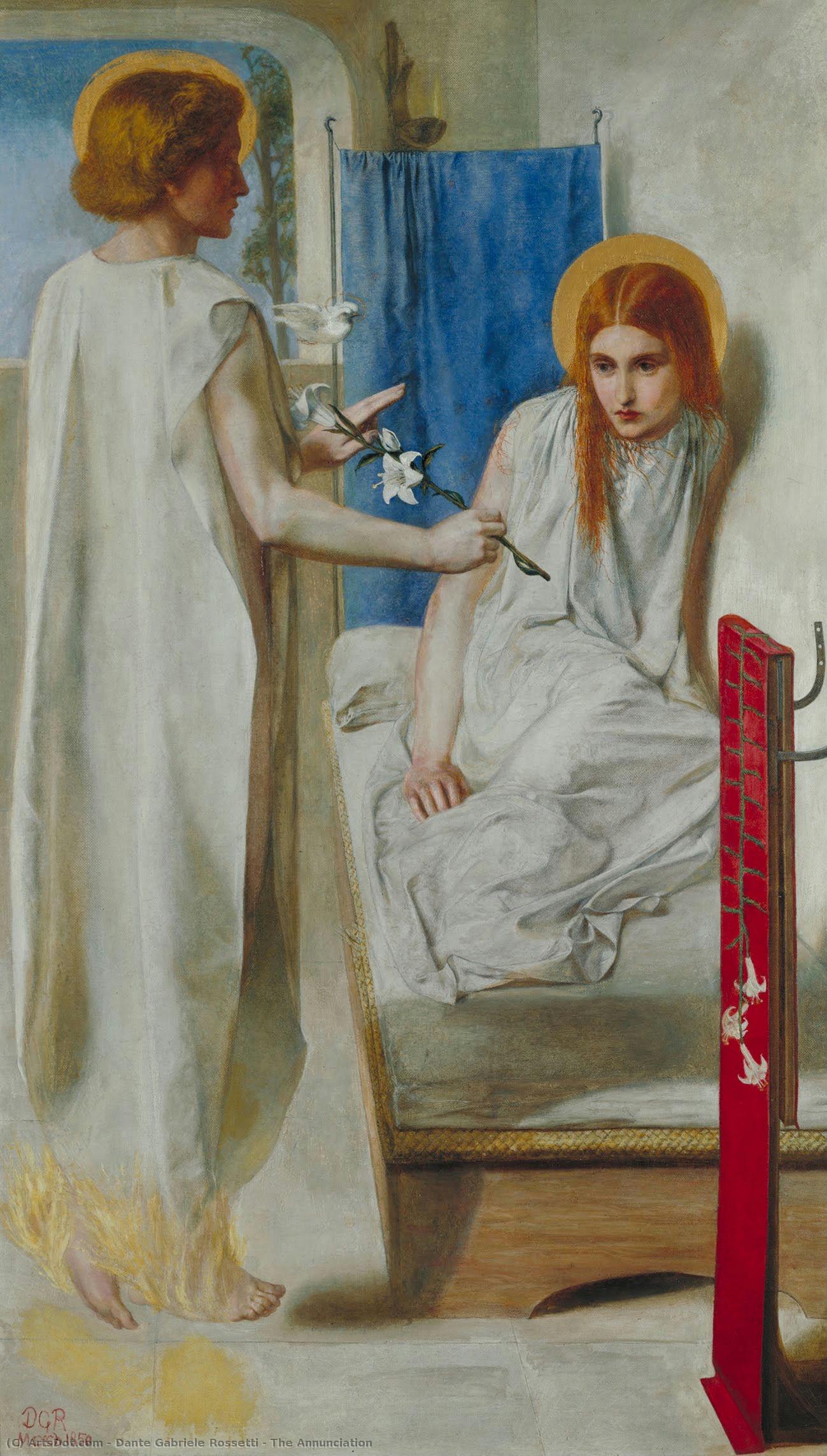
The Bodleian Libraries in Oxford, United Kingdom, house an impressive collection of artworks, including paintings that span various artistic styles and periods. Discover more about these artworks at Discovering the Artworks of Bodleian Libraries, Oxford, United Kingdom.
A Radical Reinterpretation of Divine Revelation
Dante Gabriel Rossetti’s “The Annunciation” transcends the conventional depiction of Mary receiving the divine messenger, presenting instead a profoundly unsettling vision rooted in Romantic sensibilities. Rejecting the established iconography—where Virgin Mary is portrayed passively accepting God's decree—Rossetti sought to capture a moment of visceral reaction, mirroring his belief that art should strive for supernatural realism. This daring approach distinguishes it from its predecessors and establishes Rossetti as a pioneer of psychological depth within religious painting.
- Subject Matter: The artwork portrays Mary, the mother of Jesus, confronted by Gabriel, the angel tasked with announcing the miraculous conception.
- Style: Embracing Romanticism’s preoccupation with emotion and imagination, Rossetti abandons idealized beauty for a palpable sense of vulnerability and apprehension.
Technique and Material Considerations
Executed in oil paint on canvas, “The Annunciation” exemplifies the meticulous craftsmanship characteristic of the Pre-Raphaelite Brotherhood. Rossetti’s masterful brushwork imbues the scene with a luminous quality—primarily achieved through careful layering of glazes—that captures the ethereal glow associated with divine presence. The dominant white hue isn't merely decorative; it symbolizes purity and innocence, reinforcing the spiritual narrative at its core. Notably, the inclusion of embroidered lilies – mirroring those depicted in Mary’s hands – underscores this symbolic significance.
- Medium: Oil paint on canvas
- Brushwork: Rossetti utilizes delicate brushstrokes to convey a sense of movement and luminosity.
Historical Context and Artistic Influences
Created in 1849-50, “The Annunciation” emerged during a period marked by intellectual ferment—the Victorian era witnessed burgeoning interest in psychology and the exploration of inner experience. Rossetti’s artistic vision was profoundly impacted by poets like Tennyson and Milton, whose works championed moral seriousness and imaginative storytelling. Furthermore, he drew inspiration from medieval illuminated manuscripts, particularly those depicting scenes of biblical narratives with heightened emotional intensity. This deliberate stylistic choice reflects a broader movement toward rejecting academic conventions in favor of expressive art that communicates profound spiritual truths.
Symbolism and Emotional Resonance
Beyond its formal elements, “The Annunciation” resonates deeply with symbolic meaning. The angel’s outstretched hand bearing the lily—a traditional emblem of virginity and divine grace—represents God's benevolent intervention in Mary’s life. Simultaneously, Mary’s recoiling posture conveys a sense of disorientation and fear – acknowledging the unsettling confrontation between faith and doubt. Rossetti’s intention was to provoke contemplation on the human condition and the transformative power of spiritual revelation. The painting invites viewers to consider not merely what is seen but also what is felt—a testament to Rossetti's enduring legacy as one of Victorian art’s most emotionally resonant masterpieces.