Explore the Pre-Raphaelite art of Dante Gabriel Rossetti (1828-1882). Discover his sensual paintings, symbolic poetry & medieval themes – a key figure in Aestheticism & Symbolism.
A Vision of Romantic Idealism: Exploring Dante Gabriel Rossetti’s “The Loving Cup”
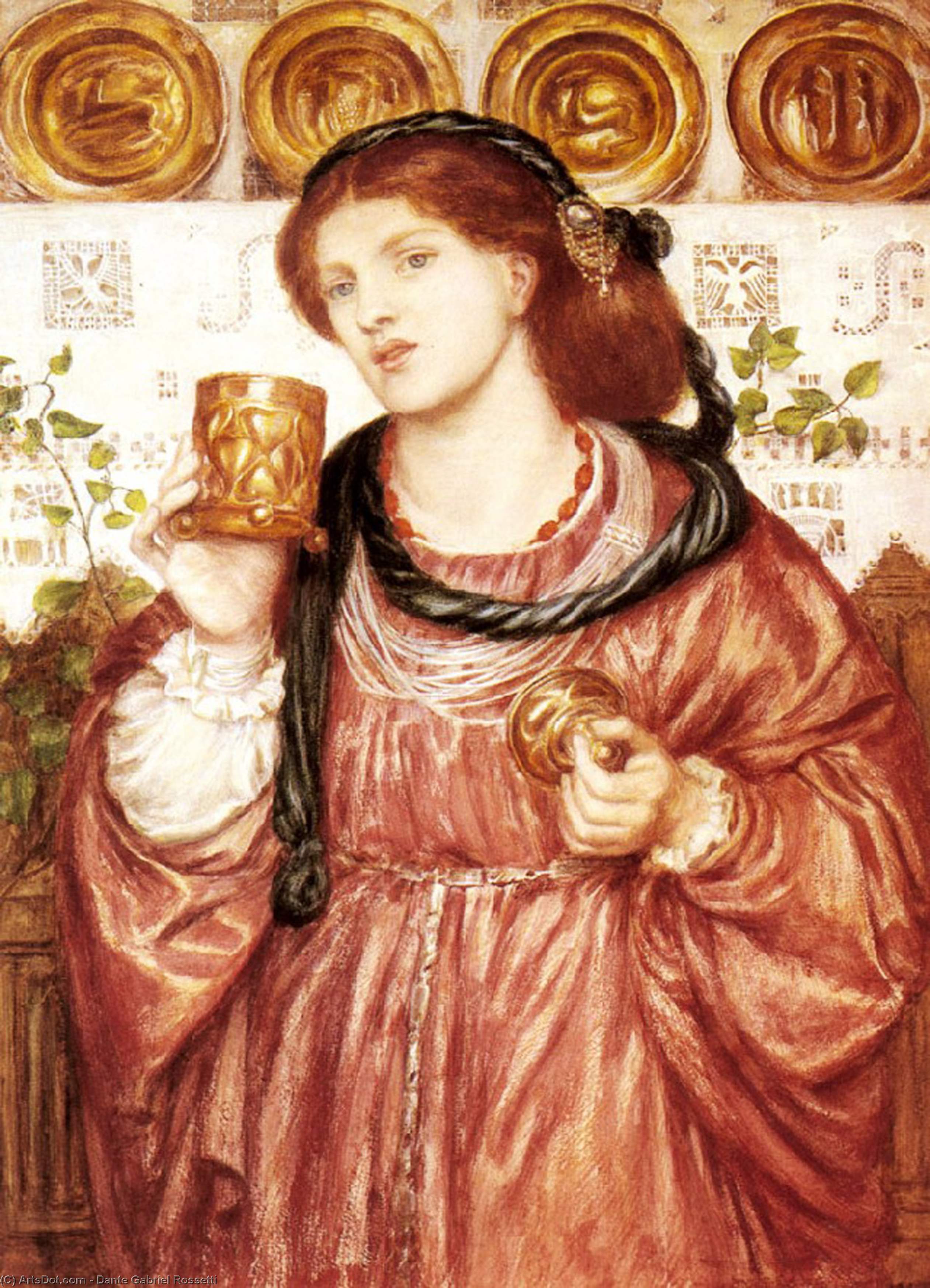
Dante Gabriel Rossetti's "The Loving Cup," completed in 1867, stands as a quintessential emblem of Pre-Raphaelite artistic fervor—a testament to the movement’s preoccupation with beauty, mythology, and profound emotional resonance. More than just a portrait, it’s an immersive experience for the viewer, transporting them back to Victorian England while simultaneously delving into themes of love, devotion, and spiritual contemplation. This exquisite watercolor reproduction captures not merely what Rossetti saw but what he wished to convey—a carefully constructed tableau designed to stir the imagination and evoke feelings of sublime serenity.
Subject Matter and Composition: Capturing Fleeting Beauty
The painting depicts Alexa Wilding, a celebrated beauty of her time and Rossetti’s muse, posed gracefully against a backdrop of opulent gold ornamentation. Wilding is presented in a flowing scarlet gown embellished with shimmering gold thread—a deliberate choice reflecting the Pre-Raphaelite penchant for rich hues and luxurious fabrics. Her gaze directs upwards, conveying an aura of quiet contemplation as she holds aloft two objects: a golden chalice and a delicate bird. The chalice symbolizes sacred communion and spiritual grace, while the bird embodies innocence, freedom, and aspiration—elements central to Romantic ideals. Rossetti’s masterful composition utilizes triangular arrangements of gold plates to create visual stability and draw the eye towards Wilding's figure, emphasizing her centrality within the scene.
Technique and Artistic Style: Pre-Raphaelite Precision
Rossetti employed a meticulous watercolor technique, characteristic of the Pre-Raphaelites who rejected academic conventions in favor of direct observation and expressive color palettes. Layers upon layers of translucent washes build up to create luminous effects that capture the subtle nuances of light and shadow—a hallmark of Rossetti’s artistic prowess. The artist's painstaking attention to detail is evident in every element, from the intricate embroidery adorning the white fabric background to the delicately rendered plumage of the bird. This meticulous approach distinguishes “The Loving Cup” from more generalized Romantic depictions, elevating it to a level of refined artistry that reflects the Pre-Raphaelite commitment to capturing idealized beauty with unparalleled accuracy.
Historical Context and Influences: Echoes of Mythology
“The Loving Cup” emerged during a period marked by significant intellectual and artistic upheaval—the Victorian era witnessed a burgeoning interest in mythology, folklore, and medieval art forms. Rossetti’s inspiration drew heavily from Dante Alighieri's “Divine Comedy,” specifically Beatrice’s vision of Paradise—a motif that finds its visual representation in the upward gaze of Wilding and the symbolic significance of the chalice and bird. The Pre-Raphaelite movement sought to recapture the spirit of early Renaissance art, rejecting the artificiality of academic painting and embracing instead a return to naturalism and emotional sincerity. This artistic revival fueled a desire for beauty that transcended mere ornamentation—a yearning for spiritual transcendence embodied in Rossetti’s masterful depiction of Alexa Wilding.
Emotional Impact: A Portrait of Inner Grace
Ultimately, “The Loving Cup” succeeds in conveying a profound sense of serenity and contemplation—a reflection of the Romantic preoccupation with exploring the depths of human emotion and experience. The painting's luminous colors and delicate brushstrokes evoke feelings of peace and reverence, inviting viewers to contemplate themes of love, faith, and artistic beauty. It’s a piece that lingers in the memory long after viewing, prompting introspection and reaffirming the enduring power of art to inspire wonder and elevate the spirit—a timeless masterpiece destined to continue captivating audiences for generations to come.