A Vision of Light and Transformation: Dante Gabriel Rossetti’s “The Rainbow”
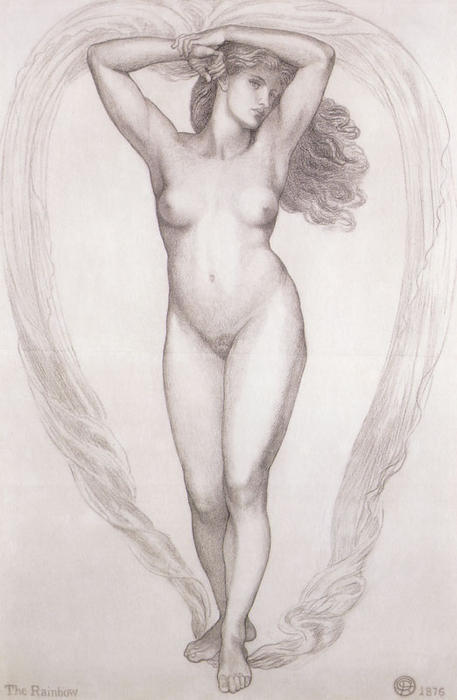
Dante Gabriel Rossetti's "The Rainbow," painted in 1876, is more than just a depiction of a natural phenomenon; it’s an immersive exploration of beauty, spirituality, and the yearning for connection. This exquisite pencil drawing, now meticulously reproduced on hand-stretched canvas, captures a nude female figure emerging from swirling clouds – a potent symbol of rebirth, transformation, and the delicate balance between earthly existence and the ethereal realm. Rossetti, a key figure in the Pre-Raphaelite Brotherhood, rejected the rigid academic traditions of his time, prioritizing emotional intensity, rich symbolism, and a return to the perceived purity of medieval art. “The Rainbow” embodies these principles perfectly, inviting viewers into a dreamlike space where form and feeling intertwine.
Romanticism and Symbolism: Unpacking the Layers of Meaning
Rossetti’s style is deeply rooted in Romanticism, a movement that emphasized emotion, imagination, and the sublime power of nature. However, he elevates these themes through Pre-Raphaelite symbolism. The central figure, often interpreted as representing innocence or a nascent spirit, isn't merely a nude; she embodies potential and vulnerability. The swirling clouds surrounding her aren’t simply atmospheric effects – they represent the forces of nature, perhaps even divine influence, guiding her towards a new beginning. The rainbow itself is a potent symbol of hope, promise, and reconciliation after a storm, mirroring the figure's own journey from obscurity to radiant beauty. Rossetti masterfully employs muted tones and delicate hatching techniques to create an atmosphere of serene contemplation, inviting viewers to lose themselves in the artwork’s evocative mood.
Technique and Materials: A Study in Detail
The drawing is executed entirely with graphite pencils on paper, a testament to Rossetti's meticulous attention to detail. Observe the subtle variations in shading – the delicate hatching and cross-hatching create an astonishingly realistic depiction of fabric, smoke, and the contours of the figure’s body. The lack of strong perspective contributes to the dreamlike quality, flattening the image and drawing focus entirely onto the central subject. This deliberate choice reinforces the sense of being immersed within a world of heightened emotion and symbolism. The artist's control over tonal values is remarkable, allowing him to capture both the softness of the clouds and the delicate texture of the woman’s skin with equal precision.
Historical Context: Rossetti and the Pre-Raphaelites
Dante Gabriel Rossetti (1828-1882) was a pivotal figure in the Pre-Raphaelite movement, alongside artists like John Everett Millais and William Holman Hunt. Rejecting the conventions of academic art, the Pre-Raphaelites sought to revive the style and spirit of early Italian Renaissance painting – particularly that of Giotto – believing it offered a more truthful and emotionally resonant approach. Rossetti’s work often explored themes of mythology, literature, and medieval romance, frequently featuring beautiful women in evocative settings. “The Rainbow” reflects this fascination with beauty, spirituality, and the power of imagination, firmly placing it within the broader context of the Pre-Raphaelite aesthetic. His connection to Dante Alighieri, his father’s literary hero, is evident in the artwork's themes of poetry, love, and the pursuit of transcendent beauty.
Discover a stunning hand-painted reproduction of “The Rainbow” today at ArtsDot.com