The Enigmatic Embrace: Unveiling Dante Gabriel Rossetti’s “The Two Mothers”
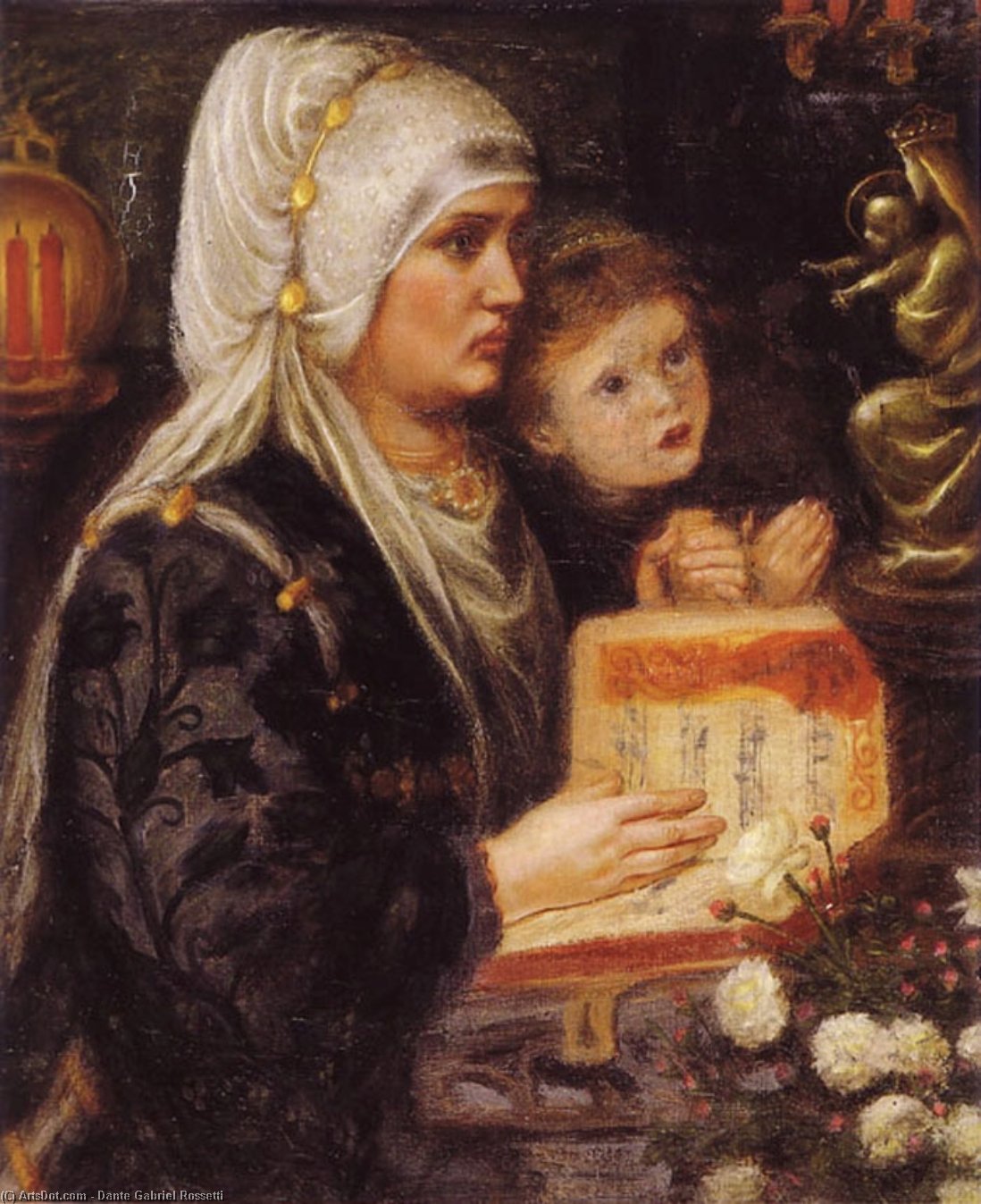
Dante Gabriel Rossetti's "The Two Mothers," painted in 1851, is not merely a portrait; it’s an exquisitely layered tableau of Victorian sensibilities, Pre-Raphaelite symbolism, and the quiet contemplation of motherhood. This captivating work, currently available as a stunning hand-painted reproduction on ArtsDot.com, invites viewers into a world of gentle melancholy and profound connection. The painting depicts two women, their figures bathed in diffused light within a modestly furnished interior – a table bearing a vase, a subtle clock hinting at the passage of time, and a backdrop that suggests a private sanctuary. The central focus rests on the woman holding a child, her gaze directed slightly off-camera, perhaps lost in thought or reading from the book held by her companion. This subtle gesture immediately establishes a dynamic of shared experience and quiet understanding.
A Rossettian Vision: Pre-Raphaelite Detail and Romantic Mood
Rossetti’s signature style is powerfully evident in “The Two Mothers.” He meticulously renders the textures of fabric, the delicate sheen of porcelain on the vase, and the subtle folds of the women's garments. The Pre-Raphaelites championed a return to the detail and luminosity of early Italian art, rejecting the academic conventions that had dominated the artistic landscape. This is immediately apparent in the rich, jewel-toned palette – deep blues, muted greens, and warm ochres – which creates an atmosphere of dreamy nostalgia. Rossetti’s masterful use of light, particularly the soft illumination filtering through a window (implied rather than explicitly shown), contributes significantly to the painting's ethereal quality. The figures themselves are idealized, possessing a classical beauty reminiscent of Renaissance depictions of women, yet imbued with a distinctly Victorian sensibility.
Symbolism and Narrative: Motherhood, Time, and Reflection
Beyond its aesthetic appeal, “The Two Mothers” is rich in symbolic meaning. The act of reading – the book held by one woman – represents knowledge, experience, and the transmission of wisdom from one generation to another. The child symbolizes innocence, potential, and the future. The off-camera gaze of the mother suggests a contemplative state, perhaps reflecting on her role as nurturer and guide. The presence of the clock subtly introduces the theme of time, reminding us of the fleeting nature of life and the enduring importance of family bonds. It’s also worth noting the angels hovering above each woman; they represent divine grace and protection, reinforcing the sanctity of motherhood and the spiritual dimension of this intimate scene.
Christina Rossetti's Influence and a Family Legacy
It is crucial to acknowledge the profound influence of Christina Rossetti, Dante Gabriel’s sister, on this work. Her own poetry, particularly her exploration of themes related to motherhood, faith, and mortality, undoubtedly informed her brother’s artistic vision. The quiet dignity and introspective quality of the figures in “The Two Mothers” resonate with the spirit of Christina's verse. The painting can be viewed as a visual embodiment of their shared intellectual and emotional landscape – a testament to a family deeply immersed in literature, art, and spiritual contemplation. Rossetti’s work, like his sister’s poetry, continues to evoke a sense of poignant beauty and timeless relevance.
A hand-painted reproduction from ArtsDot.com allows you to bring this exquisite artwork into your home or office, capturing its delicate details and evocative atmosphere with unparalleled fidelity. Consider it not just a painting, but a window into the heart of Victorian England and the enduring power of maternal love.