A Whispered Moment in Time
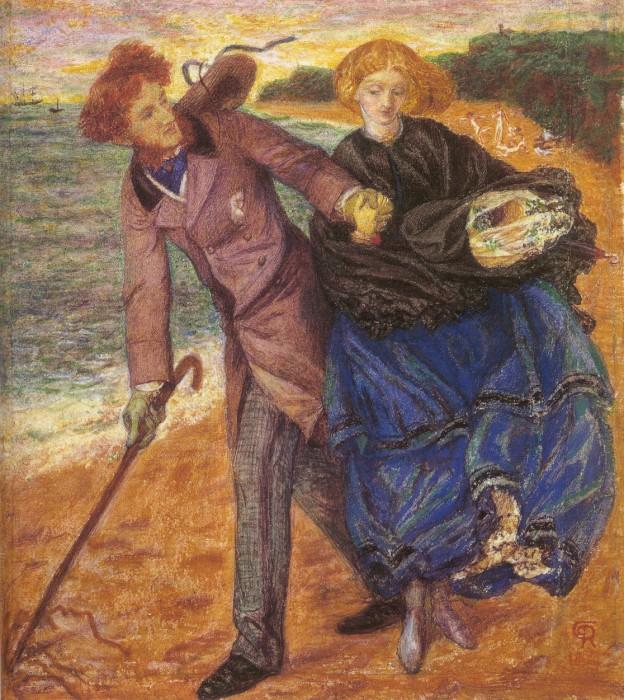
In the delicate, sun-drenched expanse of Dante Gabriel Rossetti’s Writing on the Sand, we are invited into a sanctuary of quiet intimacy and profound reflection. Completed in 1859, this masterpiece serves as a poignant meditation on the ephemeral nature of existence. The scene captures a tender encounter between two figures upon a coastal shore, where the act of inscribing words into the earth becomes a powerful metaphor for the fragility of memory and love. As the tide approaches, so too does the inevitable erasure of all things, leaving the viewer to contemplate the beauty found in moments that are destined to vanish. For the discerning collector or interior designer, this piece offers more than mere decoration; it provides a window into the soulful depths of the Pre-Raphaelite spirit.
The composition is masterfully orchestrated to guide the wandering eye through a dreamlike landscape. Rossetti utilizes subtle diagonal lines—formed by the gentle slope of the beach and the reaching arm of the man—to draw our gaze toward the hazy, atmospheric horizon where the sea meets the sky. There is a rhythmic grace to the arrangement, with the figures positioned slightly off-center to create a sense of natural, unposed movement. The background, rendered in muted, ethereal tones, recedes into a soft blur, ensuring that the emotional weight remains anchored in the foreground interaction. This deliberate use of depth creates an immersive experience, pulling the observer into the very heart of this seaside romance.
The Alchemy of Color and Texture
Technically, Writing on the Sand is a triumph of atmospheric watercolor and fine detail. Rossetti employs a restrained yet evocative palette, dominated by warm, earthy tones of ochre, burnt orange, and deep brown that mimic the sun-baked grains of the shore. These warmth are beautifully punctuated by delicate accents of cerulean and soft blue, found in the flowing folds of the woman’s skirt and the rhythmic pulse of the distant waves. The artist eschews harsh, clinical outlines in favor of a more fluid, organic approach, allowing shapes to merge softly into one another. This technique imbues the work with a palpable sense of light and air, as if the scene were viewed through the shimmering heat of a summer afternoon.
The tactile quality of the piece is equally captivating. Through masterful brushwork, Rossetti creates a striking contrast between the grainy, textured appearance of the sand and the smooth, blurred strokes used to depict the undulating water. This interplay of textures adds a layer of visual richness that makes the artwork feel alive under different lighting conditions. For those looking to enhance a sophisticated interior, the painting’s ability to evoke both the ruggedness of nature and the softness of human emotion makes it an unparalleled centerpiece for a room designed around themes of tranquility, nostalgia, or classical elegance.
A Legacy of Romantic Symbolism
Beyond its aesthetic splendor, the artwork is steeped in the symbolic language of the Pre-Raphaelite Brotherhood. Rossetti, a polymath who was as much a poet as he was a painter, infused this scene with layers of literary and emotional meaning. The central motif—the writing upon the sand—is a classic symbol of impermanence, reminding us that even our most profound declarations are subject to the passage of time. The figures themselves, often interpreted as portraits of contemporary muses or loved ones, embody a sense of longing and quiet devotion that resonates deeply with the Romantic tradition.
To possess a reproduction of this work is to bring a piece of Victorian history into the modern home. It is an invitation to slow down, to observe the subtle nuances of light and shadow, and to find beauty in the fleeting. Whether placed in a sunlit reading nook or as a focal point in a grand gallery-style living space, Writing on the Sand continues to inspire awe, offering a timeless connection to one of the most evocative eras in art history.